
How often should warehouse racking inspections be conducted to ensure safety and compliance?
Warehouse racking should receive regular visual checks, with the inspection frequency based on the risks and operating conditions, and a formal inspection by a technically competent person at least every 12 months. Arrange an additional inspection after an impact, alteration, serious damage or other event that could affect safety, and complete any necessary repairs promptly.
Warehouse racking should be visually checked regularly by trained staff, with a documented inspection by a technically competent person at intervals of no more than 12 months. More frequent formal inspections may be appropriate where the system is heavily used, exposed to frequent impacts, subject to demanding environmental conditions or has a history of damage. An additional inspection is also required after an impact, alteration, serious damage or any other event that could affect structural safety.
The recommended frequency should be determined through a documented risk assessment rather than by relying on an annual date alone. Consider the type and condition of the warehouse racking, the loads stored, forklift and pedestrian traffic, building conditions, operating procedures, previous damage and the competence of employees carrying out routine checks. Manufacturer instructions, site rules, insurance conditions and relevant safety guidance may also require a shorter interval.
Routine visual checks
A responsible employee should carry out regular visual checks at a frequency suitable for the risks on site. In busy or high-impact areas, this may need to be daily or weekly; quieter areas may follow a different planned schedule. These checks should look for obvious defects, including:
- bent, twisted or displaced uprights, beams, bracing or other structural components;
- missing, damaged or incorrectly positioned locking pins and safety clips;
- loose, damaged or missing floor fixings;
- uneven, overloaded or incorrectly positioned loads;
- signs of impact from handling equipment;
- damaged pallets or goods that could fall; and
- changes to the layout, protection, access routes or load notices.
Checks should be recorded, even where no defect is found. Records help demonstrate that the inspection system is active, identify recurring damage and show whether corrective actions have been completed. Employees should know how to report concerns immediately rather than waiting for the next planned check.
Formal inspection by a technically competent person
HSE guidance for warehousing and storage recommends a systematic inspection by a technically competent person at intervals not exceeding 12 months. The inspection should be more than a general visual walk-through. It should assess the condition and stability of the warehouse racking, examine reported defects, consider the operating environment and identify actions needed to control risk.
The competent person should provide a written report that clearly identifies the location and nature of each defect, its priority and the action required. A traffic-light system is commonly used to help prioritise findings:
- Red risk: an issue requiring the affected area or warehouse racking to be taken out of use immediately until it has been made safe;
- Amber risk: a defect requiring prompt action within a specified timescale, with interim controls where necessary; and
- Green risk: an issue to be monitored or corrected through planned maintenance.
The inspection report should be reviewed by the person responsible for the site. Repairs, unloading, isolation or other controls should be arranged without unnecessary delay, and completion should be recorded. A report alone does not make a storage system safe if identified damage remains untreated.
When an additional inspection is needed
Do not wait for the next scheduled inspection after an incident or change that may have affected safety. Arrange an assessment following a forklift or other handling-equipment impact, visible structural damage, an overload, an unusual movement of the structure, a change in configuration, relocation, significant alteration, fire, flood or other event that could affect stability.
The affected section should be isolated or unloaded where necessary until it has been assessed. Components should not be straightened, welded, drilled or replaced with unsuitable parts as an informal repair. Remedial work should follow the manufacturer’s specifications or be approved by an appropriately qualified person.
How to set a suitable inspection programme
- Complete a risk assessment covering the warehouse racking, loads, equipment, traffic routes, working practices and environment.
- Set the frequency of routine visual checks and define who is trained and responsible for completing them.
- Schedule a formal inspection by a technically competent person at least every 12 months, or more often where the risk assessment requires it.
- Establish a clear process for reporting, isolating and repairing defects.
- Review inspection records, incidents and recurring damage to confirm that the frequency remains suitable.
Annual inspection should therefore be treated as the maximum interval for the formal competent-person assessment, not as the only inspection required. Regular in-house checks and prompt event-driven assessments are essential to identify damage between formal visits, protect employees and maintain compliance with the warehouse’s safe operating procedures.
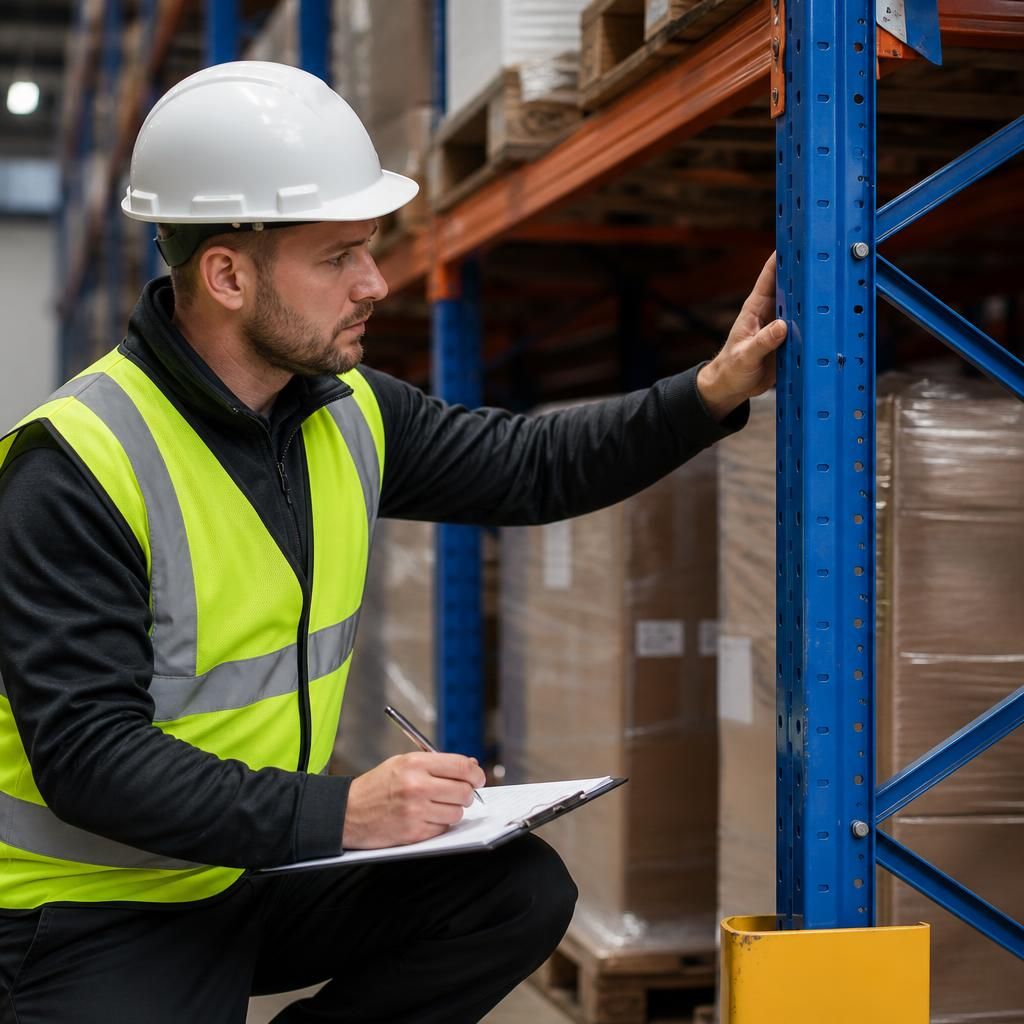
A formal warehouse racking inspection by a technically competent person should take place at least every 12 months, but an additional inspection is needed after any event that could affect structural safety. This includes forklift impact, visible damage, overloading, changes to the configuration, relocation, fire, flooding or unusual movement.
Until the affected area has been assessed, it may need to be isolated or unloaded. Inspection findings should be recorded clearly, with repairs or other corrective action completed without unnecessary delay. Regular visual checks by trained employees remain essential between formal inspections, particularly in busy areas where impact risks are higher.
Arrange your warehouse racking inspection
Contact Able Racking to arrange a warehouse racking inspection by a technically competent person. We can help you identify defects, prioritise remedial work and maintain a safe, compliant storage system.