
What specific skills will I acquire from the warehouse racking installation training?
Warehouse racking installation training develops practical skills in reading installation drawings, identifying components, using tools correctly, and assembling storage systems safely and accurately. You will also learn how to align and secure frames, install beams and protection, check stability, recognise defects, and work in accordance with relevant safety procedures and manufacturer guidance.
Warehouse racking installation training develops the practical and safety skills needed to assemble, position and secure warehouse racking correctly. You will learn how to interpret installation drawings, identify system components, select and use tools, build frames and beams accurately, install protection, check stability and complete installation records in line with manufacturer instructions and site safety requirements.
The course combines technical instruction with practical application. This helps you understand not only how warehouse racking is assembled, but also why accurate installation matters. Small errors in alignment, anchoring or component selection can affect the load capacity, stability and safe operation of the completed system.
Reading drawings and installation information
You will develop the ability to read warehouse racking layouts, elevation drawings and installation instructions. This includes identifying bay positions, frame locations, beam levels, access routes and specified protection. You will learn to compare the planned layout with the warehouse environment before work begins, helping to identify obstructions, uneven surfaces, access limitations or differences between the drawing and the actual site.
Training also covers the importance of checking that the proposed arrangement matches the available components and the intended load requirements. Where information is unclear or conditions differ from the plan, you will learn to stop, raise the issue with the appropriate person and obtain clarification rather than making an assumption.
Identifying warehouse racking components
A key skill is recognising the purpose and correct position of the main parts of a warehouse racking system. Depending on the system being installed, this can include frames, uprights, bracing, beams, connectors, baseplates, anchors, spacers, safety pins, row spacers, guards and other protective components.
You will learn to distinguish between components that may look similar but have different functions or load requirements. The training reinforces the need to inspect parts before use and to remove damaged, distorted or unsuitable components from the installation. Correct identification helps prevent incorrect assembly and supports the performance specified by the manufacturer.
Using tools and equipment safely
The training develops safe, controlled use of the hand tools, power tools and access equipment required for warehouse racking installation. You will learn to select the correct tool for the task, check its condition, use it according to instructions and store it safely when not in use.
Practical instruction normally includes safe techniques for fastening, drilling, levelling, measuring and tightening connections. You will also learn to manage trailing leads, work areas and materials so that tools and equipment do not create additional trip, impact or handling hazards.
Assembling frames and beams accurately
You will practise assembling upright frames, fitting bracing and installing beams in the correct sequence. This includes understanding how connectors engage, how safety pins or retaining devices are fitted and how each connection should be checked before the next stage of the installation.
Accuracy is essential. The course will help you develop reliable methods for measuring bay dimensions, maintaining consistent beam levels, checking upright spacing and confirming that the structure is square and plumb. You will learn that forcing components into position, overlooking a missing connection or continuing when the structure is out of alignment can create avoidable safety risks.
Levelling, alignment and anchoring
Another important skill is assessing whether the installed warehouse racking is correctly positioned in relation to the floor and surrounding layout. You will learn how to check vertical alignment, bay spacing, beam position and contact with the floor before the system is loaded.
Training also explains the role of baseplates and floor anchors, including the need to use the specified fixing method and follow the manufacturer’s requirements. You will develop an understanding of why unsuitable fixings, inadequate drilling or poor anchor placement can compromise stability. Any issue involving the floor, fixings or structural condition should be referred for appropriate technical review.
Installing protection and safety features
You will learn how to fit the protective equipment specified for the installation, such as upright guards, end-of-aisle protection and other impact protection. The practical focus is on positioning protection where it can reduce the likelihood or severity of damage from workplace vehicles and handling activity.
The course also covers checking that safety pins, retaining devices and other required features are present and correctly fitted. Protection is not a substitute for good operating practice, so you will also learn why clear aisles, suitable vehicle movements and prompt reporting of impact damage remain essential.
Applying safe working procedures
Warehouse racking installation training strengthens your ability to work in accordance with risk assessments, method statements, site rules and relevant health and safety requirements. You will learn to prepare the work area, establish suitable exclusion zones, control access and maintain clear communication with other people working nearby.
Practical safety skills include using appropriate personal protective equipment, applying safe manual handling techniques and recognising hazards associated with lifting, stored materials, workplace transport and work at height. You will also learn when work must stop, such as when conditions become unsafe, equipment is defective or the installation does not match the approved information.
Inspecting work and identifying defects
A competent installer must be able to check their own work rather than relying solely on a final inspection. You will develop a systematic approach to inspecting connections, bracing, anchors, alignment, protection and component condition during and after installation.
The training helps you recognise common defects, including damaged uprights, missing safety devices, incorrectly seated beams, loose fixings, unsuitable components and poor alignment. You will learn to record issues clearly and report them through the correct process. Defective work should be corrected or assessed by a suitably competent person before the warehouse racking is put into service.
Solving practical installation problems
Installation rarely takes place in completely ideal conditions. You will develop problem-solving skills for situations such as restricted access, discrepancies in component quantities, uneven floors, damaged parts or differences between the planned layout and the warehouse.
The correct approach is to assess the problem, protect people in the area and refer to the approved information or a suitably qualified supervisor. Training reinforces that installers should not improvise structural alterations, substitute unapproved components or modify the design without authorisation.
Documenting and communicating completed work
You will also gain skills in completing installation checklists, recording outstanding items and communicating the status of the work. Clear records provide evidence of the checks carried out and help ensure that any unresolved issue is dealt with before handover.
Effective communication is particularly important when coordinating with supervisors, site managers, delivery teams and warehouse operatives. You will learn to explain hazards, report damage and confirm when an area is ready for use. These skills support a controlled handover and help the customer maintain the system safely after installation.
By the end of the training, you should have a structured method for planning the work, assembling the system, checking its condition and escalating anything outside your competence. The emphasis is on accurate installation, safe decision-making and compliance with the supplied design and manufacturer guidance. Practical assessment and tutor feedback can then identify any areas requiring further instruction or supervised experience before you undertake installation work independently.
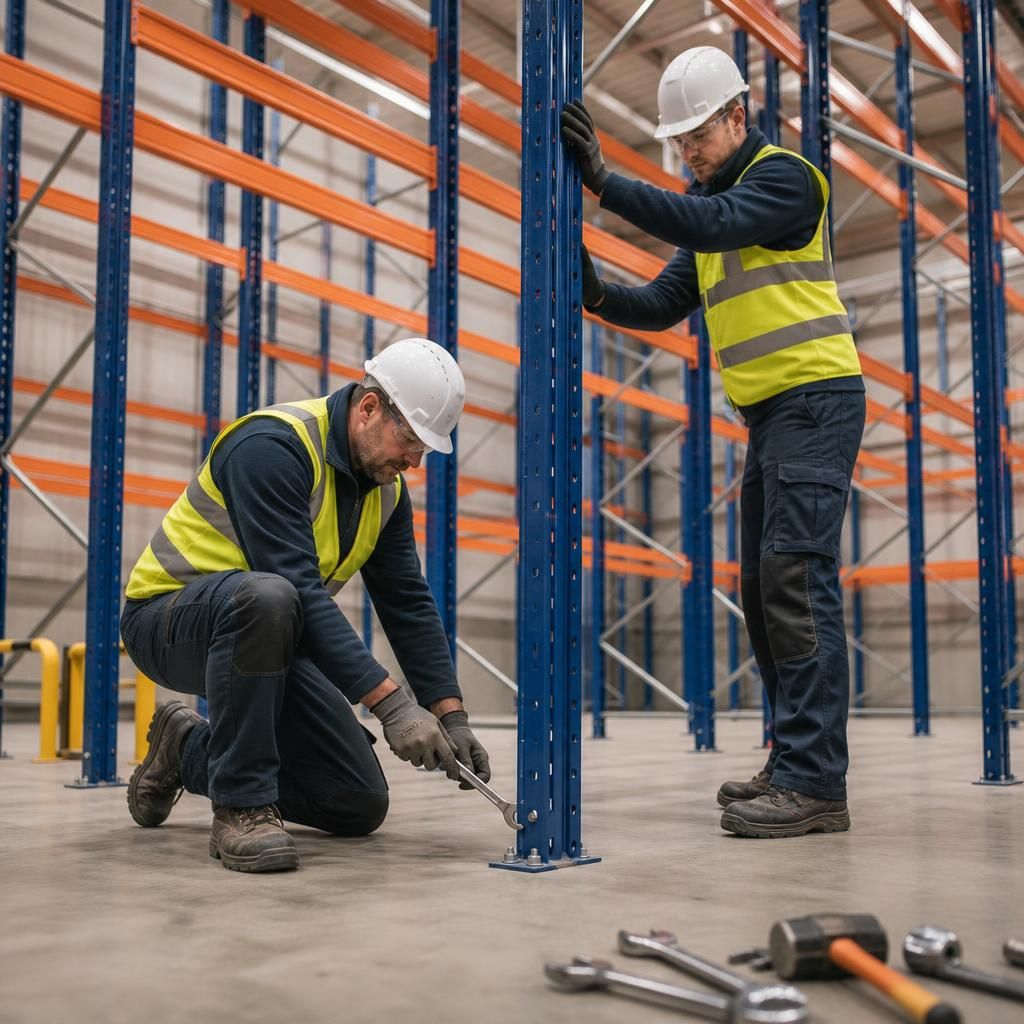
A key skill developed during warehouse racking installation training is the ability to verify that an installation matches the approved drawings, component specifications and site conditions before the system is put into use.
You will learn to check bay positions, frame alignment, beam levels, bracing, anchors, safety devices and protective equipment in a planned sequence. This includes identifying damaged or unsuitable components, recognising differences between the drawing and the warehouse, and checking that the structure is level, plumb and securely fixed.
Where conditions are unsuitable or the installation does not match the approved information, training reinforces the need to stop work, protect the area and report the issue to a competent supervisor. You will not be expected to improvise structural alterations or substitute unapproved components. This practical judgement helps ensure warehouse racking is installed accurately and safely.
Enrol on warehouse racking installation training
Enrol on warehouse racking installation training to develop the practical skills needed for safe, accurate and compliant installation. Contact Able Racking to discuss the most suitable course for your team.