
What practical skills are developed during warehouse racking installation training?
Warehouse racking installation training develops practical skills in safe fitting, levelling, anchoring and configuring warehouse racking systems. It also builds competence in reading installation plans, using tools correctly, identifying defects and carrying out checks to confirm the completed installation is stable, compliant and ready for use.
Warehouse racking installation training develops the practical ability to plan, assemble, secure and check storage systems safely. The main skills include interpreting layout drawings, identifying components, using installation tools correctly, achieving accurate alignment and level, installing anchors and protection, and completing checks before the system is handed over for use.
Reading installation information
Operatives learn how to follow layout drawings, installation instructions and load information. This includes identifying bay positions, frame locations, beam levels, bracing arrangements, access clearances and any specified protection. Training also helps installers recognise when the information on site does not match the approved plan, so work can be paused and the issue referred to a competent person rather than resolved through guesswork.
Identifying and handling components
A practical course develops familiarity with the parts used in warehouse racking systems, including upright frames, beams, bracing, connectors, baseplates, anchors, safety pins and protection equipment. Installers learn to check components for damage, confirm that the correct parts are being used and position them without creating avoidable handling or stability risks.
Using tools and equipment safely
Training covers the correct selection and use of hand tools, measuring equipment, levels, torque equipment and access equipment relevant to the installation. The emphasis is on following manufacturer instructions, checking equipment before use and using tools in a controlled manner. Where lifting equipment or powered access is required, installers must work within their authorisation and the site’s safe system of work.
Assembling frames and beam levels
Installers practise assembling frames in the correct sequence and fitting beams securely into their connectors. They learn how to confirm that locking devices are properly engaged, that bracing is positioned as specified and that the structure is temporarily supported while the installation progresses. Correct sequencing is important because an incomplete system may not have its final stability or load-bearing characteristics.
Levelling, alignment and positioning
Accurate measurement is a core practical skill. Training shows how to check upright plumb, bay dimensions, beam levels, aisle alignment and clearances. Installers learn to identify deviations early and make suitable adjustments before the system is fixed permanently. This helps prevent uneven loading, difficult access and problems when adjoining bays or protective equipment are installed.
Anchoring and securing the system
Warehouse racking installation training develops competence in positioning baseplates, drilling where required and fitting the specified anchors in accordance with the design and manufacturer’s instructions. It also covers checking the substrate, keeping fixings free from obstruction and confirming that the completed installation is secure. The correct fixing method depends on the system, floor construction and design requirements, so installers should never substitute anchors or alter details without approval.
Fitting protection and associated safety equipment
Installers learn how to fit the protection specified for the layout, such as upright guards, end-of-aisle protection, barriers and other impact protection. They also develop the ability to check that protection does not obstruct access, interfere with doors or services, or reduce the required operating clearance. Load notices and other safety signs must be positioned where they are visible and relevant to the installed arrangement.
Recognising defects and unsuitable conditions
Practical training teaches installers to distinguish between acceptable installation tolerances, incomplete work and defects that require corrective action. Examples include damaged uprights or beams, missing locking devices, distorted components, loose fixings, incorrect bracing, unsuitable floor conditions and obstructions affecting the planned layout. The key skill is knowing when not to continue and how to record and report the issue clearly.
Carrying out installation checks
Before handover, installers learn to complete systematic checks against the approved layout and installation requirements. These checks may include component selection, beam engagement, bracing, anchorage, alignment, protection, signage, access routes and housekeeping. Clear records, photographs and defect reports provide useful evidence of what was inspected and what actions remain outstanding.
Applying safe working practices
The course develops practical awareness of exclusion zones, falling-object risks, manual handling, temporary stability, work at height and vehicle movements around the installation area. Installers practise coordinating with site management and other contractors, maintaining clear communication and stopping work when conditions become unsafe. These behaviours are as important as the physical assembly skills because installation work often takes place in active industrial environments.
Working efficiently without compromising quality
Experienced instruction also helps installers organise components, prepare tools, follow a logical installation sequence and reduce unnecessary movement. Efficiency should come from preparation and consistent methods, not from omitting checks or rushing fixings. A well-organised installation makes defects easier to identify and supports a cleaner, safer handover.
By the end of warehouse racking installation training, a learner should be able to contribute competently to an installation under the level of supervision appropriate to their experience and authorisation. They should understand the limits of their role, follow the approved design, raise deviations promptly and leave the completed system ready for the required inspection and approval process. Ongoing refresher training, supervision and regular workplace checks help maintain these practical skills.
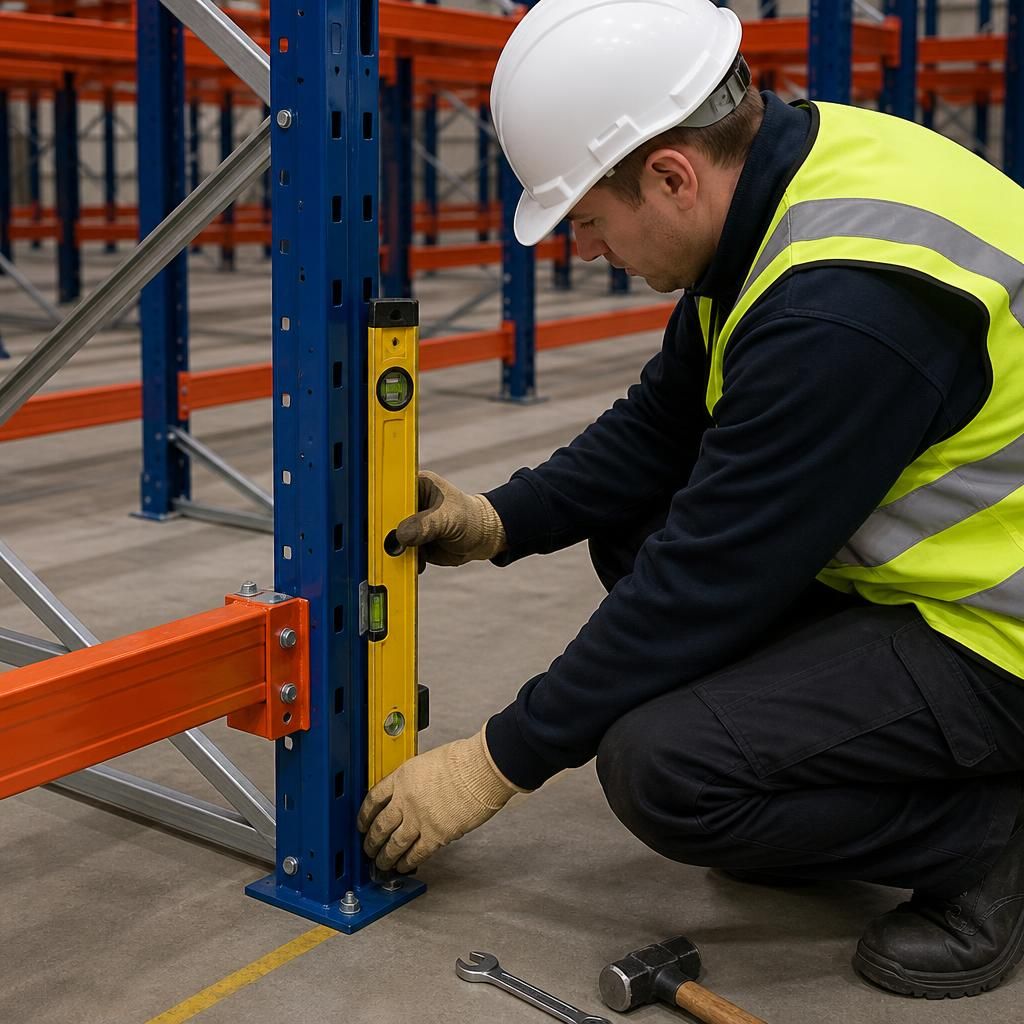
One of the most important practical skills developed during warehouse racking installation training is accurate alignment and levelling. Installers learn to check upright plumb, bay dimensions, beam heights, aisle clearances and the position of each frame against the approved layout before permanent fixing.
This process also includes fitting the specified baseplates and anchors correctly, checking that fixings are secure and reporting unsuitable floor conditions or damaged components. Identifying and correcting deviations during installation helps prevent stability, loading and access problems at handover.
Book Warehouse Racking Installation Training
Contact Able Racking to discuss warehouse racking installation training for your team and identify the most suitable course for your site requirements. Our experienced trainers can help you build practical competence in safe assembly, fitting, inspection and handover procedures.