
What specific safety certifications or accreditations do the trainers possess for conducting warehouse racking installation training sessions?
Able Racking’s warehouse racking installation training is delivered by experienced, competent practitioners who work to current SEMA guidance, manufacturer installation instructions and UK health and safety requirements, with relevant training and instructor credentials verified for each course. Where sessions involve specialist activities such as powered access or work at height, the trainer’s applicable accreditation and competence are confirmed before delivery.
Able Racking’s warehouse racking installation training is delivered by experienced, competent practitioners whose qualifications and practical experience are matched to the course content. There is no single statutory certificate that covers every warehouse racking installation trainer. Instead, competence is demonstrated through relevant industry training, instructor capability, knowledge of current safety requirements and recent practical experience. The specific credentials held by the trainer are checked against the work activities covered before each session.
Trainer competence is assessed in relation to the following areas:
- Warehouse racking installation knowledge: practical experience of assembling, aligning, securing and inspecting storage systems in accordance with the manufacturer’s instructions, design information and current SEMA guidance.
- Health and safety training: appropriate knowledge of risk assessment, method statements, safe systems of work, manual handling, lifting operations, workplace transport and control of work at height.
- Instructional competence: the ability to explain installation procedures clearly, demonstrate safe techniques, supervise practical exercises and assess whether participants can complete tasks safely and correctly.
- Site-based experience: familiarity with the conditions found in working warehouses, including restricted access, shared vehicle and pedestrian routes, live operations, uneven floors and coordination with other contractors.
- Equipment-specific competence: additional evidence of training is required where the course involves powered access equipment, access towers, lifting equipment or other specialist tools.
Where powered access equipment forms part of the practical session, the relevant operator or instructor credentials, such as appropriate IPAF categories, are confirmed for the equipment being used. Where a mobile access tower is involved, applicable PASMA training is considered. These accreditations are activity-specific; they do not replace the trainer’s warehouse racking installation competence.
Trainers also work from the current installation instructions for the system being taught. This is important because frame dimensions, connection details, bracing arrangements, beam locking methods and permitted tolerances can vary between manufacturers and product ranges. A competent trainer should therefore be able to explain both the general principles of safe installation and the specific requirements of the equipment on the course.
Before delivery, Able Racking confirms that the trainer’s experience, qualifications and any specialist accreditations are suitable for the course scope, site conditions and equipment involved. Course records can identify the trainer, the subjects covered, practical observations and any further instruction required. This provides a clear record that participants were trained by a suitably competent person and that safety-critical activities were not treated as a generic classroom exercise.
Participants should distinguish between a trainer’s personal competence and an accreditation held by a training provider. A provider’s quality approval may demonstrate that its processes have been assessed, but it does not by itself prove that an individual can safely supervise warehouse racking installation. Able Racking therefore considers the trainer’s practical background, technical knowledge, teaching ability and task-specific credentials together.
For a particular course, customers can ask for confirmation of the trainer’s relevant qualifications, the standards and manufacturer instructions used, and any specialist equipment accreditation required. This is especially useful where the training is being delivered on a live site or includes work at height, lifting activities or powered access. The final course arrangements should always reflect the site risk assessment and the equipment that participants will actually use.
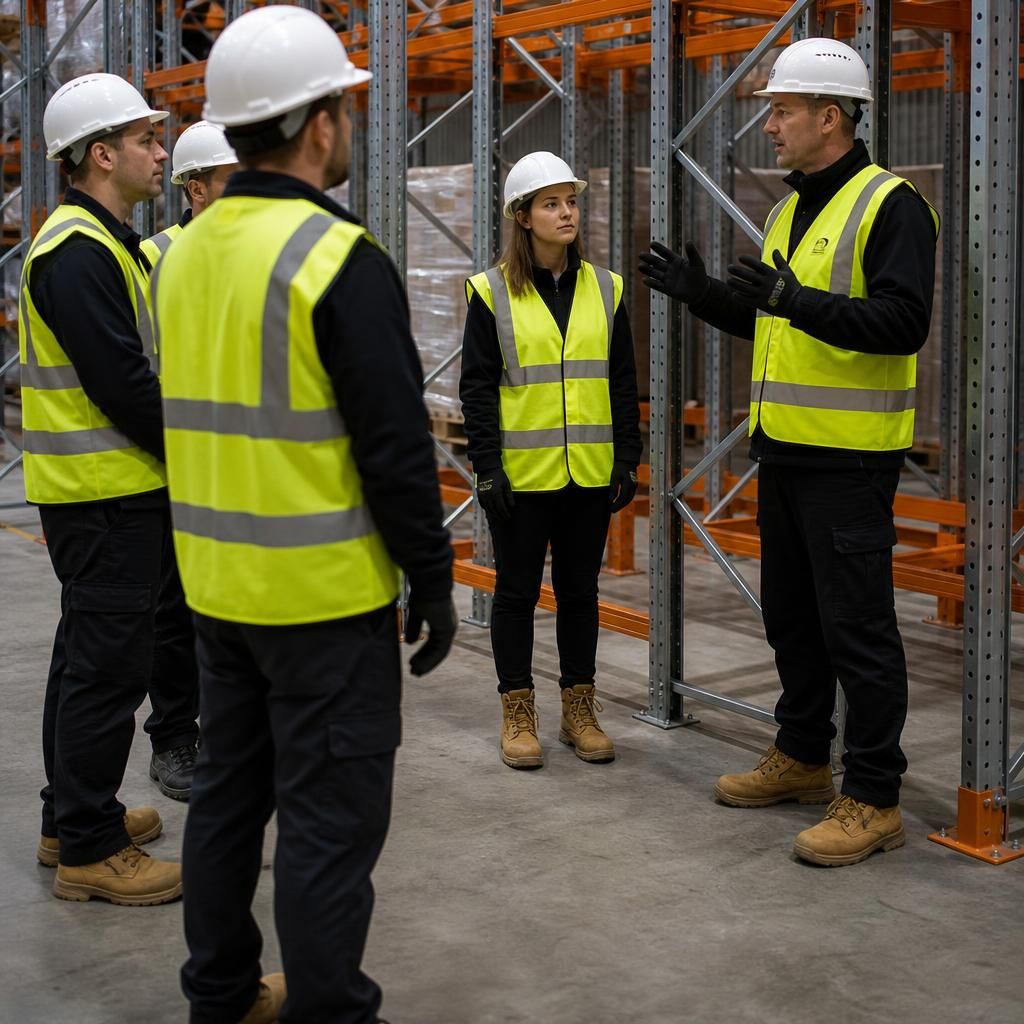
Trainer competence for warehouse racking installation training combines practical installation experience with the qualifications required for the activities being taught. Able Racking verifies that each trainer understands current SEMA guidance, manufacturer installation instructions and relevant UK health and safety requirements, and can demonstrate safe installation methods in a working warehouse environment.
Additional accreditation is confirmed where specialist equipment or activities are included. For example, powered access training requires the relevant IPAF category, while mobile access tower work may require PASMA training. These activity-specific credentials complement, but do not replace, the trainer’s technical knowledge and experience of warehouse racking installation.
Discuss your warehouse racking installation training requirements
Discuss your warehouse racking installation training requirements with Able Racking to confirm the appropriate trainer competence, course content and any specialist accreditations needed for your site.