
What specific installation techniques are covered in the warehouse racking installation training sessions at Able Racking?
Able Racking’s warehouse racking installation training covers safe system assembly, frame and beam fitting, bracing, anchoring, alignment, load identification and post-installation checks. Sessions combine practical instruction with inspection and handover techniques, helping teams install warehouse racking accurately, safely and in line with the manufacturer’s guidance and applicable requirements.
Able Racking’s warehouse racking installation training covers the practical techniques needed to assemble, position, secure and check warehouse racking systems correctly. Training typically combines instructor demonstration, supervised hands-on work and verification of the completed installation, with emphasis on the manufacturer’s instructions, the approved layout and applicable safety requirements.
Understanding the installation information
Before assembly begins, trainees learn how to interpret the information that controls the installation. This includes the warehouse racking layout, component schedules, load information, installation instructions and any relevant risk assessments or method statements. The session explains why installers must confirm that the supplied components match the approved design and identify damaged, missing or incompatible parts before work starts.
Participants are also shown how to recognise the main components of a warehouse racking system, including frames, uprights, beams, bracing, baseplates, safety locks, protectors and associated accessories. Understanding the purpose and correct orientation of each component helps prevent assembly errors and makes later checks more reliable.
Safe preparation and work planning
Good installation starts with controlling the work area. Training covers setting out an exclusion zone, keeping access routes clear, coordinating activities with warehouse operations and checking that the floor and surrounding area are suitable for the planned work. Trainees learn to identify hazards such as vehicle movements, overhead obstructions, uneven surfaces, stored goods and unauthorised access.
The course also addresses safe handling practices. This includes planning how components will be moved, avoiding unstable temporary storage and using appropriate lifting equipment or handling methods. The trainer explains how communication between the installation team and other site personnel reduces the risk of dropped components, collisions and premature loading.
Frame assembly and bracing
Practical instruction covers the correct sequence for assembling upright frames and fitting horizontal and diagonal bracing. Trainees learn how to distinguish the front and rear of a frame, position bracing correctly and secure connections without forcing components into place. The training reinforces the need to use the specified components and fixings rather than substituting parts that appear similar.
Installers are shown how to check that connections are fully engaged and that frame members have not been distorted during handling. Where the system uses proprietary locking arrangements, the session demonstrates how to confirm that locks, pins or retainers are correctly fitted and seated.
Beam fitting and connection checks
Beam installation is covered as a controlled process rather than simply lifting beams into position. Trainees practise fitting beams at the correct levels, engaging the end connectors fully with the uprights and installing the required safety locks or retaining devices. They learn how to check that each connection is secure before the frame is left unsupported or the next bay is added.
The training also explains how beam levels and bay dimensions affect the intended storage arrangement. Incorrect positioning can reduce clearance, alter the available load capacity or prevent accessories from fitting correctly. For that reason, installers are taught to compare the assembled structure with the approved layout throughout the work, not only at the end.
Setting out, alignment and levelling
Accurate setting out is essential for a stable and usable warehouse racking installation. Sessions cover marking out bay positions, maintaining the required aisle widths and checking that runs are located correctly in relation to walls, doors, columns, fire equipment and other site features.
Trainees learn how to check plumb, level and alignment using suitable measuring equipment. They are shown how to identify an out-of-plumb frame, a misaligned run or an inconsistent bay dimension, and how to rectify the issue before continuing. The course stresses that adjustment should follow the approved installation method; installers must not improvise by drilling, cutting or altering structural components without authorisation.
Anchoring and floor fixing
Where floor anchoring is required, the training covers the correct positioning and installation of anchor fixings in accordance with the system design and manufacturer’s instructions. This includes checking the fixing type, drilling location, embedment requirements and the condition of the supporting floor before work proceeds.
Participants are taught to keep drilled holes clean, install fixings correctly and complete any required tightening or verification checks using suitable equipment. The trainer also explains why damaged fixings, unsuitable substrates and obstructions such as embedded services must be reported rather than worked around without approval.
Protective components and accessories
Installation training includes the fitting and checking of components designed to protect the structure or improve safe operation. Depending on the system, these may include upright protectors, end-of-run protection, row spacers, decking, safety barriers, mesh panels and other approved accessories.
Trainees learn to position accessories so that they do not obstruct load placement, reduce required clearances or interfere with doors, sprinklers, lighting or handling equipment. The trainer also covers checking that decking and support members are properly seated and suitable for the intended stored loads.
Load information and storage configuration
Correct installation must be followed by correct identification of the system’s intended use. Training explains how to locate and read load notices, confirm beam and bay arrangements and ensure that the completed warehouse racking matches the configuration for which it was designed. Installers are taught not to guess load limits or approve changes based on appearance alone.
The session may also cover the relationship between beam levels, pallet dimensions, clearances and handling equipment. Any proposed change to the layout, component type or loading arrangement should be referred to the responsible person or competent designer for review before implementation.
Inspection, defect recognition and handover
Post-installation checks form an important part of the practical training. Trainees work through a structured inspection covering frame condition, bracing, beam connections, locks, anchors, alignment, clearances, protection and accessories. They learn to identify defects such as bent components, incomplete connections, missing fixings, damaged coatings, unsuitable modifications and signs that the structure is not installed to the approved arrangement.
The final technique is accurate recording and handover. Training explains how to document outstanding defects, prevent use of incomplete areas and provide the relevant installation and load information to the responsible site team. This creates a clear point at which the warehouse racking can be reviewed and accepted for use, subject to the required checks.
Throughout the session, Able Racking’s trainers reinforce that installation work must be carried out by competent personnel, using the correct equipment and following the approved instructions. Practical exercises allow techniques to be corrected at the point of work, helping participants develop a consistent method for safe, accurate and compliant warehouse racking installation.
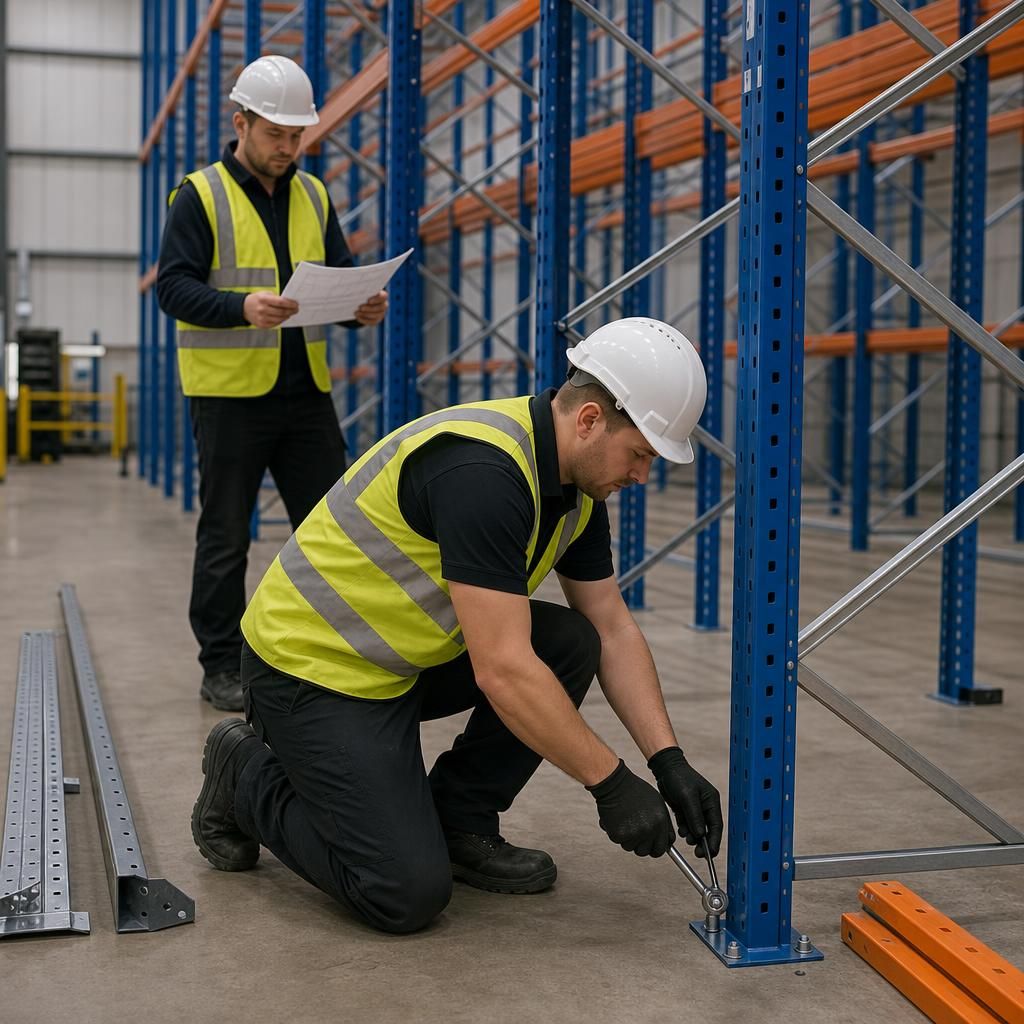
Accurate setting out, alignment and levelling are essential installation techniques covered in Able Racking’s warehouse racking training. Trainees learn to position each bay against the approved layout, maintain the required aisle clearances and check that frames and runs are plumb, level and correctly aligned before fixing work is completed.
Practical exercises show how to use suitable measuring equipment to identify uneven floors, inconsistent bay dimensions and out-of-plumb frames. Participants are taught to correct permitted adjustments in accordance with the manufacturer’s instructions, while reporting problems that require design approval rather than drilling, cutting or altering structural components without authorisation.
The training also covers floor anchoring where it is specified for the warehouse racking system. This includes checking the fixing type, drilling locations, embedment requirements and floor condition, followed by correct installation and tightening. These checks help ensure the completed installation matches the approved design and is ready for the required inspection before use.
Discuss Your Warehouse Racking Installation Training Requirements
Discuss your warehouse racking installation training requirements with Able Racking to identify the practical techniques and site-specific topics your team needs to cover.