
What is the role of ongoing support and aftercare services following warehouse racking installation training?
Ongoing support and aftercare following warehouse racking installation training help reinforce safe working practices, resolve installation questions and identify issues before they affect people or operations. This may include practical guidance, inspections, maintenance advice, refresher training and prompt support with remedial work to help keep warehouse racking safe, compliant and efficient.
Ongoing support and aftercare following warehouse racking installation training help convert the training into consistent workplace practice. They provide a route for resolving installation queries, checking that procedures are being followed, identifying defects or changes that could affect safety, and maintaining the competence needed to keep warehouse racking compliant and efficient.
Training establishes the principles of safe installation, but competence develops through supervised application and continued review. Aftercare gives trained operatives access to practical guidance when conditions differ from the examples covered during the session. This may include advice on interpreting installation instructions, selecting suitable tools, checking component compatibility, following the approved installation sequence and dealing with unexpected site conditions.
Key elements of effective aftercare include:
- Technical guidance: Support with installation questions, manufacturer instructions, anchoring requirements, tolerances, bracing and the correct use of components.
- Workplace observation: Reviewing installation activities to confirm that safe methods are understood and applied consistently, rather than relying solely on a classroom assessment.
- Inspection and defect reporting: Helping the responsible person recognise damage, missing components, loose fixings, instability, overloading risks and other conditions requiring action.
- Remedial support: Providing a clear process for isolating unsafe areas, obtaining suitable replacement parts and arranging competent repairs where required.
- Refresher training: Reinforcing knowledge where there has been a long gap between installations, a change in personnel, repeated errors or an update to working methods.
- Records and traceability: Maintaining evidence of training, inspections, reported defects, repairs and follow-up actions so that the business can demonstrate effective control.
Aftercare is particularly important when warehouse racking is installed in a live warehouse. Traffic routes, pedestrian movements, forklifts, lighting, floor conditions and nearby operations can all affect how installation work is planned and controlled. A follow-up review can confirm that the completed installation matches the approved layout, that access and protection arrangements remain suitable, and that no later operational change has introduced a new risk.
Inspection and maintenance advice
Installation training should be followed by a defined inspection and maintenance process. Employees should know how to report visible damage immediately and understand when an affected bay or area must be taken out of use. The responsible person should ensure that inspections are carried out by someone with suitable knowledge and experience, with findings recorded and corrective actions followed through.
Routine checks may identify issues such as bent frames, damaged beams, displaced safety components, missing locking pins, loose anchors, impact damage or signs that the warehouse racking is being used outside its design limits. Not every issue can be assessed safely by an untrained employee. Where the cause, severity or required repair is uncertain, the area should be controlled and referred to a competent specialist. Damaged components should not be straightened, welded or improvised unless an appropriate repair method has been formally specified.
Support when circumstances change
Warehouse racking should be reassessed when the layout, load pattern, equipment or working method changes. Examples include introducing different pallets, storing heavier or larger loads, changing beam levels, altering forklift routes, extending an installation or relocating components. These changes can affect capacity, clearances, stability and the suitability of existing protection measures.
Aftercare support helps trained personnel recognise that an installation should not be altered informally. Before changes are made, the proposed arrangement should be checked against the design information, manufacturer requirements and relevant workplace safety duties. Updated load notices, drawings, inspection records and operating instructions should be provided where appropriate.
Refresher training and competence checks
Refresher training is useful when operatives have not installed warehouse racking for some time, when new equipment or components are introduced, or when inspections show recurring mistakes. It can focus on the specific weakness rather than repeat every part of the original course. Practical reassessment may cover component identification, safe handling, sequencing, securing fixings, checking tolerances and recognising when work must stop.
Managers should also consider whether the person carrying out the work has the appropriate experience for the installation involved. Completing a course does not remove the need for supervision, suitable equipment, clear instructions and competent management of site risks. Aftercare provides an opportunity to confirm that training remains relevant to the work actually being undertaken.
How Able Racking can support the process
A practical aftercare arrangement can combine technical advice, warehouse racking inspections, maintenance recommendations, remedial work and targeted refresher training. Able Racking’s experienced operatives can help review concerns identified after training, explain suitable next steps and support the responsible person with clear documentation. Where a repair or alteration is needed, the work should be planned around the condition of the installation and completed using appropriate components and methods.
The most effective approach is preventative. Keep installation and inspection records together, make reporting routes clear, investigate repeated damage, review working practices after significant changes and arrange professional advice whenever the condition or design of warehouse racking is uncertain. This reduces the likelihood that a minor defect, knowledge gap or unauthorised alteration will develop into a serious safety or operational problem.
Ongoing support therefore extends the value of warehouse racking installation training beyond the original session. It reinforces safe behaviour, provides technical reassurance, supports compliance with workplace responsibilities and helps maintain the structural condition and operational performance of the storage system throughout its service life.
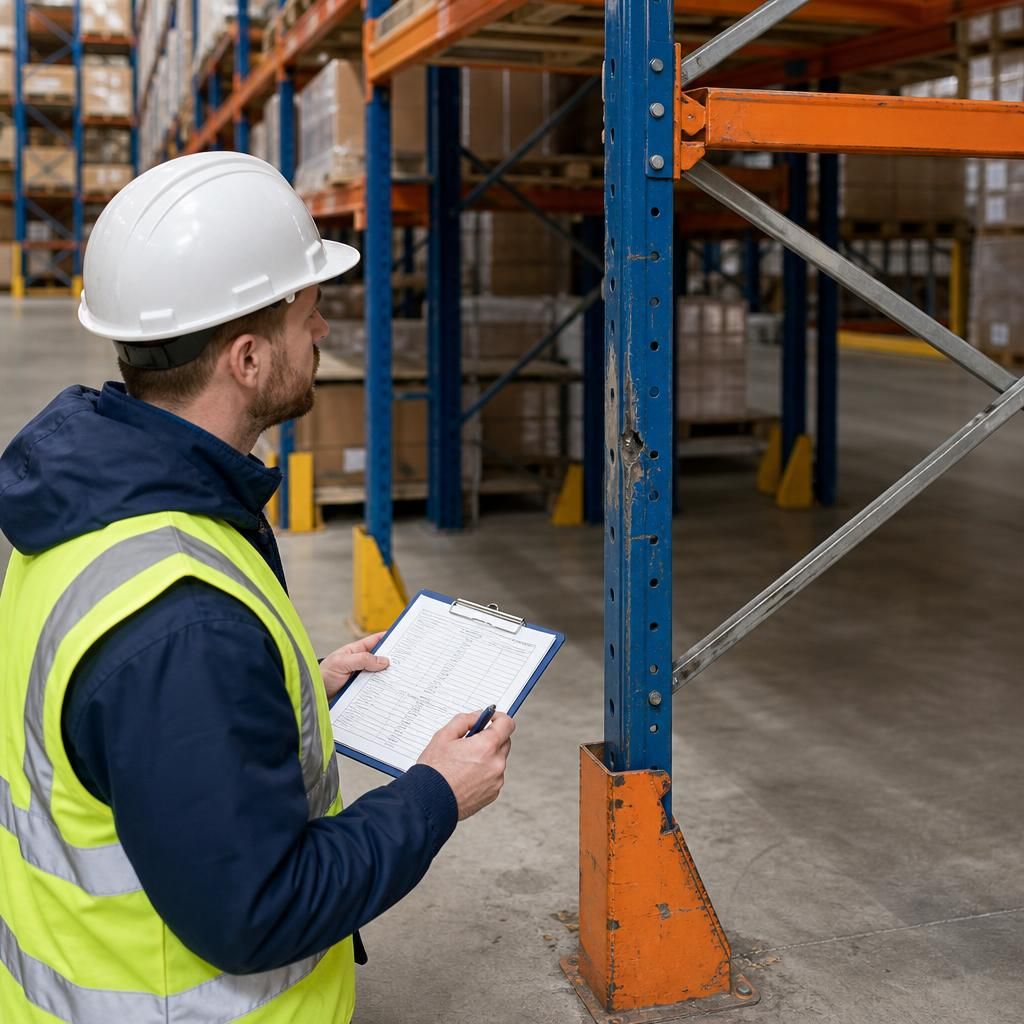
Inspection and maintenance support is a key part of aftercare following warehouse racking installation training. It helps trained operatives recognise damage, missing components, loose fixings, instability and signs that the storage system may be outside its design limits.
After training, employees should understand how to report visible defects promptly and when to isolate an affected area. A competent person can then assess the condition, record the finding and arrange an appropriate repair or replacement. Components should not be straightened, welded or improvised unless a suitable repair method has been formally specified.
Able Racking can provide practical guidance on inspection findings, maintenance requirements and remedial action. This continued support helps turn training into consistent workplace practice and keeps warehouse racking safe, compliant and operationally effective.
Discuss Your Warehouse Racking Installation Training Aftercare
Discuss your warehouse racking installation training aftercare with Able Racking to review ongoing support, inspections, refresher training or remedial requirements. Our experienced team can help you plan the appropriate next steps for maintaining safe, compliant warehouse racking.