
What are the benefits of completing a warehouse racking installation training programme?
Completing a warehouse racking installation training programme helps installers plan and carry out work more safely, accurately and efficiently. It supports compliance with relevant workplace safety requirements, improves practical installation skills and helps reduce avoidable errors, damage and delays during warehouse racking projects.
Completing a warehouse racking installation training programme gives installers the knowledge and practical skills to plan, assemble and check storage systems safely and accurately. It helps participants understand installation instructions, identify hazards, use tools correctly, apply suitable control measures and recognise when work must stop or be referred to a competent person. The result is a safer installation process, fewer avoidable errors and a more reliable warehouse racking system.
Training is particularly valuable because warehouse racking installation involves more than connecting structural components. Installers must interpret technical information, prepare the work area, handle heavy components, maintain stability during assembly and confirm that the completed system is suitable for its intended use. A structured programme brings these activities together into a consistent method of work.
- Improved safety during installation: Participants learn how to identify risks associated with lifting, working at height, moving vehicles, falling components, unstable partially assembled sections and interaction with other warehouse activities. They can then apply controls such as exclusion zones, suitable lifting methods, appropriate personal protective equipment and safe sequencing of the work.
- Better understanding of installation instructions: Training helps installers follow the manufacturer’s specifications, layout drawings, component schedules, connection details and anchoring requirements. This reduces the risk of using the wrong components, omitting fixings or making unapproved changes to the design.
- More accurate assembly: Practical instruction develops the ability to set out frames and beams correctly, check alignment and plumb, install bracing and protectors, and tighten or secure connections as specified. Accurate assembly supports the intended strength and stability of the finished warehouse racking system.
- Reduced damage and rework: Correct handling and installation techniques help prevent damage to frames, beams, braces, anchors, floors and protective equipment. Identifying mistakes at the right stage avoids unnecessary dismantling, replacement components and delays to the wider project.
- More efficient project delivery: Trained installers are better prepared to organise tools, materials and work sequences before installation begins. This can reduce interruptions, improve coordination with warehouse personnel and make it easier to progress work without compromising safety or quality.
- Stronger hazard awareness: Training encourages installers to assess the actual conditions on site rather than relying solely on a standard method. Floor condition, access restrictions, lighting, traffic routes, storage activities and changes to the approved layout may all affect how the work should be completed.
A further benefit is improved understanding of individual responsibilities. Everyone involved should know who is supervising the work, who is authorised to make technical decisions, how defects are reported and when specialist advice is required. Installation training does not replace the need for competent design, suitable equipment, site supervision or compliance with the manufacturer’s instructions. It supports those arrangements by giving operatives the practical competence needed to carry out their assigned tasks safely.
Training also supports compliance with relevant UK workplace safety duties. Depending on the work involved, this may include requirements relating to risk assessment, safe systems of work, work equipment, lifting operations, personal protective equipment and work at height. Participants should understand that a training certificate alone does not prove that an installation is safe or compliant. The completed system must still be inspected, documented and managed in accordance with the design, manufacturer’s guidance and applicable workplace requirements.
Practical exercises are an important part of an effective programme. They allow participants to practise setting out, component identification, connection methods, anchoring, bracing, protection and inspection under competent supervision. Practical feedback can reveal issues that are less obvious in classroom learning, such as poor sequencing, unsafe positioning, incorrect tool use or failure to verify alignment before continuing.
Installation training can also improve communication between installers, supervisors, warehouse managers and end users. A shared understanding of terminology, drawings, load information and defect reporting makes it easier to resolve questions before they become installation problems. It also helps warehouse staff understand the limits of the completed system and the importance of reporting impact damage, missing components or other changes promptly.
For existing teams, training provides an opportunity to standardise working practices and address gaps identified through previous projects, inspections or near-miss reviews. For new installers, it establishes a structured foundation before they undertake work under supervision. In both cases, competence should be maintained through suitable supervision, experience, refresher instruction where necessary and ongoing review of working methods.
The main benefits can be summarised as safer working, more consistent quality, improved efficiency and better control of installation risks. When training is combined with a suitable design, competent supervision, correct equipment, thorough handover information and regular warehouse racking inspections, it helps protect people and supports the long-term performance of the storage system.
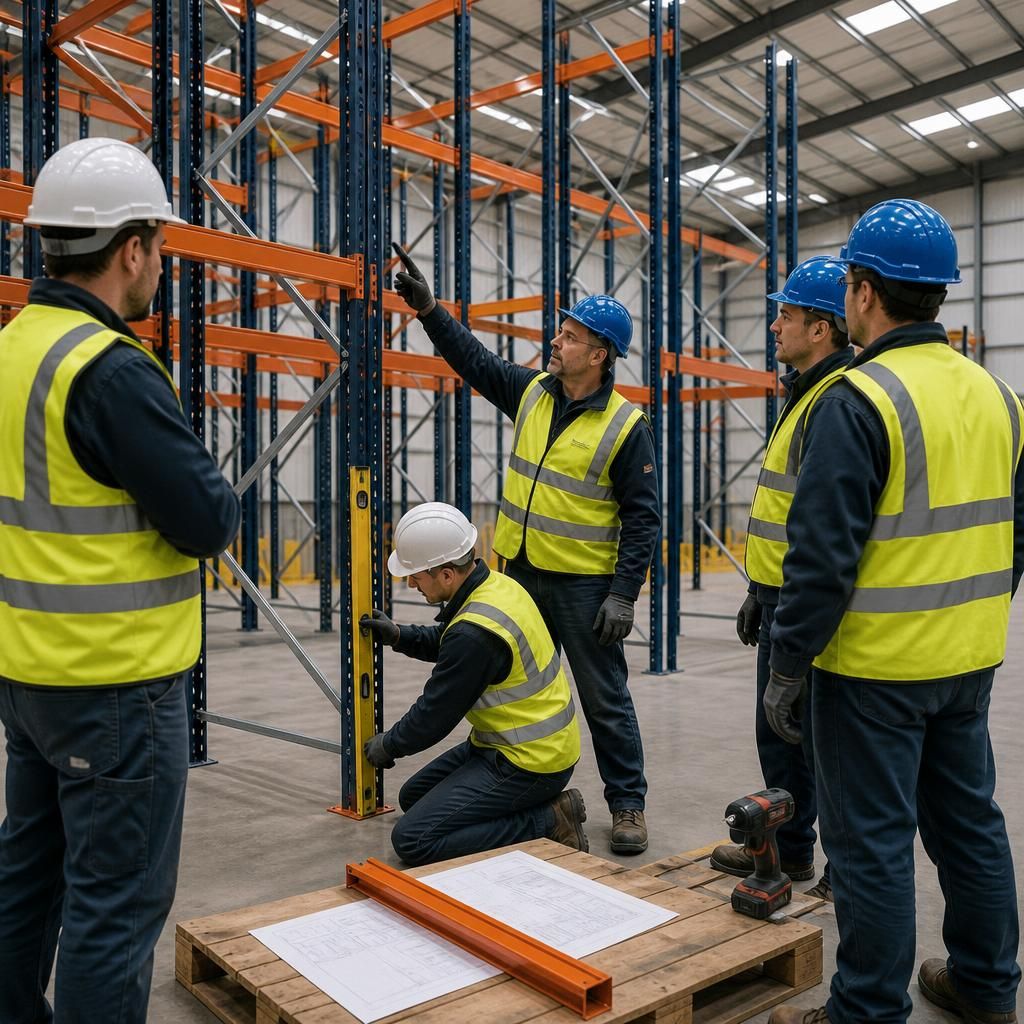
Warehouse racking installation training improves proficiency by combining technical instruction with supervised practical work. Participants learn to identify components, follow layout drawings, position frames and beams, install bracing and protection, and check alignment before the next stage begins.
Practical exercises also help installers recognise errors that may be missed in classroom learning, such as incorrect sequencing, loose connections, poor positioning or unsuitable tool use. Competent feedback allows these issues to be corrected immediately, helping teams develop consistent methods and complete installations safely, accurately and in accordance with the manufacturer’s instructions.
Discuss your warehouse racking installation training needs
Discuss your warehouse racking installation training needs with Able Racking to identify the most suitable programme for your team, experience level and site requirements.