
How does practical training enhance proficiency in warehouse racking installations?
Practical training enhances proficiency in warehouse racking installations by combining technical instruction with supervised, hands-on work, helping installers apply correct procedures accurately and safely. It builds confidence in equipment use, component positioning, connection methods and quality checks, reducing avoidable errors and supporting compliant, efficient installations.
Practical training enhances proficiency in warehouse racking installations by turning technical guidance into supervised, repeatable work. Participants learn how to identify components, interpret installation information, use tools correctly, position and secure the structure, and complete quality checks before the installation is handed over. This combination of instruction and controlled practice improves accuracy, reinforces safe working habits and helps installers recognise problems before they affect the finished system.
Classroom or online learning can explain installation principles, but practical sessions show how those principles apply on site. Under the guidance of an experienced trainer, participants can practise tasks in the correct sequence and receive immediate feedback. This is particularly valuable where small errors in alignment, connection, anchoring or inspection could affect the stability, usability or compliance of the warehouse racking.
- Component recognition: Installers handle and identify frames, beams, bracing, connectors, guards, anchors and other system components. Understanding the purpose and correct orientation of each part reduces the risk of incorrect assembly.
- Reading installation information: Practical exercises help participants use manufacturer instructions, layout drawings, load information and relevant project details while carrying out the work, rather than treating the documentation as a separate theory exercise.
- Correct assembly techniques: Trainers demonstrate how to position components, form secure connections, check frame alignment and follow the specified installation sequence. Participants then repeat the process under supervision until it is performed consistently.
- Tool and equipment use: Training covers the safe selection, inspection and use of hand tools, power tools, access equipment and lifting aids relevant to the task. This helps prevent damage to components and reduces avoidable risks from unsuitable or poorly used equipment.
- Measurement and alignment: Participants practise checking dimensions, levels, plumb, clearances and bay positions. These checks help ensure that the completed structure matches the approved layout and can be used safely by warehouse personnel.
- Anchoring and protection: Practical instruction shows how floor fixings, impact protection and other protective measures are installed and checked in accordance with the system requirements and site conditions.
- Inspection during installation: Rather than waiting until the end of the job, trainees learn to inspect each stage for missing components, loose connections, damage, distortion and installation discrepancies. Early checks make corrective work more straightforward.
Supervised practice also improves hazard recognition. Installers learn to assess the work area before starting, identify vehicle and pedestrian interfaces, control falling-object risks, maintain exclusion zones and work safely around other trades. They can practise stopping the job when conditions change or when the installation does not match the available information. This supports a stronger safety culture than relying on informal instruction or experience alone.
A competent trainer can correct technique at the point where an error occurs. For example, if a participant attempts to force a connection, uses a tool incorrectly or overlooks an alignment check, the trainer can explain the potential consequence and demonstrate the correct method. Immediate correction prevents poor habits from becoming routine and gives the participant a clear standard to follow on future installations.
Practical training is also useful for developing judgement. Warehouse racking installations rarely take place in completely identical conditions. Floor levels, access restrictions, damaged components, incomplete information or interference from existing operations may require the team to pause and seek clarification. Training helps participants distinguish between a minor issue that can be resolved using an approved method and a situation that requires escalation to a supervisor, designer, manufacturer or other competent person.
Assessment is an important part of proficiency. A suitable practical assessment may require the participant to prepare the work area, select appropriate equipment, assemble part of the system, complete relevant checks and explain how defects would be reported. The trainer can assess both the finished work and the process used to achieve it. This gives a more reliable indication of competence than a written knowledge check alone.
By the end of effective practical training, installers should be better able to:
- follow approved instructions and the intended installation sequence;
- select and use tools and access equipment safely;
- recognise components, connections and protective features;
- identify misalignment, damage, missing parts and other defects;
- carry out appropriate checks throughout the installation;
- communicate concerns clearly and stop work when necessary; and
- leave the completed warehouse racking ready for the required inspection and handover process.
Practical training does not replace design information, manufacturer requirements, risk assessments, method statements or competent supervision. It provides the applied skills needed to use those controls correctly. Installation teams should also receive site-specific information and should not improvise where the system design, component condition or working environment is unclear.
Ongoing observation and refresher training can maintain proficiency when installers encounter new system types, revised procedures, different tools or changing site conditions. Reviewing inspection findings and recurring installation defects can help identify where further coaching is needed. This preventative approach supports safer, more consistent warehouse racking installations and reduces the likelihood of avoidable remedial work.
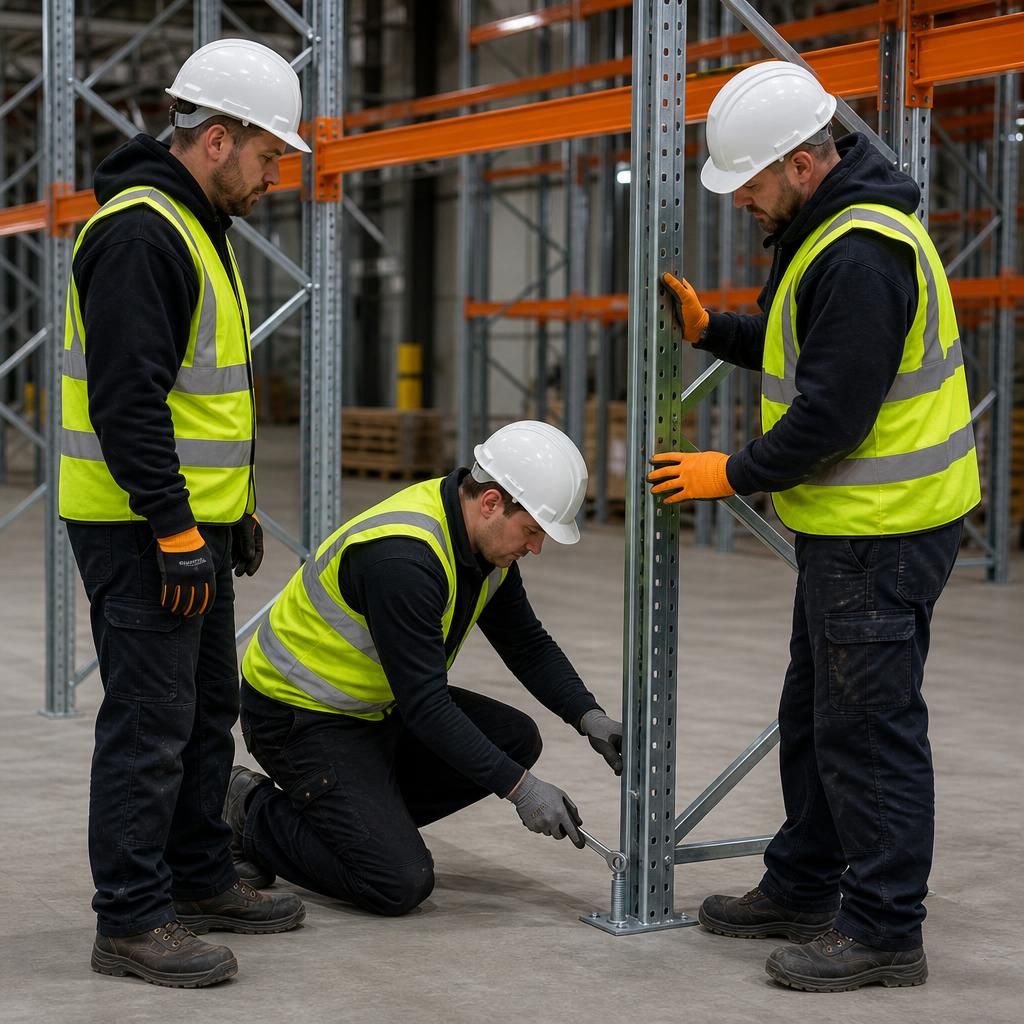
Practical training enhances proficiency in warehouse racking installations by allowing installers to practise assembly, alignment, anchoring and inspection under competent supervision. This converts written instructions into repeatable working methods and gives trainees immediate feedback before incorrect techniques become established.
During supervised exercises, installers can identify components, follow the approved installation sequence, use tools correctly and check for defects such as missing fixings, damaged parts or misalignment. Trainers can also show when to stop work and seek clarification if the layout, components or site conditions do not match the available information. This builds the judgement needed to complete warehouse racking installations safely, accurately and consistently.
Book practical warehouse racking installation training with Able Racking
Speak to Able Racking about practical warehouse racking installation training tailored to your team, system and site requirements. Arrange a suitable session to build consistent installation skills under competent supervision.