
What are the industry-standard safety procedures covered in the pallet racking installer training?
Pallet racking installer training covers risk assessment, safe systems of work, suitable PPE, exclusion zones, safe handling and lifting, work-at-height controls, and following the manufacturer’s installation instructions. It also teaches installers to identify damage, maintain structural stability, secure components correctly and leave the warehouse racking ready for inspection and safe use.
Industry-standard safety procedures in pallet racking installer training are the controlled methods used to plan, assemble and hand over warehouse racking safely. They cover risk assessment, safe systems of work, personal protective equipment, exclusion zones, manual handling, work at height, component checks, structural stability and compliance with the manufacturer’s installation instructions.
The purpose of the training is to ensure installers can identify hazards before work begins, control risks during installation and leave the completed warehouse racking suitable for inspection and safe use. Procedures are applied to the specific site, the racking design, the equipment available and the activities taking place around the installation area.
- Site risk assessment: Installers learn to assess delivery routes, floor conditions, vehicle movements, pedestrian access, lighting, overhead obstructions, nearby operations and the condition of the work area. They are taught to review changing conditions and update controls where the installation sequence or site environment changes.
- Method statements and safe systems of work: Training explains how to follow an agreed installation method, understand the sequence of work and stop if the planned controls are no longer effective. Clear communication, competent supervision and suitable briefings are important parts of this process.
- Pre-use checks: Tools, lifting equipment, access equipment and personal protective equipment must be checked before use. Installers are trained to report defects, remove unsuitable equipment from service and use only equipment appropriate for the task.
- Personal protective equipment: Typical requirements include safety footwear, a suitable hard hat, high-visibility clothing, gloves and eye protection where the task creates a relevant hazard. Additional protection may be needed for drilling, cutting or other activities that create dust, noise or flying particles.
- Exclusion and segregation zones: The installation area must be separated from unauthorised personnel, warehouse traffic and other work activities. Training covers barriers, warning signs, controlled access and communication with the site team so that materials or partially assembled structures are not disturbed.
- Safe handling and lifting: Installers learn how to plan the movement of frames, beams, bracing and other components, considering their weight, shape and stability. The procedure includes using mechanical aids where appropriate, maintaining clear routes and avoiding unsafe lifting, carrying or positioning techniques.
- Work at height: Training covers the selection and correct use of suitable access equipment, fall prevention measures and safe positioning while installing components at height. Installers must not improvise access arrangements or work from unstable materials, and they must follow the site’s rescue and emergency arrangements.
- Correct assembly: Components must be identified, positioned and secured in accordance with the approved design and the manufacturer’s instructions. Installers are trained to check frame orientation, beam engagement, bracing, locking devices, baseplates, anchors and protection where specified.
- Floor and anchoring controls: The condition and suitability of the floor must be considered before installation. Where anchoring is required, installers need to use the specified anchor type, drilling method and fixing arrangement, while taking care around services or obstructions that could affect the work.
- Structural stability during installation: Partially assembled warehouse racking can be unstable if it is not braced, aligned or supported correctly. Training therefore emphasises the approved build sequence, temporary stability measures, controlled positioning and preventing loads from being placed on incomplete or unapproved structures.
- Damage and defect recognition: Installers learn to identify bent, cracked, distorted or otherwise unsuitable components before they are incorporated into the system. Any suspected defect must be isolated and reported rather than concealed, straightened without authorisation or placed into service.
- Safe use of tools and equipment: Procedures include using tools for their intended purpose, managing power leads and hoses, controlling noise and dust, and maintaining good housekeeping. Keeping the work area clear reduces trip hazards and helps prevent components being damaged during installation.
- Emergency arrangements: Training addresses how to respond to injuries, falling objects, equipment failure, fire and other foreseeable incidents. Installers should know how to raise an alarm, contact the responsible site person, make the area safe and follow the site’s emergency and reporting procedures.
- Inspection and handover: On completion, the installation is checked against the design, instructions and agreed quality requirements. The area should be cleared of tools and waste, outstanding issues recorded, and the completed warehouse racking made available for the appropriate inspection before it is loaded or released for normal operation.
The training also reinforces the need to work within relevant UK health and safety requirements. Depending on the task and site arrangements, this may include principles associated with the Health and Safety at Work etc. Act, the Provision and Use of Work Equipment Regulations, the Lifting Operations and Lifting Equipment Regulations, the Work at Height Regulations and the Construction (Design and Management) Regulations. The applicable requirements must always be confirmed for the particular project rather than assumed.
Industry guidance and technical standards are considered alongside the manufacturer’s instructions and the approved design. In operational environments, the principles of relevant warehouse racking guidance, including inspection, damage assessment and safe use, help installers understand why accurate assembly and clear handover records matter. Training does not replace the requirement for a competent person to inspect the completed installation or for the warehouse operator to maintain it safely.
Good installation practice continues after the physical assembly is complete. Installers should record deviations, report damage or missing information, protect unfinished work and communicate any restrictions to the responsible person. This creates a clear handover and helps prevent warehouse racking being loaded before its condition and configuration have been properly confirmed.
In practical terms, a trained installer should be able to recognise a hazard, select an effective control, assemble components in the correct sequence, verify the quality of the finished work and stop when conditions are unsafe or unclear. These procedures provide the foundation for safe installation, but ongoing competence also depends on supervision, refresher learning, site-specific instruction and following the manufacturer’s requirements throughout the work.
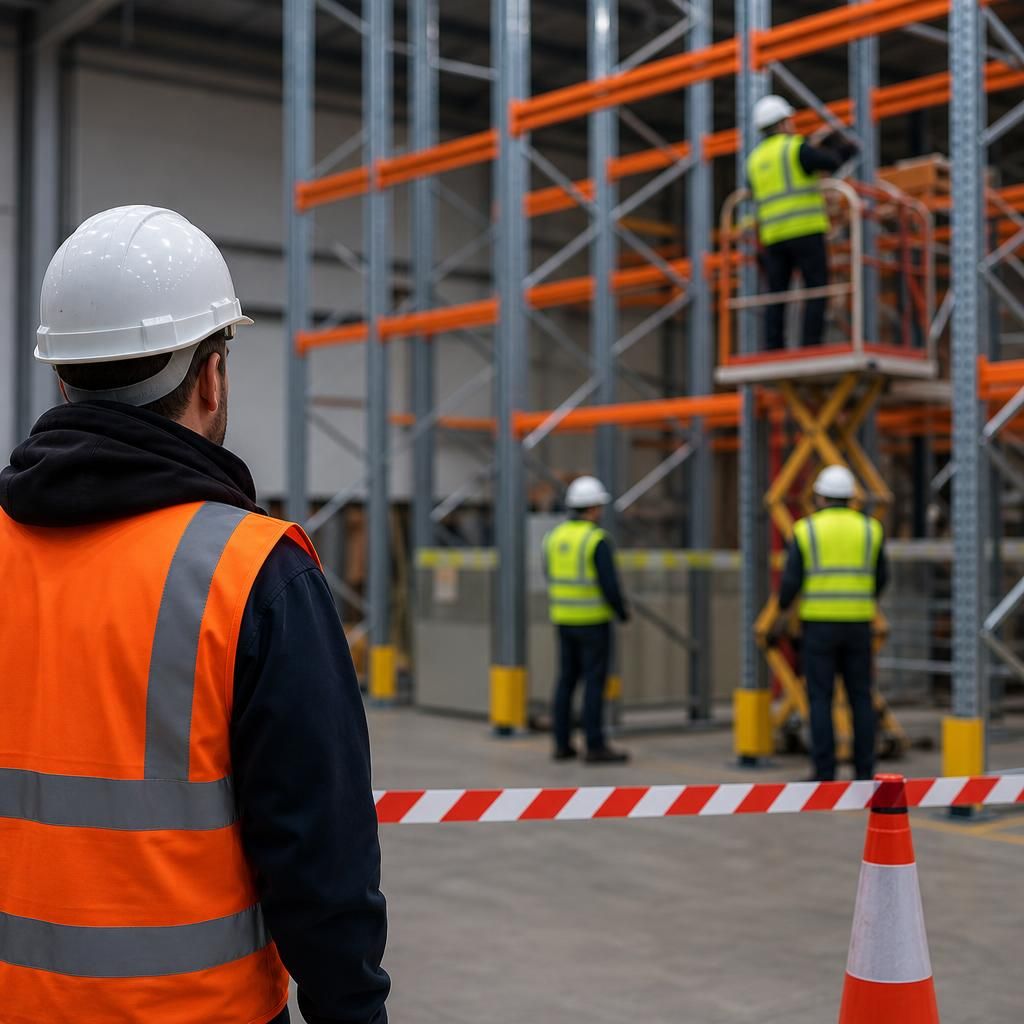
Exclusion zones are controlled areas around an installation where unauthorised people, vehicles and other activities are kept clear. Pallet racking installer training covers how to establish these zones using barriers, warning signs and agreed access arrangements before work starts.
This control is particularly important when frames or beams are being lifted, components are stored temporarily, or warehouse racking is only partially assembled. Installers learn to communicate the work area boundaries to the site team, maintain clear routes and stop the activity if the segregation arrangements are breached or become ineffective.
Discuss Your Pallet Racking Installer Training Requirements
Discuss your pallet racking installer training requirements with Able Racking to confirm the appropriate course content, site arrangements and competency objectives for your team.