
What are the benefits of completing a certified pallet racking installer training programme?
Completing a certified pallet racking installer training programme develops the practical skills needed to install warehouse racking safely, correctly and in line with current industry guidance. It helps reduce installation errors, support compliance, improve system performance and provide documented evidence of installer competence.
Completing a certified pallet racking installer training programme provides documented evidence that an installer has been assessed on the knowledge and practical skills required to install warehouse racking safely, accurately and in accordance with current UK guidance. It supports safer working practices, improves installation quality, reduces avoidable errors and helps businesses demonstrate that suitably competent people are carrying out installation work.
Improved installation safety
Pallet racking installation involves lifting, positioning and securing structural components, often alongside other work taking place in a busy warehouse. Training helps installers recognise the hazards associated with these activities and apply appropriate control measures before work begins. This includes understanding safe systems of work, exclusion zones, manual handling, work at height, the use of access equipment and the correct handling of tools and components.
A trained installer is better prepared to identify unsafe conditions, stop work where necessary and communicate effectively with site managers and other contractors. This reduces the likelihood of incidents during installation and helps protect installers, warehouse employees and visitors.
More accurate and consistent installations
Certified training develops a structured approach to reading layout drawings, identifying components, checking dimensions and following the manufacturer’s installation instructions. Installers learn why correct alignment, levelling, anchoring, bracing and beam positioning matter to the stability and intended performance of the system.
Using a consistent installation process helps prevent common problems such as incorrectly positioned frames, unsecured components, missing fixings, damaged parts or unsuitable substitutions. It also makes it easier for a competent person to check the completed work before the warehouse racking is put into service.
Support for legal and operational compliance
Training does not transfer the legal duties of the employer, duty holder, designer, manufacturer or site manager to the installer. However, it gives the installer the competence needed to carry out their assigned tasks in line with site procedures, manufacturer requirements and applicable UK health and safety obligations.
Businesses can use training records, certificates and installation documentation to help demonstrate that appropriate competence has been considered. These records should be retained alongside risk assessments, method statements, inspection records and handover information. A certificate is valuable evidence, but it should be supported by supervision, suitable equipment, practical experience and ongoing competency checks.
Earlier identification of defects and incompatibilities
Training helps installers distinguish between components that are suitable for the specified system and those that may be damaged, incompatible or incorrectly supplied. This is important because using the wrong frame, beam, connector, brace or fixing can affect the structural performance of the warehouse racking.
Competent installers are more likely to report issues before they become part of the completed installation. Examples include damaged uprights, missing labels, unsuitable floor conditions, discrepancies between the layout and the supplied components, or obstructions that prevent the planned arrangement from being installed safely.
Better efficiency without compromising safety
Good training improves efficiency by giving installers a clear sequence of work and a better understanding of the system they are assembling. This can reduce rework caused by incorrect measurements, poor sequencing or incomplete fixing. It also supports clearer communication between the installation team, the customer, the manufacturer and other contractors.
Efficiency should never mean rushing or bypassing checks. The benefit of training is that installers can complete tasks methodically, identify problems earlier and avoid delays caused by preventable installation errors.
Clearer handover and maintenance information
A properly completed installation should be handed over with relevant information about the system, including layout details, load information, protection measures and any outstanding actions. Training reinforces the importance of recording deviations, reporting damage and making sure that unresolved issues are not overlooked at handover.
This information helps the warehouse team use the system correctly and supports future inspections, maintenance and alterations. It also provides a useful reference if components are replaced, the layout changes or the storage operation develops.
Stronger evidence of installer competence
A recognised certificate can help a business assess whether an installer has completed relevant training and passed the required assessment. It may be particularly useful when selecting employees or contractors for installation work, preparing tender submissions or reviewing competence as part of a contractor management process.
Businesses should check what the programme covers, how competence is assessed and whether the certification remains subject to renewal or refresher requirements. They should also confirm that the training is appropriate for the type of pallet racking and installation work being undertaken.
Improved understanding of responsibilities
Installation work involves more than assembling steel components. A certified programme can clarify the responsibilities of installers, supervisors, employers and other duty holders. This helps ensure that design information, manufacturer instructions, site controls and installation checks are considered by the right people.
It also helps installers understand when they must seek guidance rather than make an unsupported decision. For example, changes to the proposed layout, unexpected floor conditions, damaged components or an unclear fixing detail should be escalated for review instead of being resolved informally on site.
A foundation for continued competence
Training is the starting point for competence rather than the end of it. Installers should continue to build experience under appropriate supervision, keep up to date with changes to guidance and manufacturer instructions, and take part in refresher training where required. Employers should monitor work quality and address any recurring issues through toolbox talks, supervision or additional instruction.
Once warehouse racking is in use, it must also be managed through suitable inspections, reporting arrangements and prompt action on damage. Correct installation supports the safe performance of the system, but it does not remove the need for regular ongoing management.
Overall, a certified pallet racking installer training programme benefits both the installer and the business. It develops practical competence, supports safer installations, improves consistency, strengthens compliance evidence and provides a sound basis for continued inspection and maintenance. The strongest results come when certification is combined with competent supervision, manufacturer information, accurate records and a planned approach to warehouse racking safety.
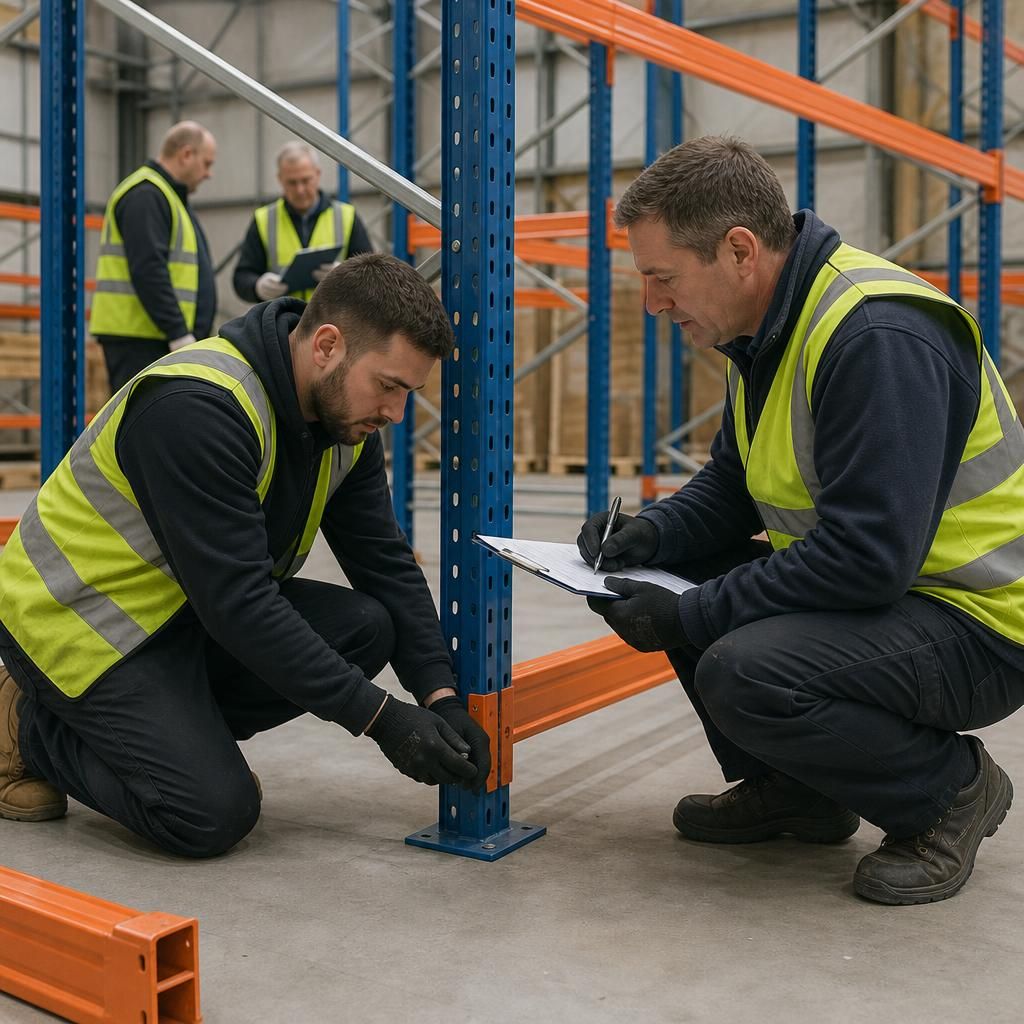
A certified pallet racking installer training programme provides assessed evidence that an installer understands the correct methods for assembling warehouse racking safely and accurately. Training typically covers reading layout information, checking components, positioning frames and beams, installing fixings and completing essential installation checks in accordance with manufacturer instructions.
This evidence helps businesses select suitable installers and demonstrate that competence has been considered within their contractor management arrangements. Certification should be supported by practical experience, appropriate supervision, suitable equipment and ongoing competency checks. When these controls are combined, installations are more consistent, defects are identified earlier and the completed warehouse racking can be handed over with clearer records for future inspections and maintenance.
Discuss your pallet racking installer training requirements
Contact Able Racking to discuss your pallet racking installer training requirements, including course content, assessment and the competence needed for your installation team.