
How does warehouse racking installation training improve workplace safety? It teaches installers to assemble, anchor and inspect warehouse racking correctly, reducing installation errors, identifying hazards early and supporting compliance with workplace safety requirements.
Warehouse racking installation training improves workplace safety by teaching installers how to assemble, anchor and inspect warehouse racking correctly. This reduces installation errors, helps identify hazards early and supports compliance with workplace safety requirements.
Warehouse racking installation training improves workplace safety by teaching installers how to interpret specifications, assemble components correctly, secure the structure, control installation risks and identify defects before the system is put into service. Properly trained installers are better able to prevent instability, falling materials, collisions and premature damage caused by incorrect installation.
It reduces installation errors
Warehouse racking must be installed to the approved design, manufacturer’s instructions and site requirements. Training helps installers recognise the purpose of each component, follow the correct sequence of work and check that frames, beams, bracing, locking devices and protection equipment are fitted correctly. This reduces the likelihood of missing components, incorrect connections, unsuitable substitutions or poorly aligned frames.
Installers also learn to distinguish between components that may look similar but have different load-bearing or structural functions. This is important because an apparently minor assembly error can affect the stability and safe working capacity of the complete storage system.
It improves anchoring and structural stability
Correct anchoring is essential where the installation design requires the structure to be fixed to the floor. Training covers the correct positioning of anchors, preparation of the base, tightening requirements and checks for unsuitable floor conditions or obstructions. Installers learn that fixing methods must not be selected by assumption; they must be suitable for the floor, the system design and the loads the warehouse racking is intended to carry.
Training also reinforces the importance of checking frame alignment, verticality, bracing and beam engagement. These checks help identify movement, distortion or incomplete connections before stock is stored or handling equipment operates nearby.
It controls hazards during installation
Installation work can involve lifting, working at height, moving materials, temporary instability and interaction with warehouse vehicles or other contractors. Practical training helps the team plan the work area, establish exclusion zones, use suitable access equipment and handle components without creating avoidable risks.
A competent installation team should understand how to:
- review the method statement, risk assessment and approved layout before starting;
- keep unauthorised people away from active installation areas;
- use appropriate personal protective equipment and access equipment;
- coordinate lifting and positioning activities clearly;
- store loose components safely so they cannot create trip or falling-object hazards;
- stop work when site conditions differ from the agreed plan; and
- report damaged components, unsafe behaviour and unexpected obstructions promptly.
These controls protect installers and other people working in or around the warehouse while the structure is being assembled.
It supports safer use after installation
Installation training does not end when the final connection is made. It should include handover checks and an understanding of the information needed by the warehouse operator. This may include the approved layout, safe working load information, protection requirements and any restrictions affecting the completed system.
Installers who understand these requirements are more likely to identify missing load notices, unsuitable changes or damage that should be resolved before the warehouse racking is loaded. They can also explain the importance of keeping beams, frames, bracing and protective equipment free from unauthorised alterations.
It strengthens inspection and defect reporting
Training develops the ability to carry out meaningful visual and practical checks during installation. Installers learn to look for impact damage, bent or twisted components, missing locking devices, loose fixings, poor alignment, damaged welds and other conditions that may compromise safety.
Just as importantly, training establishes what to do when a defect is found. The correct response may be to isolate the area, prevent loading, report the issue to a responsible person and arrange a competent assessment or repair. Prompt reporting prevents a small installation defect from becoming a larger operational hazard.
It helps meet workplace safety responsibilities
Employers must provide suitable information, instruction, training and supervision for work that could affect health and safety. Warehouse racking installation training supports this duty by providing documented evidence that installers have been taught the relevant techniques and hazards.
Training does not replace a site-specific risk assessment, competent supervision or inspection of the completed installation. Instead, it forms part of a wider safety system that includes suitable equipment, clear procedures, effective communication and ongoing maintenance. The level of supervision should reflect the installer’s experience, the complexity of the work and the conditions on site.
It improves communication between the installation team and the warehouse operator
Clear communication is essential where an installation takes place in an active warehouse. Trained installers are better prepared to discuss access restrictions, delivery routes, vehicle movements, temporary closures and changes to the agreed layout. They can also explain which areas are ready for use and which require further checks.
This reduces the risk of warehouse staff loading an incomplete or restricted section, moving through an active work area or using the system before handover requirements have been met.
It provides practical competence, not just theoretical knowledge
Effective training combines instruction with supervised practical activities. Learners should have the opportunity to interpret installation information, identify components, assemble connections, use appropriate tools, complete fixing checks and recognise unsafe conditions. Practical assessment helps confirm that the learner can apply the correct method rather than simply describe it.
Refresher training is also useful when procedures change, new equipment or system types are introduced, an installer has not carried out the work for some time, or inspection findings show a recurring issue. Keeping competence current helps maintain consistent standards across different sites and installation teams.
In practice, warehouse racking installation training improves safety by preventing errors at the point of assembly, controlling hazards while work is underway and supporting reliable checks before the system is used. It gives installers the knowledge and practical skills to build to the approved design, recognise when conditions are unsafe and communicate issues before they affect people, stock or warehouse operations.
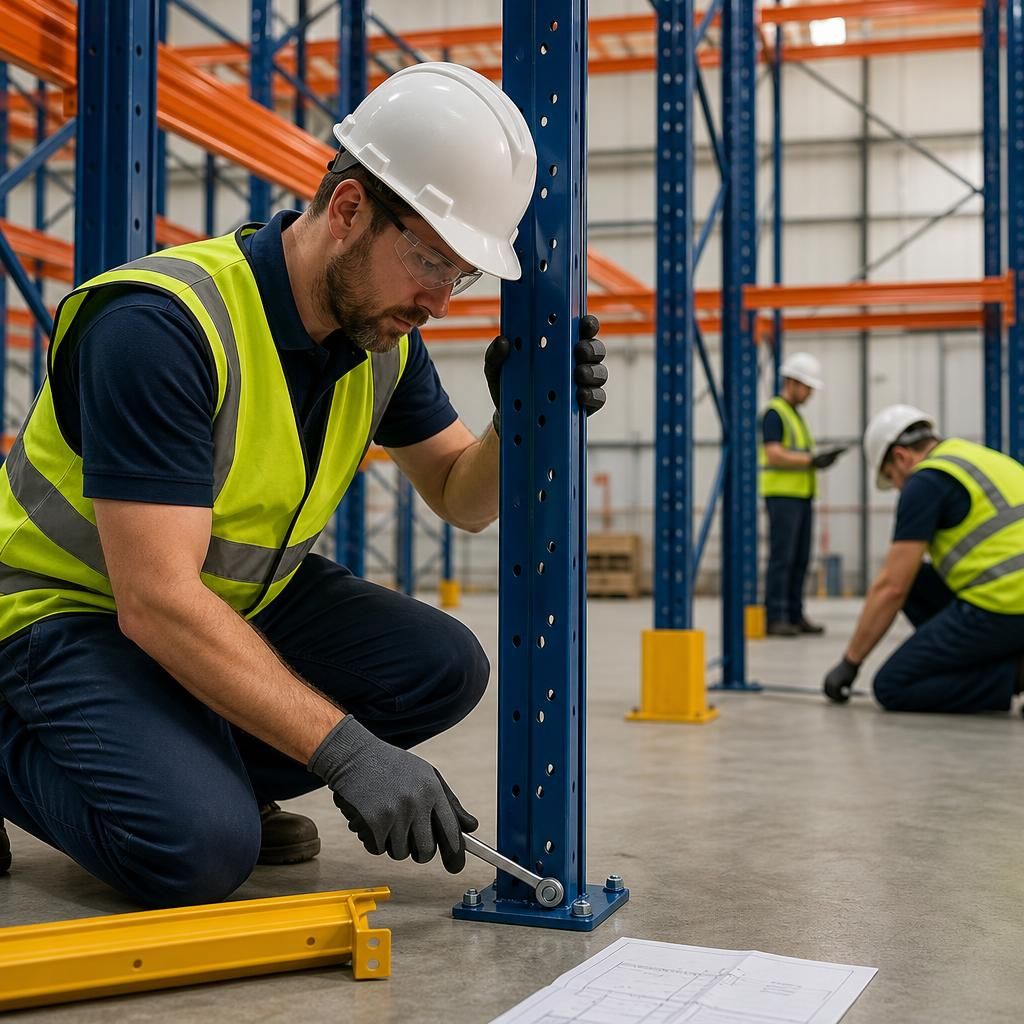
Warehouse racking installation training improves safety by teaching installers how to assemble and secure each component in accordance with the approved design and manufacturer’s instructions. Correct frame alignment, beam engagement, bracing, locking devices and floor anchoring help prevent instability before the system is put into service.
Practical training also helps installers recognise conditions that require work to stop, such as damaged components, unsuitable floor surfaces, missing fixings or obstructions affecting the agreed layout. These issues can then be reported and resolved before warehouse staff, vehicles or stock are exposed to unnecessary risk.
Book warehouse racking installation training
Book warehouse racking installation training with Able Racking to help your installation team develop the practical skills needed to assemble, secure and check systems safely.