
What is the duration and format of the Cantilever Rack Installation Training?
Cantilever Rack Installation Training is delivered in a structured format combining expert-led theory with practical installation instruction, with the duration agreed according to the learners’ experience and the course scope. Training can cover system components, safe installation methods, alignment, stability checks and relevant safety procedures, giving participants an opportunity to apply the principles in a practical setting.
Cantilever Rack Installation Training does not have a fixed duration or single delivery format. It is normally tailored to the learners’ existing experience, the cantilever racking system being installed and the level of practical assessment required. Training combines instructor-led theory with supervised practical instruction so that participants can understand the installation process and apply it safely.
The course duration is agreed during planning. A concise programme may be suitable for experienced installers who need instruction on a particular system or installation method. A more comprehensive course may be appropriate for new or less experienced participants and can allow additional time for component identification, preparation, assembly, alignment, stability checks and supervised practice. The training provider should confirm the proposed timetable, learning outcomes and any assessment requirements before the course begins.
The instructional format commonly includes the following elements:
- Classroom or instructor-led theory: an explanation of cantilever rack components, manufacturer instructions, installation sequences, load considerations, workplace controls and the relevant safety procedures.
- Pre-installation checks: reviewing the work area, floor condition, access arrangements, system layout, components, tools and equipment before assembly starts.
- Demonstration: an experienced trainer shows the correct techniques for positioning, fixing and assembling the system, including how to identify faults or unsuitable components.
- Supervised practical work: learners take part in installation activities and practise safe handling, connection, alignment and stability checks under direct instruction.
- Knowledge checking: questions, observation or a practical assessment may be used to confirm that participants understand the procedure and can carry out tasks safely.
- Review and feedback: the trainer identifies any gaps, corrects unsafe methods and explains the checks that should be completed before the system is put into service.
Practical training is most effective when it uses the type of cantilever racking, components and installation conditions that participants will encounter at work. This allows the trainer to address relevant issues such as uneven floors, restricted access, handling long loads, fixing requirements, upright alignment and the need to follow the system manufacturer’s instructions. Where the installation takes place on a live site, the delivery plan should also account for segregation, supervision, suitable personal protective equipment and the control of nearby work activities.
The format can be delivered at a suitable training venue or at the customer’s premises, provided there is a safe and properly prepared area for practical instruction. In some circumstances, introductory theory or supporting learning materials may be provided remotely, but practical installation competence should be demonstrated through supervised, hands-on activity rather than treated as an online-only subject.
Before booking, confirm whether the course includes practical assessment, what equipment and documentation will be supplied, the experience expected from learners and whether the content covers a specific manufacturer’s system. Participants should also understand what evidence of completion is provided and whether further workplace supervision is recommended. Completion of training does not remove the need to follow the manufacturer’s instructions, site risk assessments, method statements and ongoing warehouse racking safety procedures.
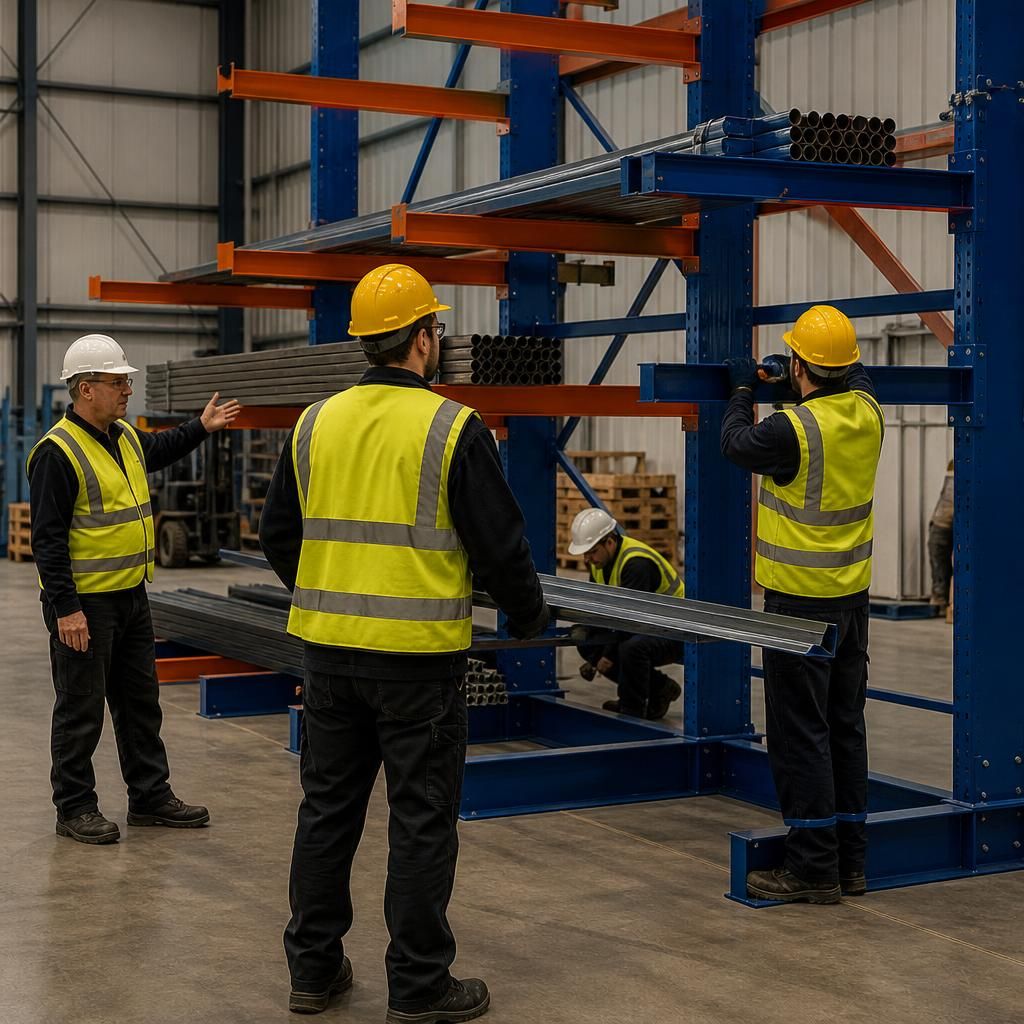
Cantilever Rack Installation Training combines instructor-led guidance with supervised practical work. The duration is agreed in advance according to the learners’ experience, the system being installed and the level of assessment required. Practical competence should not be assessed through online learning alone.
Training may cover component identification, manufacturer instructions, installation sequence, safe handling, alignment, fixing and stability checks. The trainer can demonstrate each stage before observing learners applying the correct techniques in a controlled area. The session should finish with feedback and confirmation that participants understand the required checks before the cantilever rack system is put into service.
Book Your Cantilever Rack Installation Training
Contact Able Racking to arrange Cantilever Rack Installation Training tailored to your team’s experience, system and practical assessment requirements. We can help confirm the course format, preparation needed and suitable delivery arrangements.