
What can I expect to gain from participating in the Cantilever Rack Installation Training?
Participating in Cantilever Rack Installation Training gives you the practical knowledge to install cantilever rack systems safely, correctly and in line with relevant workplace requirements. You can expect to improve your installation technique, identify common hazards, support compliance and work with greater confidence when assembling and aligning these systems.
Participating in Cantilever Rack Installation Training gives you the practical knowledge and supervised experience needed to install cantilever rack systems safely, accurately and in accordance with the manufacturer’s instructions and applicable workplace requirements. You can expect to improve your installation technique, recognise hazards, support compliance and carry out work with greater confidence.
Practical installation skills
The training explains the correct sequence for preparing, assembling and securing a cantilever rack system. This normally includes interpreting installation drawings, checking components before use, positioning uprights and bases, fitting arms and braces, installing anchors where required, and confirming that connections are correctly tightened.
Practical instruction also covers the importance of level, plumb and alignment. Small errors during installation can affect the stability, loading performance and long-term serviceability of the system. You will learn how to identify misalignment, damaged components, incorrect fittings and other issues before the rack is put into use.
Improved understanding of safety controls
You will learn how to plan installation work around foreseeable hazards, including manual handling, falling components, work at height, lifting operations, unstable partially assembled structures, vehicle movements and unauthorised access to the work area. The course can help you understand how method statements, risk assessments, exclusion zones and suitable personal protective equipment should support the installation process.
Training also reinforces the need to use appropriate tools, access equipment and lifting methods. It does not replace site-specific risk assessment or the requirements of a qualified person where specialist lifting, electrical or structural work is involved. Instead, it helps installers recognise when additional competence or technical advice is needed.
Greater awareness of load and design requirements
A cantilever rack must be assembled for its intended use. The training helps you understand how arm capacity, upright capacity, bay configuration, spacing, load distribution and the characteristics of the stored materials affect safe operation. You will also learn why loads must be placed and removed in a controlled manner, without exceeding the stated limits or creating uneven loading.
Manufacturer specifications and approved design information remain the controlling reference for the system being installed. Training helps you use that information correctly rather than relying on assumptions based on a similar-looking rack.
Better compliance and installation records
Correct installation supports compliance with workplace safety duties and the system manufacturer’s requirements. As part of the course, you can expect guidance on recording component checks, installation checks, anchor information, outstanding defects and any alterations or restrictions that apply before handover.
Clear records provide useful evidence that the installation has been planned and checked. They also give the warehouse team a reliable reference for future inspections, repairs, changes to the layout or additional bays.
More effective fault identification
The training develops your ability to spot conditions that should be corrected before the system is used. These may include bent or damaged members, missing braces, loose fixings, unsuitable anchors, incorrect arm positions, inadequate floor conditions or components that do not match the approved configuration.
You will also gain a clearer understanding of when an issue can be corrected by the installation team and when it must be referred to a responsible engineer, manufacturer or other competent person. This distinction is important because improvised repairs or unapproved modifications can compromise structural performance.
Increased confidence when working with other teams
Installation commonly involves coordination between site managers, warehouse operators, delivery teams, contractors and the system supplier. Training gives you a consistent technical vocabulary for discussing drawings, tolerances, fixing requirements, load information, defects and handover checks.
This can make it easier to raise concerns promptly, confirm responsibilities and prevent the system from being loaded before installation checks are complete. It also supports a more organised handover to the people responsible for operating and maintaining the rack.
Awareness of ongoing responsibilities
Installation training is not a substitute for routine inspection and maintenance. You will gain a better understanding of how installation quality affects the system throughout its working life, including the importance of protecting uprights and arms from impact, maintaining clear loading information and reporting damage without delay.
After completing the course, you should be able to apply the learning within your level of competence, follow the approved installation method and identify when further advice is required. Depending on the course structure, completion may also provide a training record or certificate. This confirms that the relevant learning has been completed, but it should not be treated as automatic authorisation for every type of installation or as a replacement for site-specific competence requirements.
Overall, the main benefit is a safer and more controlled installation process. You gain practical skills, stronger hazard awareness, better documentation and the confidence to assemble cantilever rack systems in line with approved information, while recognising the limits of your role and escalating technical issues appropriately.
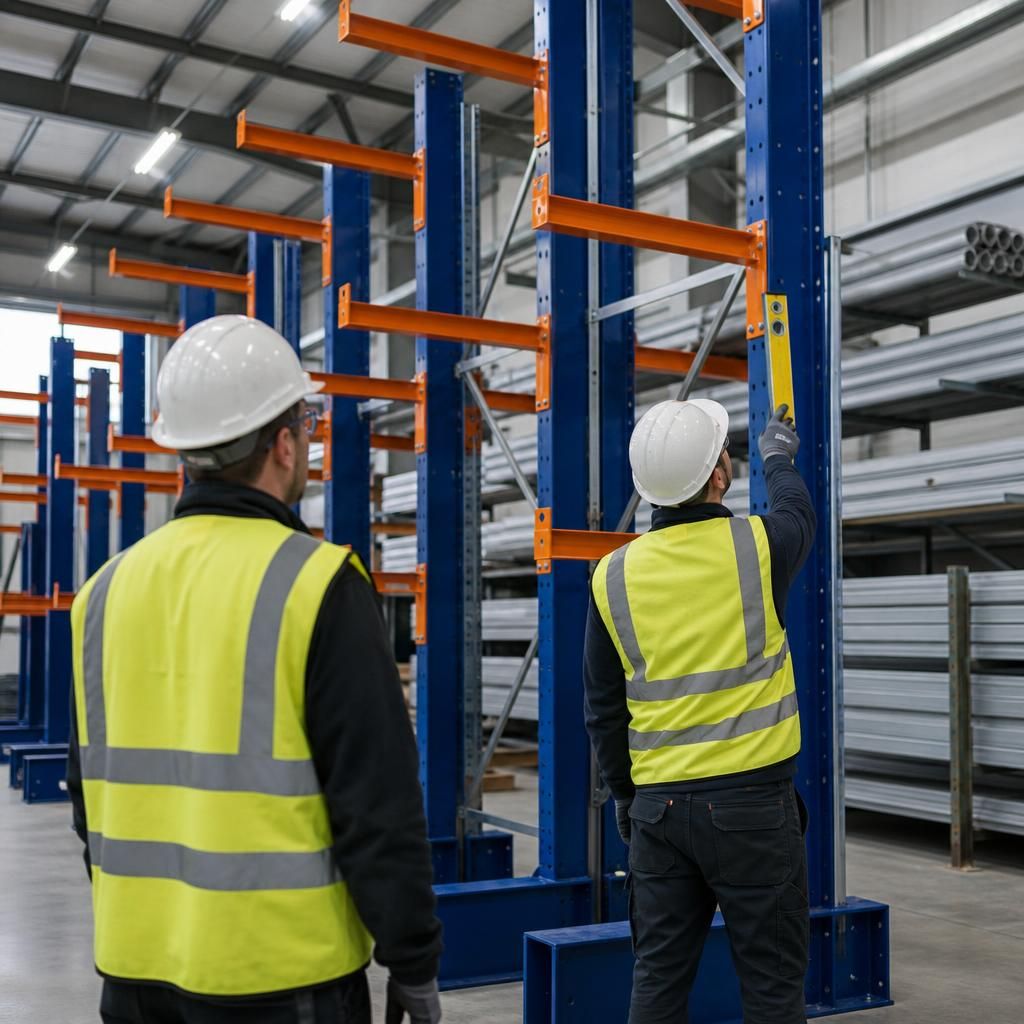
Cantilever Rack Installation Training develops the practical skills needed to assemble, align and secure a cantilever rack system in accordance with approved installation information. You learn how to check components, position uprights and bases, fit arms and bracing, install suitable fixings and confirm that the completed structure is level, plumb and stable before use.
A key benefit is learning to identify problems before they become operational risks. The training covers damaged components, incorrect fittings, loose connections, unsuitable anchors, poor floor conditions and misalignment, as well as when an issue must be referred to the manufacturer or another competent person. This supports safer handover, clearer installation records and greater confidence when working within your level of competence.
Enrol in Cantilever Rack Installation Training
Enrol in Cantilever Rack Installation Training to strengthen your practical installation skills, hazard awareness and understanding of approved installation requirements. Contact Able Racking to discuss the course format and arrange training for your team.