
What qualifications or experience are necessary to enrol in the warehouse racking inspection training course?
No formal qualification is usually required to enrol in warehouse racking inspection training, although practical warehouse experience and familiarity with storage systems are beneficial. Candidates should be able to understand safety instructions, identify visible damage and communicate findings clearly; the course develops the knowledge and inspection skills needed for the role.
No formal qualification is usually required to enrol on a warehouse racking inspection training course. The most useful preparation is practical experience in a warehouse or facilities environment, familiarity with storage systems and the ability to follow safety instructions, recognise visible damage and record findings accurately.
The course is suitable for people who already carry out, or are expected to carry out, workplace inspections. This may include warehouse supervisors, facilities and maintenance staff, health and safety personnel, site managers and operatives with responsibility for storage safety. Previous experience of warehouse racking is helpful, but it is not normally essential because the training explains the inspection principles, common defects and appropriate reporting procedures.
Attendees should be able to:
- Understand spoken and written safety instructions in English, or have suitable support in place.
- Read inspection guidance, labels and warning information.
- Record observations clearly using inspection forms or digital reporting systems.
- Communicate defects and safety concerns to responsible managers.
- Work safely around active warehouse operations and follow site controls.
Basic practical awareness is more important than an academic background. Candidates do not generally need an engineering qualification, previous inspection certificate or specialist trade qualification to start the course. However, anyone attending should understand that completing training does not automatically make them competent to assess every type of storage system or resolve structural problems. Competence also depends on applying the learning correctly, recognising the limits of a visual inspection and escalating issues that require a suitably qualified technical assessment or repair.
Previous experience can make the course easier to apply in practice. For example, someone who has worked around warehouse racking may already understand loading practices, forklift activity, pallet placement and the way impact damage can occur. Someone with limited experience can still benefit, provided they have the communication skills and practical awareness needed to participate safely. The trainer can usually relate the inspection process to the systems and working conditions found at the attendee’s site.
Employers should select attendees who have sufficient authority and time to report defects and initiate appropriate action. An inspector must be able to distinguish between a minor issue that needs monitoring, damage requiring prompt attention and a serious safety concern that may require an affected area or component to be taken out of use. The training supports this decision-making process, but the employer remains responsible for defining site procedures and ensuring inspections are carried out by competent people.
Before booking, tell Able Racking about the attendee’s experience and the type of warehouse racking used on site. This helps confirm that the course is appropriate and identifies any additional training, site familiarisation or technical support that may be needed. A willingness to learn, careful observation and clear reporting are the key entry requirements for most candidates.
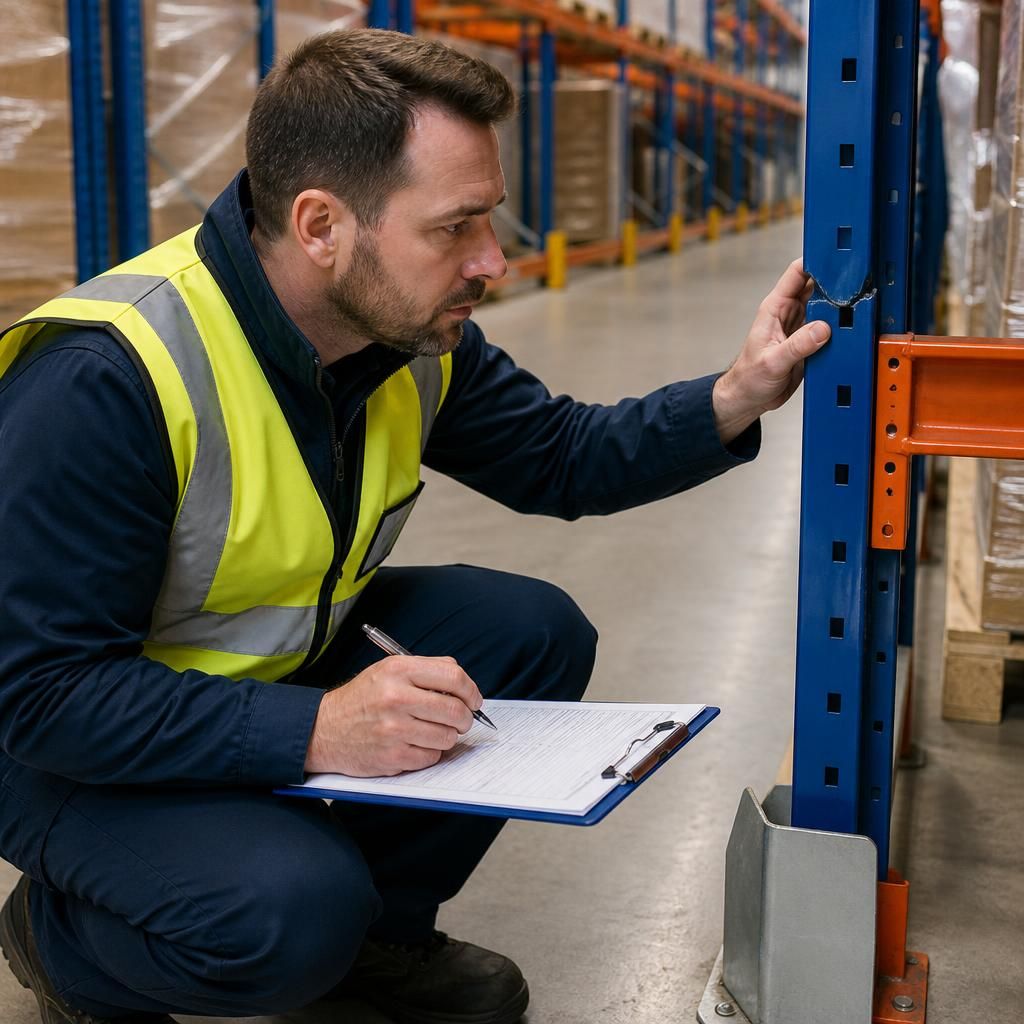
Practical warehouse experience is usually more relevant than formal qualifications when enrolling on warehouse racking inspection training. Candidates who understand warehouse traffic, pallet handling, loading practices and the causes of impact damage are often better prepared to apply the inspection process safely.
Previous inspection experience or an engineering qualification is not normally essential. Attendees should be able to follow safety instructions, recognise visible defects, record observations clearly and report concerns to the appropriate person. They must also understand that training supports inspection competence but does not authorise them to carry out structural assessments or repairs beyond their knowledge.
Discuss your warehouse racking inspection training requirements
Discuss your warehouse racking inspection training requirements with Able Racking to confirm the course is suitable for your team’s experience, responsibilities and storage systems. Our experts can advise on the appropriate training and any additional support needed.