
What are the qualifications and experience of the trainers conducting the warehouse racking inspection training?
The trainers conducting our warehouse racking inspection training are experienced warehouse racking safety professionals with relevant industry training and practical expertise in inspections, installation, maintenance and repairs. Their knowledge of applicable safety standards, inspection procedures and workplace controls enables them to explain both the theory and the practical judgement required to identify and report defects accurately.
The trainers delivering our warehouse racking inspection training are experienced warehouse racking safety professionals with relevant technical training, practical inspection experience and a detailed understanding of storage-system safety requirements. Their competence combines knowledge of inspection procedures with hands-on experience of identifying defects, assessing risk, recording findings and recommending proportionate corrective action.
Rather than relying on theory alone, our trainers have worked with warehouse racking systems in operational environments. Their practical background covers areas such as:
- Warehouse racking inspections and condition assessments
- Identifying damage to frames, beams, bracing, protection and associated components
- Recognising defects caused by impact, overloading, poor use, deterioration or unsuitable alterations
- Installation, maintenance and repair considerations
- Inspection reporting, risk classification and escalation of urgent findings
- Safe working practices and controls for inspections within busy warehouse environments
They understand the difference between a visual observation and a competent technical judgement. This is important because an inspector must do more than spot obvious damage. They need to assess the likely significance of a defect, consider how it may affect the stability or safe use of the warehouse racking, and communicate the required action clearly to the responsible person.
The training team keeps its knowledge aligned with applicable workplace health and safety duties, recognised warehouse racking guidance, manufacturers’ instructions and accepted inspection practice. They explain how these requirements apply in real workplaces, including the responsibilities of employers, warehouse operators, users and appointed inspectors. Where a finding requires specialist assessment, the trainers also explain when it should be referred to a suitably qualified person rather than dealt with through assumption or improvised repair.
Relevant technical knowledge includes the principles behind:
- Routine user checks and formal warehouse racking inspections
- Safe loading information and the importance of following the specified configuration
- Component identification and the effect of damage on structural performance
- Traffic management, impact prevention and housekeeping controls
- Quarantine, unloading or restricted-use decisions where a serious defect is found
- Accurate inspection records, photographs, defect descriptions and close-out actions
Our trainers are also experienced in explaining technical information to people with different levels of warehouse and inspection experience. They use clear terminology, practical examples and guided exercises to show how an inspection should be approached. This includes demonstrating what to look for, how to work systematically through an installation and how to write findings that another responsible person can understand and act upon.
Practical experience is particularly important when discussing judgement. A trainer can explain the inspection process, but should also be able to relate it to common conditions found on site, such as bent components, missing safety equipment, altered layouts, unclear load information, damaged protection or evidence that the installation is being used outside its intended arrangement. The course therefore focuses on applying knowledge consistently, not simply memorising defect categories.
Trainer competence is supported by continued involvement in warehouse racking inspections, installations, repairs and safety training. This helps keep the course relevant to current working practices and recurring issues seen across industrial sites. It also allows the training to reflect the practical constraints of live operations, including restricted access, vehicle movements, changing stock profiles and the need to manage unsafe findings promptly.
Before delivering training, the trainer will establish the site’s relevant requirements and the delegates’ existing experience where appropriate. This helps ensure that examples and exercises relate to the types of warehouse racking, inspection responsibilities and reporting arrangements encountered by the customer. The content remains focused on safe, consistent inspection practice while recognising that individual installations and manufacturers’ requirements can differ.
Delegates should expect instruction from professionals who can connect recognised safety principles with the decisions made during a real inspection. The result is a course delivered by experienced operatives who understand both the technical requirements of warehouse racking safety and the practical responsibility of producing clear, useful inspection information.
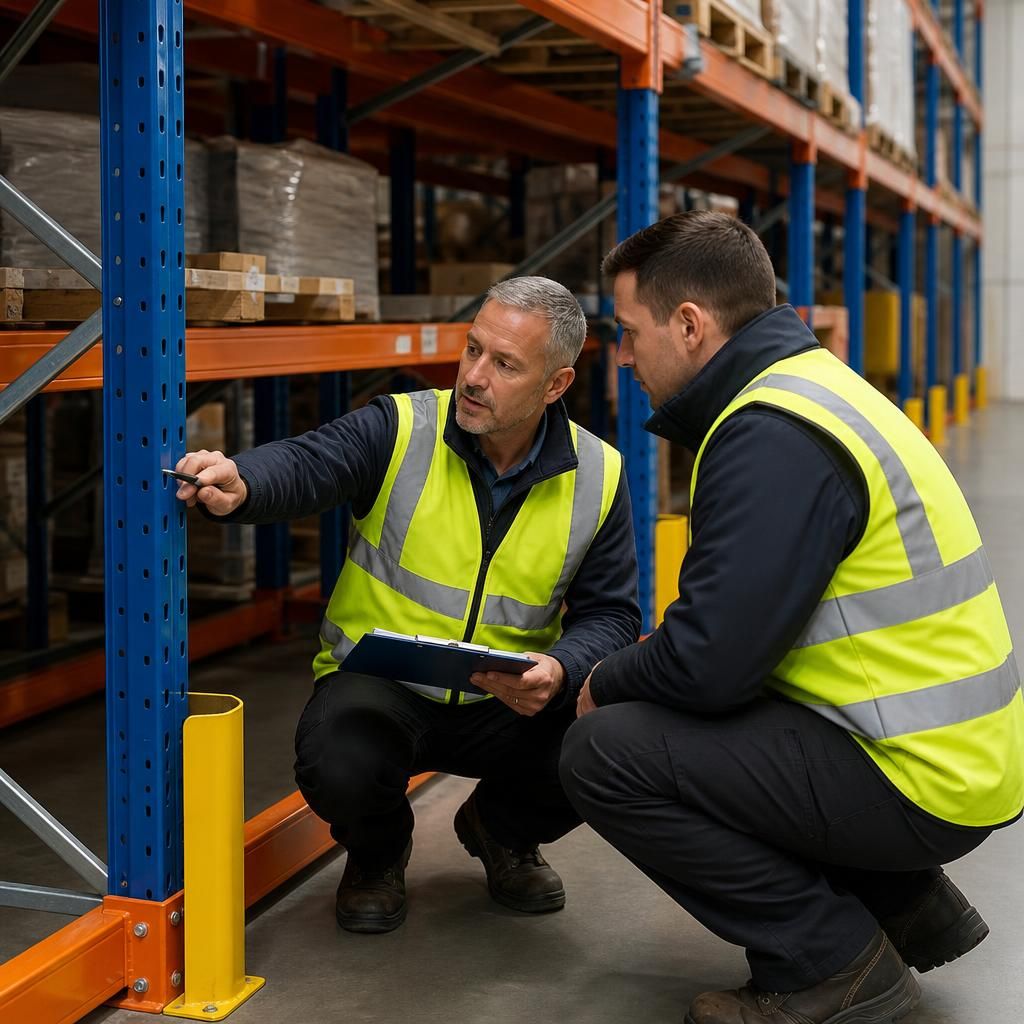
The trainers delivering our warehouse racking inspection training combine relevant technical training with practical experience inspecting, maintaining, installing and repairing warehouse racking systems in working environments. This enables them to explain not only what a defect looks like, but also how to assess its significance and record the appropriate action.
Their instruction covers the decisions an inspector must make on site, including how to identify damage, distinguish urgent findings from lower-risk defects, check safe loading information, and escalate issues that require specialist assessment. Practical examples help delegates understand how vehicle impact, missing components, altered layouts, overloading and poor housekeeping can affect warehouse racking safety.
Because the trainers remain involved in warehouse racking safety work, they can relate course exercises to the conditions found in operational warehouses. They demonstrate systematic inspection methods, clear defect descriptions and accurate reporting so that findings can be understood and acted upon by the responsible person.
Discuss your warehouse racking inspection training requirements
Discuss your warehouse racking inspection training requirements with our experienced team to ensure the course reflects your site, responsibilities and delegates’ existing knowledge.