
What are the signs that indicate a need for immediate racking inspection?
An immediate warehouse racking inspection is needed after impact, visible damage or deformation, instability, missing components, displaced loads, or any incident that could have affected the system’s safety. Arrange an inspection promptly if there is a near miss, unexplained movement or noise, or a significant change to the warehouse racking layout, load configuration or operating conditions.
An immediate warehouse racking inspection is required after any event or change that may have affected the system’s structural integrity, stability or safe load capacity. Key warning signs include impact damage, bent or displaced components, leaning or unstable frames, missing fixings, damaged protection, displaced loads, unexplained movement or noise, and any near miss involving the storage system. The affected area should be made safe and assessed promptly by a competent person before normal use resumes.
Do not rely on a routine inspection date if there is a specific reason to doubt the condition of the warehouse racking. A scheduled inspection checks the system at planned intervals, whereas an immediate inspection responds to a known incident, visible defect or change in operating conditions.
Arrange an immediate inspection when any of the following signs are present:
- Impact damage: A forklift, pallet truck, vehicle or other handling equipment has struck a frame, upright, beam, guard, bracing member or baseplate. Damage can affect the load-bearing performance of a component even when the impact appears minor.
- Visible bending or deformation: Uprights, beams, braces or connectors appear bent, twisted, bowed, buckled or pulled out of their normal position. Paint loss, fresh scrapes or exposed metal can also help identify a recent impact.
- Leaning or instability: A frame is no longer vertical, a run appears out of alignment, or the structure moves when loads are placed or removed. These symptoms may indicate damaged components, loose connections, inadequate anchoring or an uneven base.
- Missing or loose components: Locking pins, bolts, anchors, safety clips, bracing members, beam connectors or other essential parts are missing, loose or incorrectly fitted. Components must not be substituted with improvised items.
- Damaged protection: A damaged upright guard, end guard or barrier may no longer protect the warehouse racking from further vehicle impact. Protection that has moved from its intended position should also be checked.
- Displaced or damaged loads: Pallets are leaning, overhanging, broken, sitting unevenly or extending beyond the intended storage position. A load that has fallen or shifted may have damaged the supporting components or altered the balance of the installation.
- Unexplained movement, vibration or noise: New creaking, cracking, scraping, popping or unusual movement during loading and unloading should be treated as a warning. These signs require investigation rather than continued observation during normal operations.
- Overloaded or unidentified locations: A load appears to exceed the marked capacity, has been placed in the wrong location, or cannot be matched to the approved load configuration. The relevant load limits and layout should be confirmed before the location is used again.
- Corrosion, cracking or deterioration: Corrosion, fractured welds, damaged coatings, cracked concrete around anchors or other deterioration may reduce the serviceability of the installation and require professional assessment.
- A near miss or falling item: Any near miss involving a collision, falling pallet, dropped product or unexpected movement should trigger an inspection. The absence of an injury does not demonstrate that the warehouse racking remains safe.
An immediate inspection is also appropriate after changes to the warehouse racking layout, beam levels, load type, pallet dimensions, equipment used for handling, traffic routes or working practices. A system that was suitable for its original design may not be suitable after components are moved, loads become heavier or larger, or handling equipment operates closer to the structure. Changes should be reviewed against the original design information and current capacity signage.
Actions to take when a warning sign is identified
- Stop using the affected bay, frame or area where it is safe to do so.
- Prevent access and keep people and handling equipment away from any potentially unstable or damaged section.
- Do not unload or repair the affected area unless this can be completed safely under a suitable risk assessment and by appropriately trained personnel.
- Record the location, nature of the defect and circumstances of the incident. Photographs can help, provided they are taken without entering an unsafe area.
- Report the issue to the responsible person and arrange an inspection by a competent warehouse racking inspector.
- Keep the area out of service until the inspector confirms the required corrective action and, where necessary, verifies that the system is safe to return to use.
A visual check by an operator can identify obvious damage, but it does not replace a competent inspection. The inspector should assess the affected components, connections, anchorage, protection, load arrangement and surrounding conditions, then determine whether the issue requires monitoring, repair, replacement, unloading or isolation. Repairs should follow the manufacturer’s or designer’s requirements and should not conceal damage without addressing its cause.
Immediate inspection is particularly important where damage has been repeated, where previous repairs have not resolved the problem, or where the cause of a defect is unclear. Repeated vehicle contact, poor load placement or unsuitable traffic routes may continue to create risk after an individual component has been repaired.
When in doubt, treat the warehouse racking as requiring assessment. Prompt isolation and a properly documented inspection help prevent further damage, protect employees and visitors, and provide evidence that the storage system is being managed responsibly. Routine inspections should continue after the immediate issue has been dealt with, because an urgent inspection does not replace the planned inspection programme.
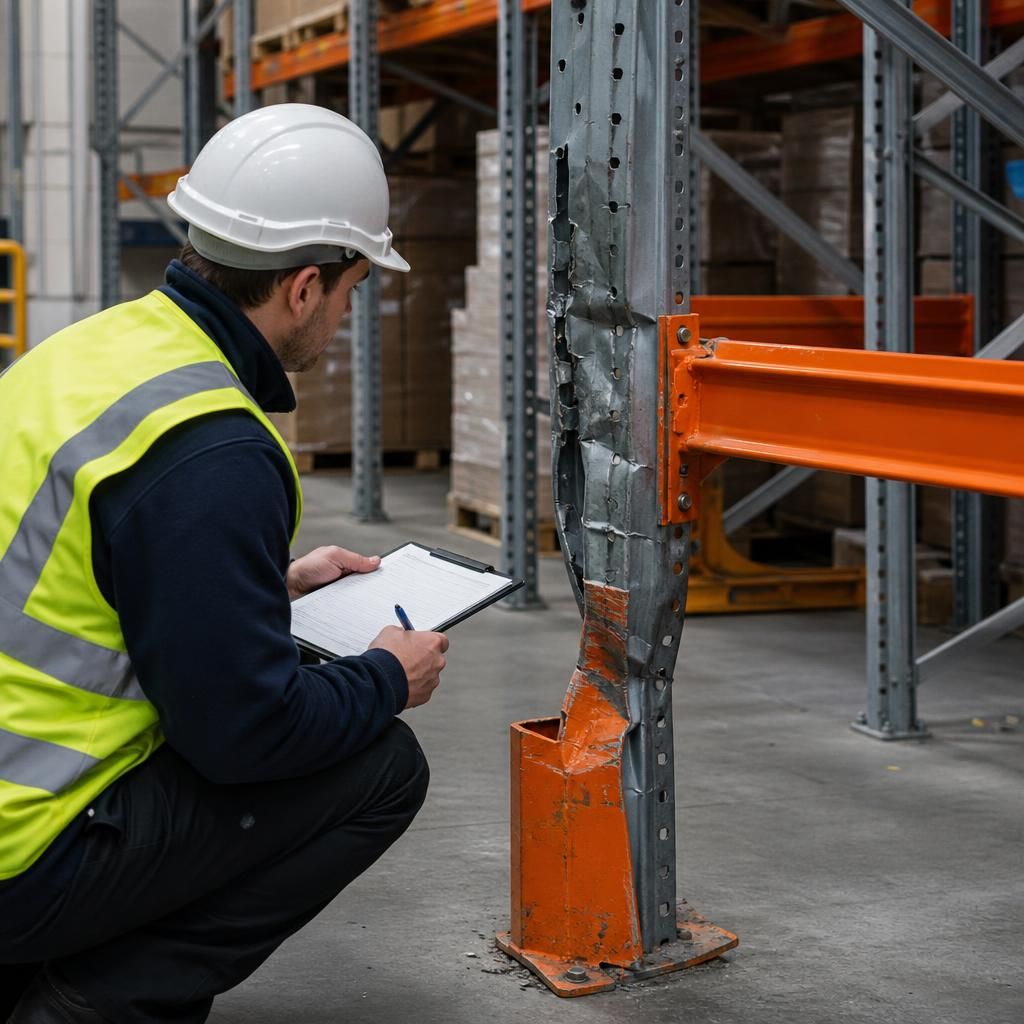
Impact damage requires prompt action. If a forklift, pallet truck or other handling equipment strikes warehouse racking, stop using the affected bay and arrange an inspection by a competent person. Even minor-looking dents, scrapes or distortion can affect the strength, alignment or stability of an upright, beam, brace or connection.
Keep people and equipment away from the affected area until it has been assessed. Do not straighten, unload or repair damaged components unless this can be done safely under suitable instructions. The inspection should establish whether the warehouse racking requires monitoring, unloading, repair, replacement or isolation before it returns to service.
Arrange an Immediate Racking Inspection
If you have identified impact damage, instability or another warning sign, contact Able Racking to arrange an immediate warehouse racking inspection by a competent inspector. Keep the affected area out of use until it has been assessed and any required corrective action has been confirmed.