
What are the consequences of neglecting regular warehouse racking inspections?
Neglecting regular warehouse racking inspections allows damage, overloading, instability and other defects to remain undetected, increasing the risk of falling loads, structural failure, injuries and disruption. It can also lead to avoidable repair costs, stock damage, operational downtime and difficulty demonstrating that suitable safety checks have been carried out.
Neglecting regular warehouse racking inspections allows damage, overloading, instability and other defects to remain undetected. As these issues worsen, the risk increases that loads may fall, components may fail, people may be injured and warehouse operations may be disrupted. The consequences can include avoidable repair costs, damaged stock, operational downtime and difficulty demonstrating that suitable safety checks have been completed.
Warehouse racking can be damaged during forklift movements, loading and unloading, changes to stored loads and routine warehouse activity. Some defects are obvious, such as a bent upright or damaged frame. Others, including loose connections, displaced beams, missing safety components or overloading, may be less apparent without a systematic inspection. Regular checks identify these problems before they develop into more serious failures.
Safety risks to employees and visitors
The most serious consequence of neglected inspections is an increased risk of injury. A damaged frame, beam or connection may have reduced capacity and could fail under a load that the system previously supported safely. Unsecured or poorly positioned goods may fall into working areas, while unstable warehouse racking can create risks for forklift operators, warehouse staff, contractors and visitors.
Even when a collapse does not occur, damaged components can create collision hazards, restricted access routes and unsafe loading conditions. Employees may also be exposed to risk when attempting to move stock from a damaged location or make an unauthorised repair. Promptly identifying and isolating unsafe areas is therefore an important part of preventing incidents.
Progressive damage and structural failure
A relatively minor impact can reduce the performance of a warehouse racking system. For example, a damaged upright may become more vulnerable to further forklift contact, while a bent beam or missing locking device may affect the stability of the whole bay. If the defect is not recorded and controlled, normal use can cause additional damage.
Warehouse racking systems are designed to work within specified limits. Changes to beam levels, load types, pallet dimensions or operating methods can affect those limits. Storing heavier goods than the design allows, concentrating loads incorrectly or removing components can increase the likelihood of deformation and failure. Inspections help confirm that the system remains suitable for the way it is being used.
Damage to stock, equipment and buildings
A failure or falling load can damage stored goods, pallets, forklifts, conveyors, doors, floors and other warehouse equipment. The direct replacement cost may be significant, particularly where stock is fragile, high-value, temperature-sensitive or needed to fulfil customer orders.
There may also be indirect costs. Damaged products may need to be quarantined, assessed, repacked or disposed of. Affected areas may have to remain out of use while repairs and safety checks are completed. In severe cases, damage may extend beyond the warehouse racking itself and require remedial work to surrounding infrastructure.
Operational disruption and lost productivity
When defects are found only after an incident, the response is usually more disruptive than planned preventative maintenance. Aisles may need to be closed, stock may need to be relocated and delivery or production schedules may be interrupted. Staff may be unable to access essential goods, and temporary storage arrangements can create additional handling and safety risks.
Planned inspections provide an opportunity to prioritise repairs, arrange suitable access equipment and coordinate work around operational requirements. Where an immediate risk is identified, the affected area should be isolated and the relevant loads removed or controlled in accordance with competent technical advice.
Higher repair and replacement costs
Early defects are often easier to manage than widespread or advanced damage. A prompt response may involve replacing a damaged component, correcting a loading issue or improving protection in a vulnerable location. Delaying action can allow damage to spread, increase the scope of remedial work and make replacement more complex.
Unplanned emergency repairs may also involve additional labour, access arrangements, stock movements and downtime. Regular warehouse racking inspections do not remove the possibility of damage, but they improve the chances of finding and controlling it before the consequences become more costly.
Difficulty demonstrating compliance and responsible management
Businesses have responsibilities to maintain workplace equipment and manage foreseeable risks. HSE guidance on the safe use of storage equipment, including HSG76, emphasises regular visual checks, reporting of damage and periodic inspections by a technically competent person. The inspection frequency should reflect the risks and conditions of use; HSE guidance commonly refers to expert inspection at intervals of no more than twelve months, unless a risk assessment supports a different arrangement.
Where inspections are missed or records are incomplete, it may be difficult to show that the warehouse racking has been managed properly. Following an incident, records may be examined alongside evidence of reported defects, repairs, load information, training and follow-up actions. A documented inspection programme does not replace safe working practices, but it provides an important record of how risks have been identified and controlled.
Insurance and liability implications
Neglected inspections may complicate discussions with insurers or other parties after an incident, particularly if there is no clear evidence of routine checks and corrective action. Liability will depend on the circumstances, but a lack of maintenance records can make it harder to demonstrate that reasonable precautions were taken.
Inspection reports should therefore be retained with records of reported damage, isolation notices, repairs and close-out checks. Findings should be communicated to the people who control the warehouse, and actions should be tracked until they have been completed and verified.
How to reduce the consequences
- Arrange a warehouse racking inspection by a suitably competent inspector at a frequency based on the system, its use and the findings of the risk assessment.
- Carry out routine visual checks so that fresh damage, displaced loads and obvious defects are reported promptly.
- Make sure employees know how to report damage and understand that they must not use or alter unsafe warehouse racking without authorisation.
- Display load notices where required and ensure stored goods remain within the system’s specified capacity and configuration.
- Record inspection findings clearly, including the location and severity of defects and the action required.
- Isolate areas presenting an immediate danger and arrange suitable repairs or technical assessment without delay.
- Complete a follow-up check after repairs or alterations to confirm that the warehouse racking is safe to return to service.
Regular inspections are a preventative control, not simply an administrative exercise. They help identify damage before it affects people, stock or operations, support planned maintenance and provide evidence that warehouse safety is being actively managed. If an inspection identifies a defect, it should be assessed promptly rather than left until the next scheduled review.
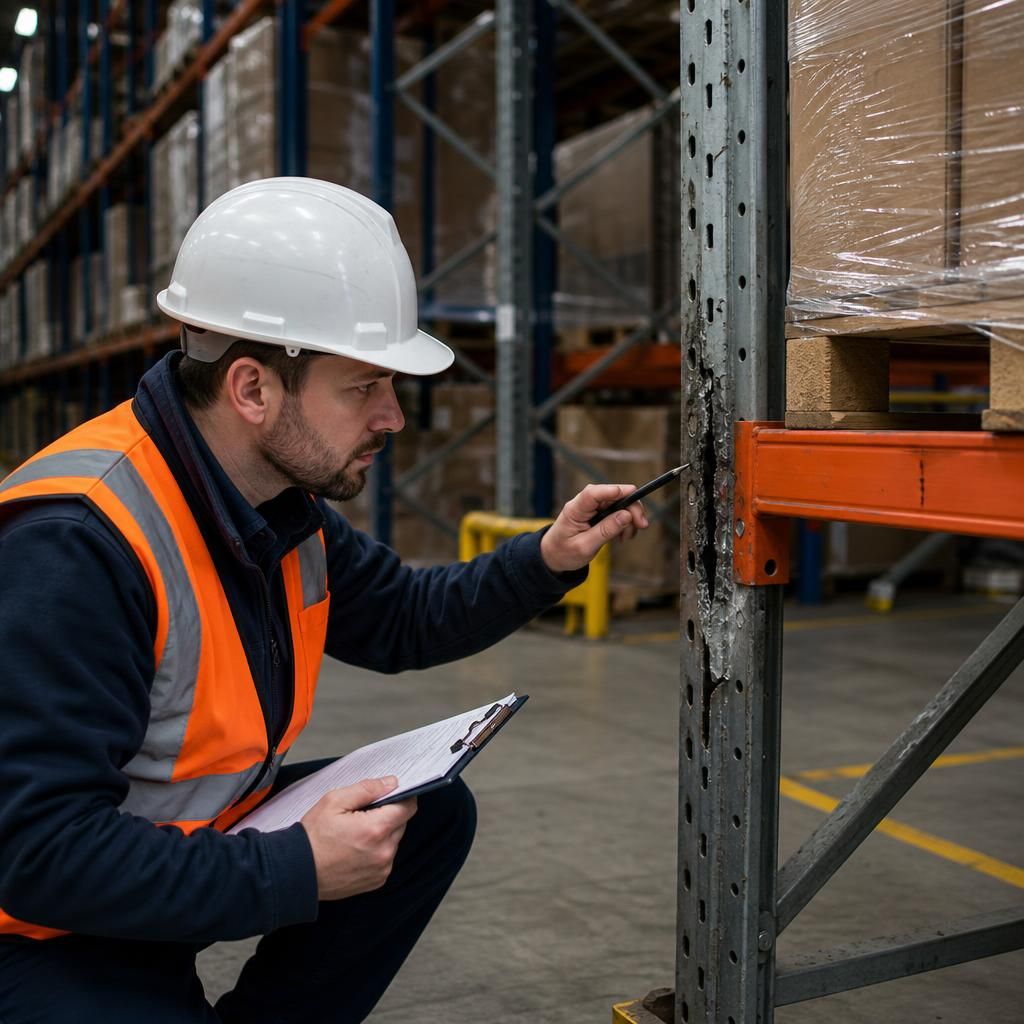
Neglecting regular warehouse racking inspections allows damage, overloading and unstable loads to remain unnoticed until they create a serious safety or operational problem. A bent upright, displaced beam, missing locking device or poorly positioned pallet can reduce the system’s safe capacity and increase the risk of falling goods, collisions or structural failure.
Prompt inspections help identify defects early so unsafe areas can be isolated, loads controlled and repairs planned before people, stock or warehouse operations are affected. Inspection findings should be recorded, reported to the responsible person and followed through until corrective work has been completed and the warehouse racking is confirmed safe to use.
Arrange a Warehouse Racking Inspection
Arrange a warehouse racking inspection with Able Racking to identify damage, overloading and other defects before they affect people, stock or operations. Our experienced inspectors can provide clear findings and practical recommendations for any necessary action.