
What are the common issues identified during warehouse racking inspections?
Common issues identified during warehouse racking inspections include impact damage to frames and beams, missing or loose components, overloading, corrosion, displaced pallets, inadequate protection and signs that the installation has become unstable or altered from its original design. Inspectors also check load notices, floor condition, safety accessories and previous repairs so defects can be assessed and corrective action prioritised.
The most common issues identified during warehouse racking inspections are impact damage, missing or loose components, overloading, displaced pallets, inadequate safety protection, corrosion, poor housekeeping and unauthorised alterations. Inspectors assess each defect in context, considering the condition of the warehouse racking, the loads being stored and whether the system still matches its original design and load specifications.
Impact damage to frames and beams
Forklift and other materials-handling equipment can strike uprights, bracing, beams and guard rails. Damage may appear as a bend, dent, split weld, distorted connection or scraped protective coating. Even apparently minor damage can reduce the load-carrying capacity of a component or affect the stability of the complete warehouse racking system.
Inspectors look closely at the lower sections of frames, aisle ends and areas where vehicles turn or position loads. They also check whether damaged components have been correctly isolated, unloaded, repaired or replaced. Straightening damaged components on site is not normally an appropriate repair unless it has been specifically assessed and approved by a suitably competent party.
Missing, loose or incorrectly fitted components
Warehouse racking depends on all structural and safety components being present and correctly secured. Common findings include missing locking pins, loose fixings, displaced bracing, damaged beam connectors, absent anchor bolts and incorrectly fitted safety accessories. A component may have been removed during maintenance or moved accidentally and not reinstated correctly.
These defects can allow beams or frames to move under load. The inspection should confirm that connectors are fully engaged, locking devices are in place and the frame is properly anchored where the design requires it.
Overloading and incorrect load distribution
Overloading occurs when stored goods exceed the stated capacity of a beam, frame or bay, or when loads are positioned in a way that creates excessive point loading. Inspectors compare the warehouse racking configuration and the loads in use with the available load information. They also look for bowed beams, excessive deflection, damaged pallets and signs that goods have been placed outside the intended storage positions.
Load capacity can change if beam levels are altered, components are replaced with incompatible items or the layout is modified. A load notice should be clear, legible and consistent with the current arrangement. Where the configuration or loading method has changed, it should be reviewed by a suitably competent designer or supplier before continued use.
Displaced, damaged or unsuitable pallets
Pallets that are broken, overloaded, poorly wrapped or unsuitable for the support arrangement can create a direct safety risk. They may sag between beams, project into an aisle, rest unevenly or allow goods to fall. Inspectors check that pallets are compatible with the warehouse racking, adequately supported and positioned with suitable clearances.
Goods should be stable and should not be stored where they can obstruct access routes, strike adjacent loads or fall through the back or sides of a bay. Damaged pallets and unstable loads should be removed from service or made safe without delay.
Inadequate protection in vulnerable areas
Protection may be missing, damaged or unsuitable for the risks present in the warehouse. Typical examples include absent upright guards, damaged end-of-aisle barriers, unprotected corners and insufficient protection at locations exposed to vehicle movement. Protection should be securely fixed, positioned to address the likely impact area and maintained as part of the wider warehouse racking safety arrangements.
Protection is not a substitute for safe vehicle operation, clear traffic routes and appropriate operator training. Inspectors consider these controls together rather than treating a guard as the only solution.
Corrosion, deterioration and poor condition
Corrosion can affect uprights, beams, bracing, fixings and floor anchors, particularly where the warehouse environment is damp or exposed to chemicals. Inspectors also look for damaged coatings, cracks, failed welds and other signs of material deterioration. Surface discolouration is not always structurally significant, but corrosion that has reduced the section of a component or affected a connection requires competent assessment.
Cleanliness also matters. Accumulated dust, moisture, chemicals or waste can conceal defects and accelerate deterioration. Cleaning should be carried out safely and should not disturb loads or structural components.
Changes to the original layout or design
Unauthorised alterations are a frequent cause of concern. Examples include moving beam levels, removing bracing, extending rows, changing aisle widths, mixing components from different systems or adding equipment without checking the design. A system can appear serviceable while no longer matching its approved configuration or load information.
Any proposed change to warehouse racking should be reviewed before work begins. The review should consider the revised loads, frame stability, floor capacity, clearances, protection and the effect on nearby bays. Updated drawings, load notices and inspection records should be retained where changes are approved.
Floor, anchorage and alignment problems
Inspectors examine the floor around the warehouse racking for cracking, settlement, uneven surfaces and damage that could affect stability. They check that base plates are properly supported and that anchors are present, tight and suitable for the floor condition. Frames may also be out of plumb, misaligned or displaced following an impact.
Small alignment issues should not be dismissed automatically. Their significance depends on the system design, the extent of movement and whether other damage is present. A competent person should assess any condition that could affect stability or load transfer.
Obstructed aisles and unsafe storage practices
Inspections often identify goods, packaging or handling equipment left in aisles, beneath access routes or in front of safety equipment. Obstructions increase the likelihood of impact and can prevent safe inspection, emergency access and effective stock handling. Poorly stacked goods, overhanging items and loads stored outside designated bays can create similar risks.
Warehouse operating procedures should define where goods may be placed, how aisles are kept clear and how damaged loads are managed. Good housekeeping supports the condition of the warehouse racking but does not remove the need for formal inspections.
Missing notices, records and control measures
Inspectors check whether the load notice is displayed, readable and appropriate for the current warehouse racking arrangement. They may also review previous inspection reports, repair records, incident reports and evidence that earlier defects have been closed out. Missing records can make it difficult to establish whether a known problem has been addressed or whether a system has been altered since its last assessment.
Other control measures may include clearly marked aisles, appropriate signage, safe working procedures and evidence that relevant employees have received suitable instruction. These administrative controls are considered alongside the physical condition of the installation.
How defects are dealt with after an inspection
Findings should be recorded clearly, with the location, component, defect and recommended action identified. Immediate risks may require the affected bay or area to be unloaded, isolated or taken out of use until a suitable repair is completed. Less urgent defects should still be assigned to a responsible person and monitored through to completion.
Repairs should use compatible components and follow the manufacturer’s or designer’s requirements. Once work is complete, the affected area should be checked to confirm that the repair has resolved the defect and that the warehouse racking remains suitable for its intended loads.
Regular inspections are most effective when their findings are used to improve daily checks, vehicle controls, loading practices, housekeeping and maintenance. Reporting damage promptly, preventing unauthorised changes and keeping inspection and repair records up to date help reduce repeat defects and support continued safe use of the warehouse racking.
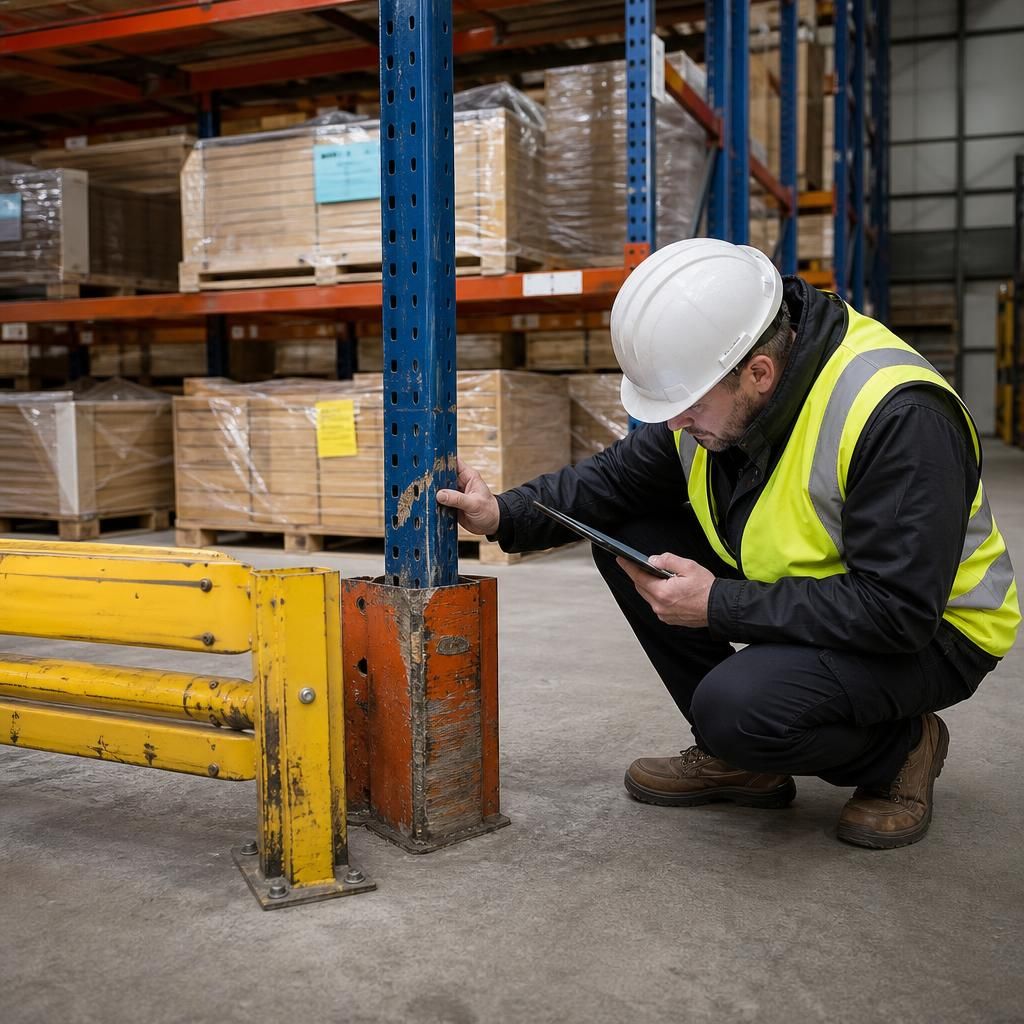
Impact damage is one of the most significant issues identified during warehouse racking inspections because a bent upright, damaged beam or displaced connection can reduce the system’s stability and load-carrying capacity. Damage is commonly found near aisle ends, frame bases and vehicle turning points where forklift impacts are more likely.
Inspectors assess the location and severity of the damage, then recommend suitable action. Depending on the risk, this may include unloading and isolating the affected bay, arranging a competent repair or replacing the damaged component. Damaged parts should not be straightened or altered on site unless the proposed repair has been properly assessed and approved.
Arrange your warehouse racking inspection
Arrange your warehouse racking inspection with Able Racking to identify defects, confirm compliance and support safe continued use. Contact our experienced team to discuss your inspection requirements.