
What are the key indicators of wear and tear in warehouse racking systems that require immediate attention during inspections?
Key indicators of wear and tear in warehouse racking systems include bent or cracked frames, damaged beams, missing or loose components, unstable connections, corrosion and signs of overloading. Any damage that could affect stability or load capacity requires immediate isolation, reporting and assessment by a competent warehouse racking inspector before the system is used again.
The key indicators of wear and tear in warehouse racking systems are damage that may reduce structural stability, load capacity or the security of stored goods. Bent or cracked frames, damaged beams, displaced components, failed connections, corrosion, impact damage and signs of overloading require immediate attention. The affected area should be made safe, reported and assessed by a competent warehouse racking inspector before it is used again.
Upright frame damage
Upright frames carry the vertical loads through the warehouse racking system, so damage to them is a priority concern. Inspectors look for:
- Bends, dents, kinks or twists in the upright posts.
- Cracks, splits or visible deformation in the steel.
- Damage near the floor, where impact from handling equipment is common.
- Distortion around beam connection points.
- Damaged, missing or ineffective upright guards and protectors.
- Loose, damaged or missing floor fixings and baseplates.
Even apparently minor damage can affect the way loads are transferred through the frame. An upright that has been struck should not be judged safe solely because it remains standing. Its condition, location, loading and effect on the complete system need to be assessed.
Damaged or deformed beams
Beams support the pallets and transfer their loads to the upright frames. Warning signs include visible bending, twisting, dents, cracks, damaged end connectors and beams that have become detached or partly displaced from their connections. A beam that is lower at one end, no longer level or showing signs of distortion may have been overloaded, struck or incorrectly installed.
Beam safety locks should be present and properly engaged. Missing, broken or ineffective locks can allow a beam to lift or move if it is hit by handling equipment or subjected to an abnormal load. Damaged beams and their connections require prompt isolation and competent assessment rather than on-site straightening or welding.
Loose, missing or displaced components
Warehouse racking depends on correctly fitted components working together. Inspectors check for missing safety pins, loose bolts, absent bracing members, damaged clips, displaced supports and incomplete frame bracing. Pallet supports, decking, backstops and other load-retention components should also be secure and suitable for the loads being stored.
A component that has been removed during maintenance or altered to accommodate stock can leave the system with less resistance to movement. Unauthorised modifications should be recorded and reviewed against the original design and loading requirements.
Unstable connections, movement and leaning
Movement, sway, leaning frames or unusual gaps at connections can indicate a problem with fixings, bracing, floor conditions or impact damage. Frames should remain aligned and adequately fixed. Any change in the system’s position, including a noticeable lean or repeated movement when loads are placed or removed, warrants investigation.
Inspectors also look for damaged floors around baseplates and anchors. Cracked or deteriorating flooring can reduce the effectiveness of fixings, even where the steel components appear undamaged.
Impact damage from handling equipment
Forklift and other handling equipment impacts are a common cause of warehouse racking damage. Evidence may include scraped paint, fresh dents, bent protectors, distorted uprights, damaged beams or marks on pallets and stored goods. The absence of a collapse does not mean that an impact is harmless.
After a significant impact, the location should be protected from further contact and the affected loads should be managed safely. Do not attempt to push damaged steel back into position or conceal impact marks with paint. A competent inspector should determine whether components need repair, replacement or removal from service.
Corrosion and deterioration
Rust, flaking coatings, pitting and thinning steel can reduce the effective strength of components. Corrosion is more likely where the warehouse racking is exposed to moisture, condensation, chemicals, leaks, wash-down processes or damaged protective coatings. Pay particular attention to joints, baseplates, areas close to the floor and locations where water or debris can collect.
Surface discolouration is not always structural corrosion, but it should be recorded and monitored. Where corrosion has caused pitting, section loss or weakness, the component requires an assessment by a suitably competent person. Cleaning or repainting does not restore lost structural capacity.
Signs of overloading or poor load placement
Overloading may be indicated by bowed beams, distorted frames, damaged beam connections, pallets that extend beyond the intended storage position or load notices that do not match the actual configuration. Unevenly distributed loads, concentrated point loads and goods placed outside the designed pallet positions can also increase stress on the system.
Load notices should be visible, legible and consistent with the current layout, beam levels and component arrangement. Changes to pallet sizes, load weights or storage configurations should be reviewed before use. If the safe working load is uncertain, the location should not be loaded until the requirement has been verified.
Damage to decking, pallet supports and load-retention features
Inspectors check that decking and pallet supports are not cracked, excessively deflected, displaced or missing. Damaged decking can allow pallets or goods to fall, while incorrectly positioned supports may fail to carry the load as intended. Backstops, barriers and other retention features should be secure and free from distortion where they are required to prevent loads moving into unsafe positions.
Pallets themselves should also be considered during an inspection. Broken boards, unstable loads, unsuitable pallet types and poor wrapping can create risks even when the steel structure is in good condition. Storage equipment and pallets must be compatible with the intended load and the warehouse racking design.
What requires immediate action?
Immediate action is appropriate where damage could cause collapse, falling goods, loss of load stability or further deterioration. Examples include a visibly bent upright, a detached or badly distorted beam, missing structural bracing, a failed connection, severe corrosion, a leaning frame, damaged floor fixings or an uncertain load capacity.
The usual response is to:
- Prevent access to the affected location and stop loading or unloading it.
- Keep people and handling equipment away from any area at risk of falling goods or structural failure.
- Record the location, component, visible damage and any known impact or loading event.
- Notify the responsible site manager and arrange assessment by a competent warehouse racking inspector.
- Unload the area only where this can be done safely and under appropriate instruction.
- Repair, replace or otherwise make safe the affected components in accordance with the assessment.
- Confirm that the area is suitable for use before removing the restriction.
Do not rely on temporary measures such as tying components together, welding damaged steel without approval or placing warning tape around a loaded location. These actions may conceal the underlying risk and do not demonstrate that the system has regained its required capacity.
How inspectors assess the condition
A thorough inspection considers the damage itself, the component’s function, the loads being carried, the surrounding structure and the likelihood of further impact. The inspector compares the installation with its intended design and checks whether previous repairs or modifications have affected its integrity. Findings should be categorised according to their severity so that dangerous conditions are dealt with without delay and lower-level defects are monitored and corrected within a defined timescale.
Inspection records should identify the exact location of each defect, include clear descriptions and photographs where useful, and state the required corrective action. Follow-up is essential: a defect is not closed simply because it has been reported. Repairs, replacements and changes to storage arrangements should be checked before the warehouse racking is returned to normal operation.
Regular inspections help identify progressive wear before it becomes a serious failure. Staff should also report impacts, unusual movement, damaged components, unstable loads and missing parts as soon as they are noticed. Prompt reporting, competent assessment and properly controlled repairs protect people, stock and operational continuity while helping the warehouse racking system remain safe and compliant.
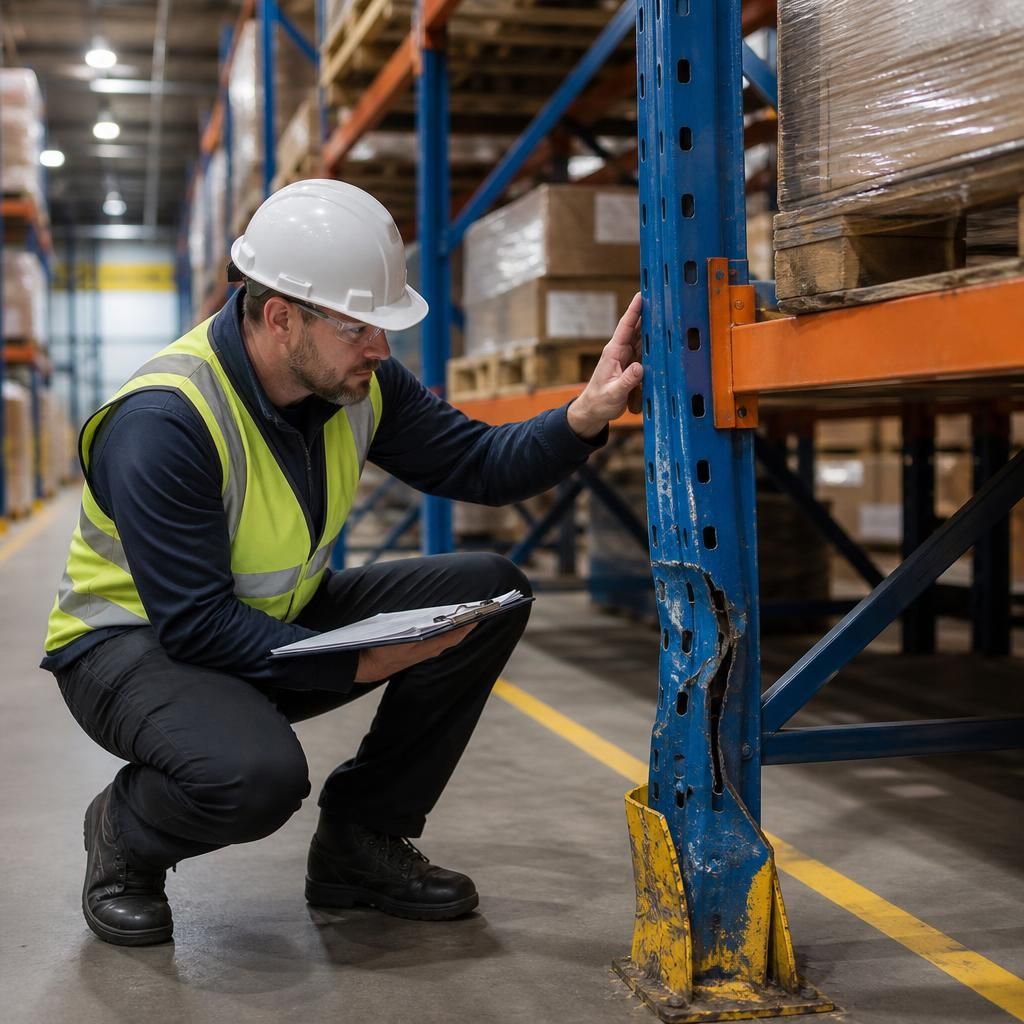
Impact damage is a key indicator that warehouse racking may no longer have its intended strength or stability. Dents, scrapes, bent upright posts, distorted beams, damaged guards or marks from handling equipment should be treated as evidence requiring prompt assessment, even when the structure is still standing.
Protect the affected location from further traffic, prevent loading or unloading, and report the damage to the responsible site manager. A competent warehouse racking inspector should assess the component, its connections, the stored load and any surrounding damage before deciding whether repair, replacement or removal from service is necessary. Damaged steel should not be straightened, welded or concealed with paint without an approved assessment.
Arrange a warehouse racking inspection
Arrange a warehouse racking inspection with Able Racking to identify damage, wear and potential safety risks before they affect your people, stock or operations. Contact our experienced team to discuss your inspection requirements and the next steps.