
How do environmental conditions impact the safety and performance of warehouse racking systems?
Environmental conditions can affect warehouse racking safety by causing corrosion, material deterioration, moisture damage and temperature-related changes that reduce the system’s strength or stability. Regular inspections should assess exposure to humidity, condensation, chemicals, extreme temperatures and poor ventilation, with damage addressed before it affects safe load performance.
Environmental conditions affect warehouse racking safety and performance by causing corrosion, moisture damage, material deterioration, contamination and temperature-related changes that can reduce the strength, stability or serviceability of the system. A suitable inspection must therefore consider the conditions surrounding the warehouse racking, not just visible impact damage or defects in individual components.
Warehouse racking is generally manufactured for use in defined indoor conditions. Where the operating environment differs from those conditions, the risk profile can change. Persistent damp, condensation, chemical exposure, extreme temperatures, poor ventilation and airborne contaminants may gradually affect uprights, beams, bracing, fixings, floor connections and protective finishes. These changes can be slow and difficult to identify without a structured inspection process.
Humidity, condensation and water exposure
High humidity can encourage corrosion, particularly where the protective coating has been scratched, worn or damaged by forklift impact. Condensation is also a concern in warehouses affected by temperature changes, cold external walls, open loading doors or refrigeration processes. Water may collect around floor plates, base connections and lower sections of uprights, where it can remain unnoticed behind stored goods or debris.
Corrosion reduces the effective cross-section of a steel component and can weaken connections or prevent fixings from functioning as intended. Surface discolouration alone may not indicate serious structural deterioration, but pitting, flaking coating, swelling around connections and significant loss of material require prompt assessment. Leaks, standing water and repeated condensation should be investigated at source rather than treated as isolated maintenance issues.
Temperature changes and cold environments
Temperature affects the way materials behave and can influence warehouse racking performance where conditions are unusually hot, cold or change rapidly. Repeated expansion and contraction may place additional movement or stress on connections, floor fixings and surrounding building interfaces. Cold environments can also make some materials less tolerant of impact, while ice, frost or condensation can affect visibility, access and the condition of stored loads.
Temperature-related risks should be assessed alongside the design specification, the condition of the warehouse floor and the way loads are handled. Any change to the operating environment, such as introducing chilled storage or heating equipment, should prompt a review of whether the existing warehouse racking remains suitable for the revised conditions.
Chemical exposure and airborne contaminants
Chemicals, cleaning products, salts, fertilisers, oils and other aggressive substances can attack protective coatings and accelerate corrosion. Vapours may affect components even where there is no direct liquid contact. Dust and airborne particles can also settle on beams, bracing and connections, hiding early signs of damage or retaining moisture against the steel.
Where chemicals are stored or used nearby, the inspection should consider the substance involved, the method of storage, spill controls, ventilation and the condition of affected components. A warehouse racking system showing coating breakdown, unusual staining or corrosion near chemical storage should not be assumed safe simply because it remains upright. The affected area should be examined by a competent person and repaired, replaced or protected in accordance with the system design and the manufacturer’s requirements.
Ventilation and building condition
Poor ventilation allows moisture and contaminants to accumulate, increasing the likelihood of condensation and corrosion. Defective roofs, leaking pipes, damaged doors and inadequate drainage can expose warehouse racking to conditions for which it was not designed. Airflow from heating, cooling or extraction systems may also create localised temperature differences, making some areas more vulnerable than others.
Inspections should map recurring environmental problems rather than recording only the visible result. For example, repeated corrosion at the same end of an aisle may point to a leak, condensation pattern or ventilation defect. Resolving the building issue, improving housekeeping and keeping components dry can be as important as carrying out repairs to the warehouse racking itself.
How environmental damage should be assessed
- Identify areas exposed to water, condensation, chemicals, heat, cold, dust or poor ventilation.
- Check uprights, beams, bracing, base plates, floor fixings, connectors and protective coatings for corrosion, distortion, cracking or material loss.
- Look behind stored goods and around lower-level components, where moisture and debris commonly collect.
- Compare any deterioration with the original system design, loading information and manufacturer’s guidance.
- Record the location, extent and apparent cause of each defect, supported by clear inspection notes and photographs where appropriate.
- Escalate significant corrosion, damaged connections, loose fixings or any loss of structural section for competent technical assessment.
Environmental damage should never be concealed with paint or removed through local cleaning before its extent has been assessed. Cosmetic treatment can hide continuing corrosion and make later inspection more difficult. Components that have lost structural capacity may need replacement rather than repair, and temporary controls may be necessary until corrective work is complete.
Preventative measures
Businesses can reduce environmental risk by repairing leaks promptly, controlling condensation, maintaining suitable ventilation, keeping floors and base connections clean and dry, managing chemical storage carefully and preventing spillages from reaching warehouse racking. Damaged protective coatings should be dealt with using an appropriate repair method, provided the underlying steel remains suitable for continued use.
Changes to warehouse operations should also be reviewed before implementation. New cleaning processes, storage of corrosive substances, changes in heating or cooling, increased wash-down activity and alterations to loading arrangements may all affect the condition and suitability of the system. Staff should know how to report leaks, corrosion, contamination and other environmental hazards, as early reporting supports timely intervention.
Regular warehouse racking inspections provide the formal opportunity to identify environmental deterioration before it develops into a structural or operational risk. The inspection frequency should reflect the severity of the conditions, the system’s age and condition, the level of traffic and any history of damage or corrosion. If environmental exposure is significant or changing, additional inspections may be appropriate alongside the scheduled inspection programme.
Where an inspection identifies a safety-critical defect, the affected area should be controlled in line with the inspector’s advice, including removing loads or preventing access where necessary. Repairs, replacement components and any change to the system should be completed by suitably competent operatives and confirmed as safe before normal use resumes. This approach protects warehouse racking performance while providing a clear record of how environmental risks have been identified and managed.
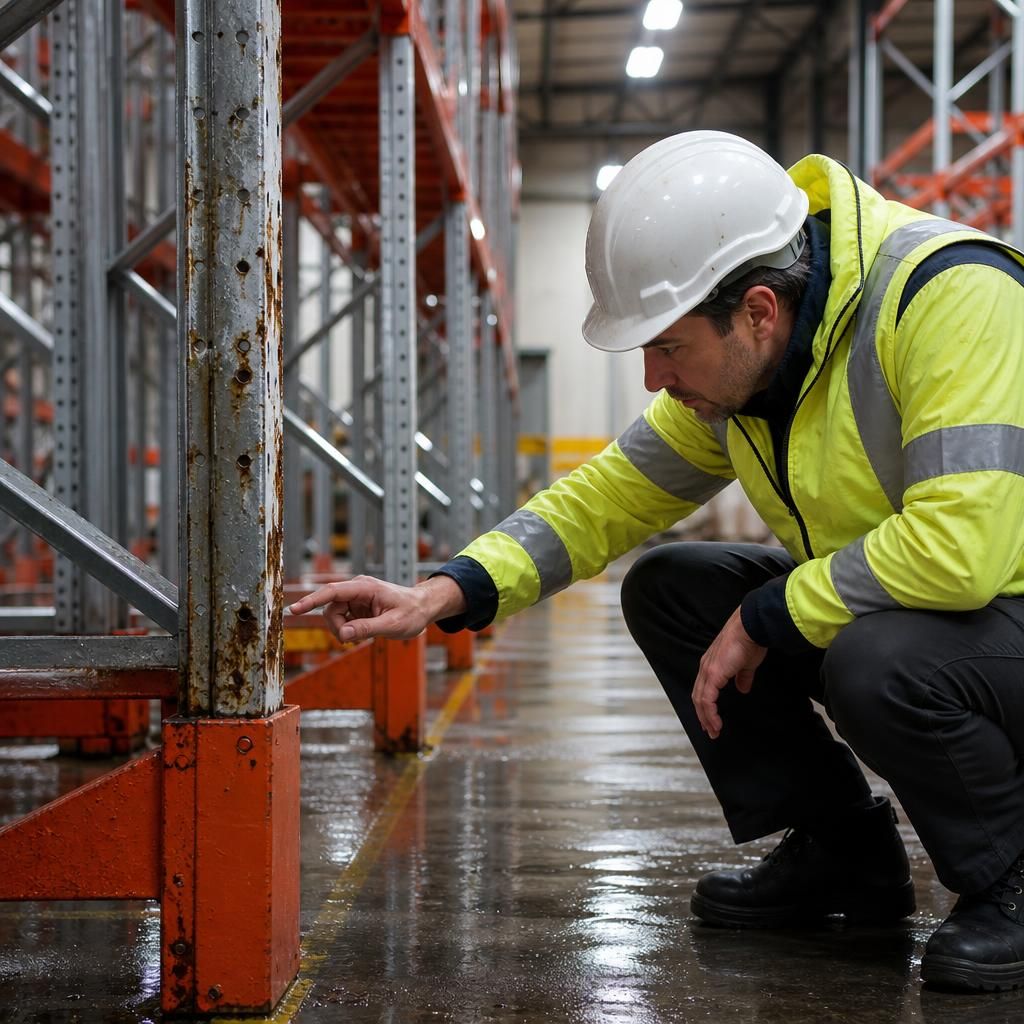
Humidity, condensation and water exposure can reduce warehouse racking safety by accelerating corrosion, particularly around damaged coatings, floor plates, base connections and lower sections of uprights. Moisture may collect behind stored goods or debris, making deterioration difficult to see during routine operations.
During an inspection, check for flaking coatings, pitting, staining, swelling around connections and any loss of steel section. Surface discolouration may be minor, but significant corrosion can affect the strength of components and the reliability of fixings. Leaking roofs, defective pipes, standing water and poor ventilation should also be investigated, as repairing the source helps prevent further damage.
- Keep floors, base plates and access areas clean and dry.
- Report leaks, condensation and corrosion as soon as they are identified.
- Do not cover damaged steel with paint before its condition has been assessed.
- Escalate significant material loss, damaged connections or loose fixings for competent technical assessment.
Arrange a Warehouse Racking Safety Inspection
Arrange a warehouse racking safety inspection to identify corrosion, moisture damage and other environmental risks before they affect safe performance. Contact Able Racking to discuss your inspection requirements with an experienced specialist.