
What qualifications should personnel conducting a warehouse racking inspection have to ensure accurate assessments?
Personnel conducting a warehouse racking inspection should be demonstrably competent through relevant training, practical experience and a recognised inspection qualification, such as SEMA Approved Rack Inspector (SARI) certification. They should understand BS EN 15635, manufacturer guidance, workplace safety requirements and how to assess damage, loading, stability and corrective actions objectively.
Personnel carrying out a warehouse racking inspection should be demonstrably competent through relevant technical training, practical experience and a recognised inspection qualification. In the UK, a qualification such as SEMA Approved Rack Inspector (SARI) is a strong indication of specialist competence, but the assessor must also understand the specific storage system, its intended loads, the manufacturer’s guidance and the requirements of BS EN 15635.
There is not a single qualification that automatically makes a person competent to inspect every warehouse racking system. Competence depends on whether the individual has the knowledge, skills and experience needed to identify defects accurately, assess their significance and recommend proportionate corrective action. The inspection provider should be able to explain how its personnel meet those requirements and provide evidence where appropriate.
Relevant technical training should cover the construction and operation of warehouse racking systems, including frames, beams, bracing, connectors, baseplates, floor fixings, protection equipment and load notices. Inspectors should understand how these components work together and how damage, overloading, poor installation or unauthorised alterations can affect stability.
Training should also address:
- Common forms of damage, such as bent uprights, distorted beams, damaged bracing, loose fixings and displaced components.
- The difference between cosmetic damage and defects that may affect structural capacity or safe use.
- Load limits, configuration details and the importance of matching the installed system to its design information.
- Safe access, inspection procedures, site hazards and the need to avoid placing the inspector or warehouse personnel at unnecessary risk.
- How to classify findings, set priorities and communicate immediate actions clearly.
- How to recognise changes made after installation, including altered beam levels, added components or incompatible replacement parts.
Practical experience is equally important. An inspector should have examined a wide range of warehouse racking layouts and encountered different types of damage, installation issues and operating conditions. Experience helps an assessor distinguish between a defect requiring immediate isolation, a problem requiring prompt repair and a lower-risk issue that should remain under observation.
Practical competence should include the ability to inspect the system methodically rather than relying on a brief visual walk-through. The assessor should review available drawings, load information and previous inspection records where available, then examine the installation from suitable viewpoints. They should consider the condition of the structure, protection measures, floor interface, pallet positioning, housekeeping, signs of impact and any activities that could create recurring damage.
Knowledge of BS EN 15635 is essential for a professional warehouse racking inspection. The standard provides recognised guidance on the use and maintenance of storage equipment, including the responsibilities of employers, users, suppliers and inspection personnel. An assessor should understand how to apply its principles in practice rather than simply naming the standard in an inspection report.
The inspector should also be familiar with relevant UK workplace safety duties and guidance, including the need to maintain work equipment in a safe condition and to provide suitable information, instruction and training. They should understand how inspection findings fit within the site’s wider risk assessment and maintenance arrangements. A competent inspector will not treat an inspection as a standalone paperwork exercise.
A recognised inspection qualification provides useful independent evidence of competence. SARI certification is widely recognised within the storage equipment sector and demonstrates that an individual has been assessed against a defined technical standard. However, certification should be considered alongside current experience, continuing professional development and the person’s ability to deal with the particular system being inspected.
Inspection personnel should maintain their knowledge through refresher training, technical updates and exposure to current manufacturer guidance. This is particularly important where systems, protection products, repair methods or site operations have changed. A provider should be able to show that its inspectors receive ongoing support and that their competence is reviewed rather than assumed indefinitely after an initial course.
Independence and professional judgement also matter. The assessor must record defects objectively, even when the findings may require temporary restrictions, repairs or changes to working practices. They should not downgrade a concern to avoid disruption or recommend unnecessary work without a clear technical reason. Where the available information is insufficient, the correct approach is to identify the limitation and recommend further investigation by a suitably qualified specialist.
A suitable inspection report should show the inspector’s name, relevant qualification or competence details, inspection date, areas examined and any limitations affecting the assessment. Findings should be described precisely, supported by photographs or location references where useful, and prioritised according to risk. The report should make clear which locations require immediate action, which require repair within an agreed timeframe and which should be monitored.
Internal warehouse personnel can carry out routine visual checks if they have been properly trained for that role. These checks support day-to-day control but do not replace a formal expert warehouse racking inspection. Staff undertaking routine checks should know how to recognise visible damage, report it promptly and prevent continued use where a serious defect is present.
Before appointing an inspection provider, ask for evidence of the inspector’s relevant qualification, experience with comparable systems, knowledge of BS EN 15635, insurance and reporting process. It is also sensible to confirm who will carry out the inspection, how urgent findings will be communicated and whether the provider can give practical guidance on repairs and follow-up actions.
In summary, the most reliable assessor combines a recognised specialist qualification with hands-on experience, current technical knowledge, sound knowledge of warehouse racking standards and the ability to produce clear, evidence-based reports. Those qualities support accurate assessments and help ensure that identified risks are controlled before they affect people, stock or operations.
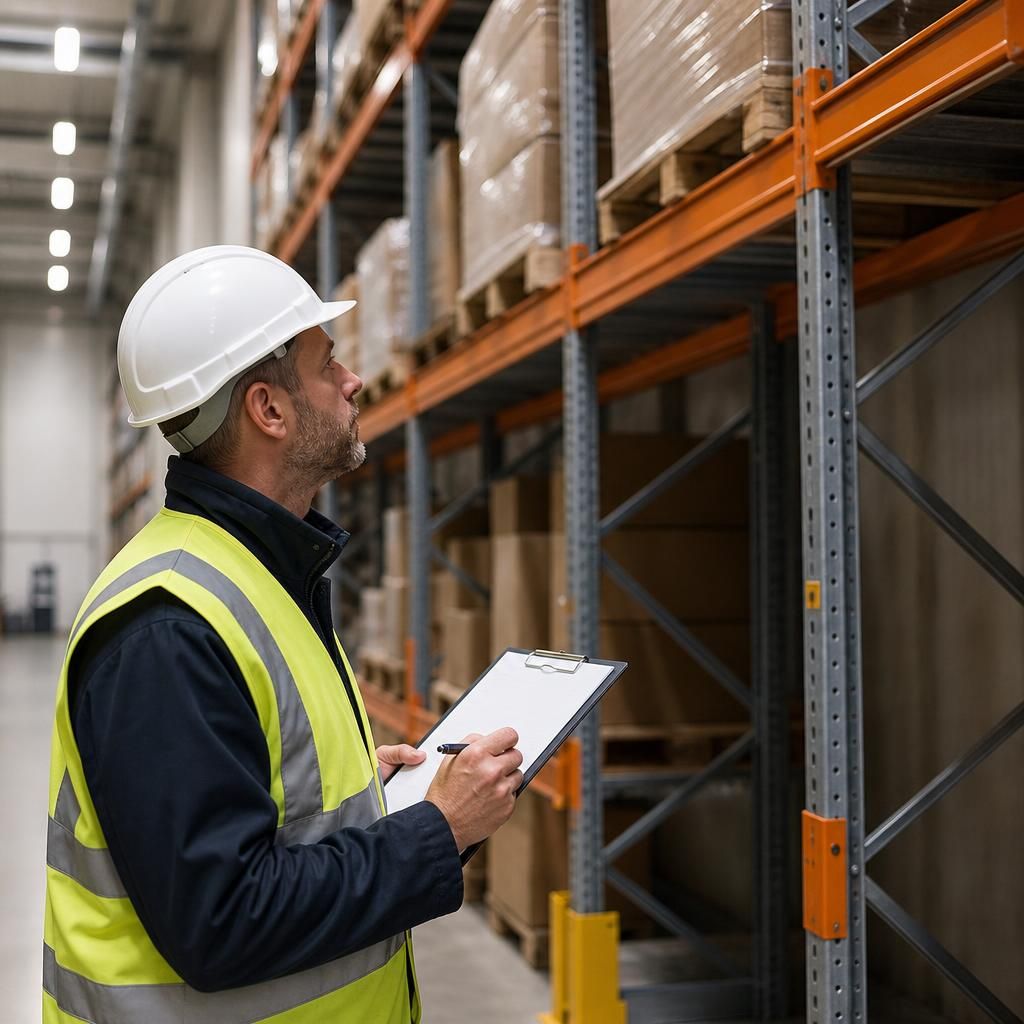
Personnel conducting a warehouse racking inspection should have recognised specialist training, practical experience and a clear understanding of BS EN 15635. A qualification such as SEMA Approved Rack Inspector (SARI) provides useful evidence that the inspector has been assessed against an established technical standard.
Qualification alone is not enough. The inspector should also understand the specific storage system, its design information, load limits, manufacturer guidance and common defects, including damaged uprights, beams, bracing, fixings and protection. They must be able to assess whether a fault requires immediate isolation, urgent repair or continued monitoring, then record the finding accurately and explain the recommended action.
When reviewing an inspection provider, ask for details of the named inspector’s qualifications, relevant experience, continuing professional development and reporting process. This helps confirm that the assessment will be completed by a competent person with the technical judgement to identify risks and provide practical, evidence-based recommendations.
Arrange a qualified warehouse racking inspection
Arrange a qualified warehouse racking inspection with Able Racking to ensure your storage system is assessed by competent, experienced personnel. Contact our team to discuss your inspection requirements and receive clear, practical recommendations.