
What are the key indicators of a potential issue during a warehouse racking inspection?
Key indicators of a potential issue during a warehouse racking inspection include damaged or missing components, visibly bent frames or beams, loose fixings, unstable loads, corrosion and signs that the structure has been struck. Any defect should be assessed promptly, recorded clearly and repaired or isolated according to its severity to protect people, stock and warehouse operations.
A warehouse racking inspection should identify any condition that could reduce the strength, stability or safe use of the storage system. The main warning signs are damaged or distorted frames and beams, missing or loose components, unstable or overloaded loads, corrosion, inadequate anchorage or protection, and evidence of repeated impact. These findings should be assessed by a competent person, recorded clearly and dealt with according to their severity.
1. Bent, twisted or visibly damaged components
Impact damage is one of the most important indicators of a potential issue. Uprights, beams, bracing, footplates and guards can be damaged by forklift trucks, pallet handling equipment or falling stock. Look for bends, dents, splits, buckling, cracked welds, separated connections and distortion around beam end connectors. Even damage that appears minor can affect the load-bearing capacity of the structure.
Frames or beams that are visibly out of alignment should not be treated as cosmetic defects. The affected area should be assessed against the manufacturer’s requirements and the relevant inspection criteria. Where there is serious deformation, the affected bay may need to be unloaded and isolated until a suitable repair or replacement has been completed.
2. Missing, loose or incorrectly fitted components
A warehouse racking inspection should confirm that all required components are present, correctly positioned and secure. Warning signs include missing safety pins, loose bolts, displaced bracing, damaged beam connectors, absent baseplates and guards that have become detached. Components may also have been removed during alterations and not replaced correctly.
Do not assume that a structure is safe because it remains upright. Missing or unsecured parts can reduce stability and allow beams or frames to move under load. Any unauthorised modification should be reviewed before the affected storage area is used again.
3. Unstable, damaged or unsuitable loads
The condition and positioning of stored goods provide important evidence during an inspection. Pallets that are broken, overhanging, leaning, poorly wrapped or positioned unevenly can place unexpected forces on beams and frames. Loads should be stable, suitable for the pallet supports and stored within the stated capacity and configuration of the system.
Warning signs include pallets resting on damaged boards, goods protruding into access aisles, inconsistent load sizes and heavy items stored above lighter or less stable goods without a suitable assessment. Load notices should be legible and consistent with the way the warehouse is being used. If the actual loads, pallet types or storage arrangement have changed, the system may require a technical review.
4. Corrosion, wear and deterioration
Rust, flaking coatings, pitting and other forms of corrosion can weaken metal components, particularly where the damage is concentrated around joints, baseplates, floor fixings or areas exposed to moisture and chemicals. Deterioration can also result from persistent contact with pallets, cleaning equipment or stored products.
Surface discolouration does not always indicate a structural defect, but it should be recorded and monitored. Deep pitting, perforation, cracking or significant loss of section requires prompt assessment. The cause of the deterioration should also be addressed, such as water ingress, poor drainage or unsuitable cleaning practices.
5. Movement, poor anchorage or an unsafe surrounding area
Unusual movement, leaning frames, gaps at floor connections or loose anchors may indicate that the structure is not adequately secured. Inspectors should also check whether the floor is suitable and sound around the baseplates, and whether guards, barriers and aisle clearances are providing the intended protection.
Repeated impact marks, damaged floor protection or evidence that vehicles are regularly striking the same location indicate an ongoing control problem rather than an isolated defect. The cause may require attention through revised traffic routes, improved protection, operator instruction or changes to the working method.
How findings should be managed
Every defect should be recorded with its location, description, likely cause and risk classification, supported by photographs where useful. Findings should be communicated to the responsible site contact so that affected areas can be unloaded, restricted or isolated when necessary. Temporary measures should not be regarded as a permanent repair.
Serious damage, instability or a condition that could lead to collapse requires immediate action and competent technical advice. Less severe defects should still be assigned an owner and a completion date, with follow-up checks confirming that the corrective work has been completed properly. Reviewing recurring findings can also identify patterns such as vehicle impacts, unsuitable loading practices or inadequate operator training.
A warehouse racking inspection is most effective when it combines a careful visual assessment with accurate load information, maintenance records and knowledge of how the system is used. Prompt reporting and repair of warning signs helps protect staff, stock and day-to-day warehouse operations while supporting continued compliance with the manufacturer’s instructions and applicable workplace safety requirements.
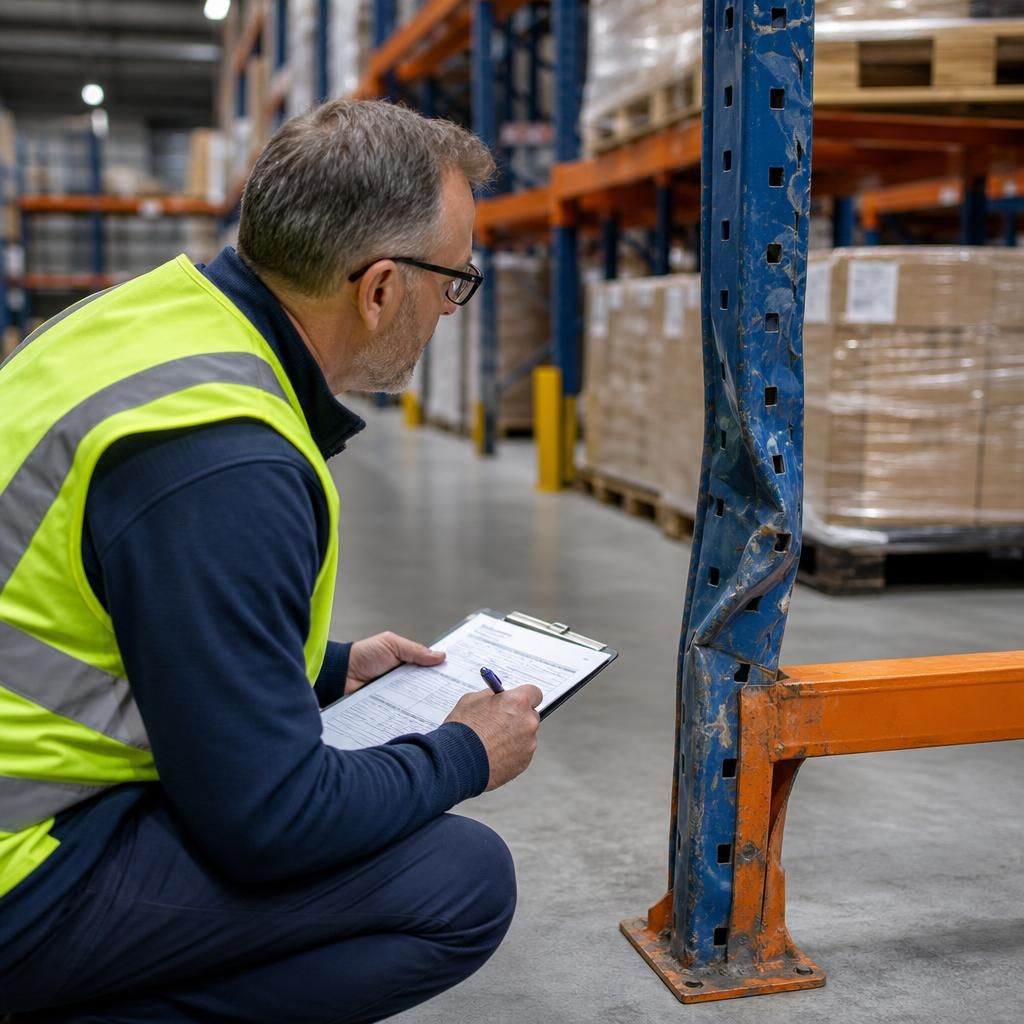
A key indicator of a potential issue during a warehouse racking inspection is visible impact damage to an upright, beam, brace, footplate or connector. Dents, bends, twists, cracked welds and displaced components can reduce the structure’s strength or stability, even when the affected bay remains standing.
The damaged area should be identified, photographed and assessed by a competent person. Where the damage is serious or the stability of the structure is uncertain, the affected location should be unloaded and isolated until suitable repair or replacement has been completed. Repeated impact marks should also be investigated, as they may indicate that vehicle routes, protection or operator controls need to be improved.
Arrange a warehouse racking inspection
If a warehouse racking inspection identifies damage, instability or another potential safety issue, arrange a professional assessment with Able Racking. Our experienced team can help prioritise defects and recommend appropriate corrective action.