
What are the consequences of neglecting regular pallet racking inspections?
Neglecting regular pallet racking inspections can allow damage, instability and overloading risks to go unnoticed, increasing the likelihood of falling loads, structural failure, injuries and operational disruption. It can also lead to more costly repairs, non-compliance with workplace safety duties and avoidable damage to stock, equipment and warehouse racking.
Neglecting regular pallet racking inspections allows damage, overloading, instability and poor installation to remain unaddressed. The consequences can include falling loads, structural failure, serious injury, damage to stock and handling equipment, operational disruption, higher repair costs and difficulty demonstrating compliance with workplace safety duties.
Warehouse storage systems can be damaged during routine forklift and pallet-handling activity, even when the damage is not immediately obvious. A bent upright, displaced beam, missing locking pin or impact to a protection component can reduce the system’s capacity and stability. Regular inspections identify these issues before they develop into a more serious hazard.
Safety risks from undetected damage
The most serious consequence of neglect is the increased risk of a partial or complete collapse. Damaged frames, beams, braces, connectors and floor fixings may no longer perform as designed. Loads can become unstable or fall into aisles, putting warehouse operatives, visitors and contractors at risk of being struck or trapped.
Smaller defects can also create immediate hazards. Protruding components, split timber pallets, unsecured loads and obstructed access routes may cause collisions, trips or handling injuries. If damage is not reported, isolated and repaired, it can worsen through continued use and affect adjoining sections of the installation.
Damage to stock, equipment and buildings
A failed beam or unstable load can damage stored goods, pallets, forklifts, conveyors and other warehouse equipment. In more severe cases, falling materials can damage floors, doors, services or the building itself. The resulting losses may extend beyond the original damaged component, particularly where stock is contaminated, unsaleable or time-sensitive.
Regular inspections help identify unsafe conditions such as overhanging loads, unevenly distributed weight, damaged pallets and loads stored outside the intended configuration. Correcting these conditions reduces the likelihood of avoidable damage and helps maintain safe clearance around aisles, fire routes and work areas.
Higher repair and recovery costs
Early defects are generally easier to manage than advanced damage. A minor impact or missing component may be dealt with through a controlled repair or replacement, while prolonged use of a damaged installation can lead to distortion, progressive failure or the need to empty and dismantle larger sections.
Neglected defects may also require emergency isolation, urgent unloading, temporary storage and expedited repairs. These activities can cost more than planned maintenance and may interrupt normal warehouse operations. An inspection programme provides an opportunity to prioritise repairs and schedule work with less disruption.
Operational disruption and reduced productivity
Unsafe sections may need to be taken out of service until they have been assessed and made safe. This can reduce available storage capacity, restrict forklift routes and require stock to be moved at short notice. If multiple defects are discovered after a long period without inspection, the disruption may be more extensive than if issues had been identified progressively.
Unplanned closures can also affect picking, replenishment, dispatch and production schedules. Maintaining clear inspection and repair records helps warehouse managers plan corrective work, communicate restrictions and return affected areas to service in a controlled manner.
Failure to meet workplace safety responsibilities
Employers and duty holders must take reasonably practicable steps to protect people who may be affected by workplace activities and equipment. Pallet racking should be used, maintained and inspected in a way that reflects its design, loading arrangements, operating environment and foreseeable risks.
Neglecting inspections can make it difficult to demonstrate that suitable precautions were in place if an incident occurs. Enforcement action, investigation costs, claims, increased insurance scrutiny and reputational damage may follow where the condition of the installation, inspection arrangements or repair decisions cannot be evidenced.
An inspection record does not replace effective action. Findings should be clearly documented, reported to the responsible person and followed by suitable controls. Depending on the risk, this may include unloading the affected area, preventing access, applying a safe-load notice, arranging repair or replacing damaged components.
Loss of load capacity and system performance
Warehouse racking is designed for particular beam levels, bay configurations, load types and maximum weights. Changes to the layout, beam positions, pallet dimensions or loading method can affect its capacity. Damage can further reduce the margin of safety, even where the installation appears to remain upright.
Ignoring missing load notices, altered configurations or signs of overloading can result in the system being used outside its intended design. A competent assessment is needed where the original design information is unavailable, the layout has changed or the condition of structural components is uncertain.
What regular inspections can identify
- Impact damage to uprights, beams, braces, guards and other components.
- Missing, damaged or incorrectly fitted locking devices and fixings.
- Distorted frames, leaning sections, loose connections or damaged floor anchors.
- Overloaded, unevenly distributed or incorrectly positioned pallets.
- Damaged pallets, unstable loads and goods projecting into aisles.
- Changes to the installation that do not match the approved configuration.
- Obstructed aisles, restricted escape routes and poor housekeeping around storage areas.
- Missing or unclear load notices and evidence that operating instructions are not being followed.
Routine user checks should be supported by a structured inspection programme carried out by a suitably trained and competent person. The frequency should reflect the risks and conditions in the warehouse, including traffic levels, the type of handling equipment, previous damage and any changes to the installation. A more detailed expert inspection should be arranged at appropriate intervals and after significant impact, alteration or unusual loading.
When an inspection identifies damage, the affected area should be assessed promptly rather than left in service because the defect appears minor. The responsible person should record the location and condition, apply immediate controls where necessary, arrange competent repair or replacement and confirm that the area is safe before normal use resumes.
Regular pallet racking inspections therefore protect more than the storage system itself. They help safeguard people, stock and equipment, support planned maintenance, reduce avoidable downtime and provide practical evidence that warehouse safety is being actively managed. Consistent inspections, accurate records and timely corrective action are essential to keeping the installation safe, compliant and fit for purpose.
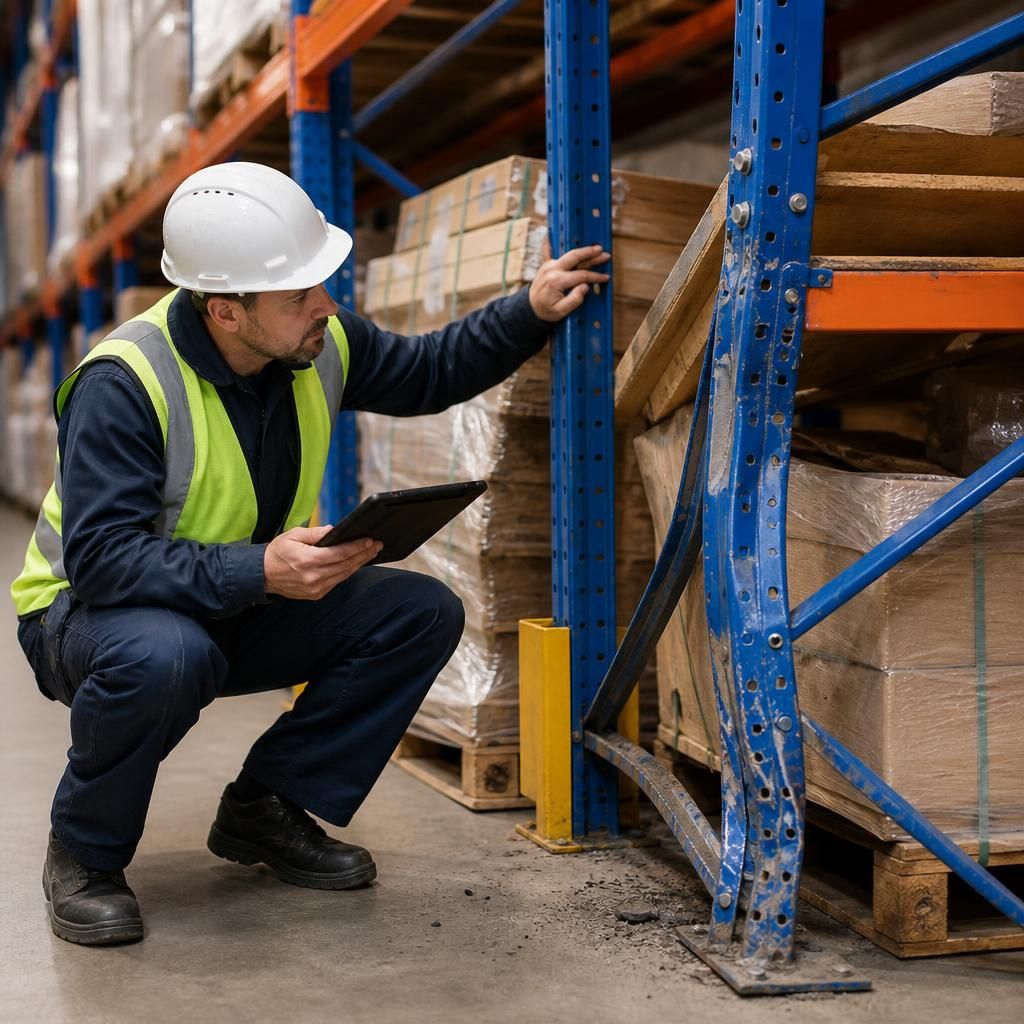
Neglecting regular pallet racking inspections allows minor damage and unsafe loading conditions to remain in use, increasing the risk of falling goods, structural failure and unplanned operational disruption.
A damaged upright, loose connection, missing locking pin or overloaded beam may require an affected bay to be isolated and unloaded at short notice. This can restrict forklift routes, reduce available storage space and delay picking, replenishment and dispatch. If defects are identified early, repairs can usually be planned, affected stock can be managed safely and disruption can be kept under control.
Inspection records also help demonstrate that warehouse safety is being actively managed. Findings should be reported promptly, with suitable action taken to unload, isolate, repair or replace affected components before the storage system is returned to service.
Arrange a professional pallet racking inspection
Arrange a professional pallet racking inspection with Able Racking to identify damage, unsafe loading conditions and compliance risks before they disrupt your warehouse. Contact our experienced team to plan a suitable inspection for your storage system.