
What are the consequences of neglecting regular pallet racking inspections?
Neglecting regular pallet racking inspections can allow damage, overloading, instability and missing safety measures to go unnoticed, increasing the risk of falling loads, collapse, injuries, stock damage and operational downtime. Routine inspections identify defects early so they can be assessed and repaired before they compromise warehouse safety, compliance or efficiency.
Neglecting regular pallet racking inspections can allow damage, overloading, instability and missing safety measures to remain undetected. These defects can lead to falling loads, partial or complete collapse, serious injury, stock damage, equipment damage, enforcement action and avoidable operational downtime. Routine inspections provide an opportunity to identify problems early, assess their severity and arrange suitable corrective action before warehouse racking becomes unsafe.
Warehouse racking is exposed to repeated use throughout its working life. Forklift impacts, incorrect loading, poorly positioned pallets, unauthorised alterations and general wear can gradually affect its condition. Damage is not always obvious from a distance, and a system that appears stable may have weakened components or inadequate protection. Regular inspections are therefore an essential part of preventative maintenance rather than an optional administrative exercise.
The main consequences of neglecting pallet racking inspections include:
- Increased risk of collapse: Bent uprights, damaged beams, missing safety pins, displaced components or weakened connections can reduce the load-bearing capacity and stability of the system. If defects are not identified, a localised failure may affect adjoining bays or larger sections of the installation.
- Falling goods and pallets: Incorrectly positioned, damaged or overloaded pallets can fall from storage levels. Loose products may also project into aisles or become dislodged when pallets are moved, creating a direct risk to people, vehicles and nearby stock.
- Injury to employees and visitors: A failure involving stored loads or warehouse racking can cause crushing, impact or trapping injuries. Even less serious damage can create hazards for forklift operators, pedestrians, contractors and anyone working near the affected area.
- Damage to stock and equipment: Falling goods can damage products, forklifts, conveyors, loading equipment, floors and other parts of the warehouse. The resulting losses may include replacement costs, waste, contamination and delays in fulfilling customer orders.
- Operational disruption: A damaged bay may need to be isolated immediately, while a more extensive problem can require sections of the warehouse to be emptied and made safe. This reduces available storage capacity and can interrupt picking, replenishment and dispatch activities.
- Non-compliance and enforcement risk: Employers must manage workplace risks and maintain work equipment and storage systems so they remain safe to use. Where inspections, records or corrective actions are inadequate, an incident may lead to investigation, enforcement action, increased scrutiny and potential civil or criminal liability.
- Higher repair costs: Small defects are generally easier to manage than damage that has been left to worsen. Delayed action can turn a replaceable component or isolated repair into a wider dismantling, unloading or system-replacement requirement.
Neglect can also make it difficult to establish whether the warehouse racking is being used within its intended design limits. Load notices may be missing or inaccurate, beam levels may have been changed without assessment, and pallets may not be suitable for the support arrangement. Without a competent inspection, these issues can continue unnoticed and encourage unsafe working practices.
Daily or routine visual checks by trained warehouse staff are useful for identifying obvious damage, obstructions, displaced pallets and other immediate concerns. They do not replace a formal expert inspection. A competent inspector should assess the installation systematically, including uprights, beams, bracing, connectors, safety locks, baseplates, guards, floors, load notices and evidence of impact. The inspection should consider how the system is actually being used, not only whether its individual components appear intact.
When a defect is found, it should be recorded clearly and classified according to its severity. Areas presenting an immediate danger should be taken out of service and unloaded safely until the issue has been assessed. Other damage should still be monitored and repaired within an appropriate timescale. Temporary measures such as warning labels or moving stock may not be sufficient if the underlying structural problem remains.
Inspection records are important because they show what was examined, what defects were identified, who carried out the assessment and what action followed. They also help warehouse managers identify recurring forklift impact, loading errors or training gaps. Reviewing previous reports can reveal patterns that would otherwise be treated as isolated incidents, allowing preventative measures such as improved traffic management, better protection or refresher training to be introduced.
Regular inspections should form part of a wider warehouse racking safety system that includes suitable design, correct installation, clear load information, controlled alterations, staff training, prompt reporting of damage and planned maintenance. Inspections cannot compensate for overloading or unsuitable use, but they provide a structured way to verify that the installation remains safe under its current operating conditions.
For existing customers, reporting damage as soon as it occurs is just as important as attending scheduled inspections. A forklift strike, dropped load, unusual movement, missing component or visible deformation should be treated as a reason for immediate assessment rather than waiting for the next planned visit. Prompt isolation and expert advice can prevent a local defect from becoming a wider safety or operational problem.
In practical terms, regular pallet racking inspections protect people, stock, equipment and business continuity. They help identify defects before failure, support compliance with workplace safety duties and provide documented evidence that warehouse racking is being managed responsibly. The safest approach is to combine routine staff observations with periodic inspections by a competent specialist and to complete corrective work without unnecessary delay.
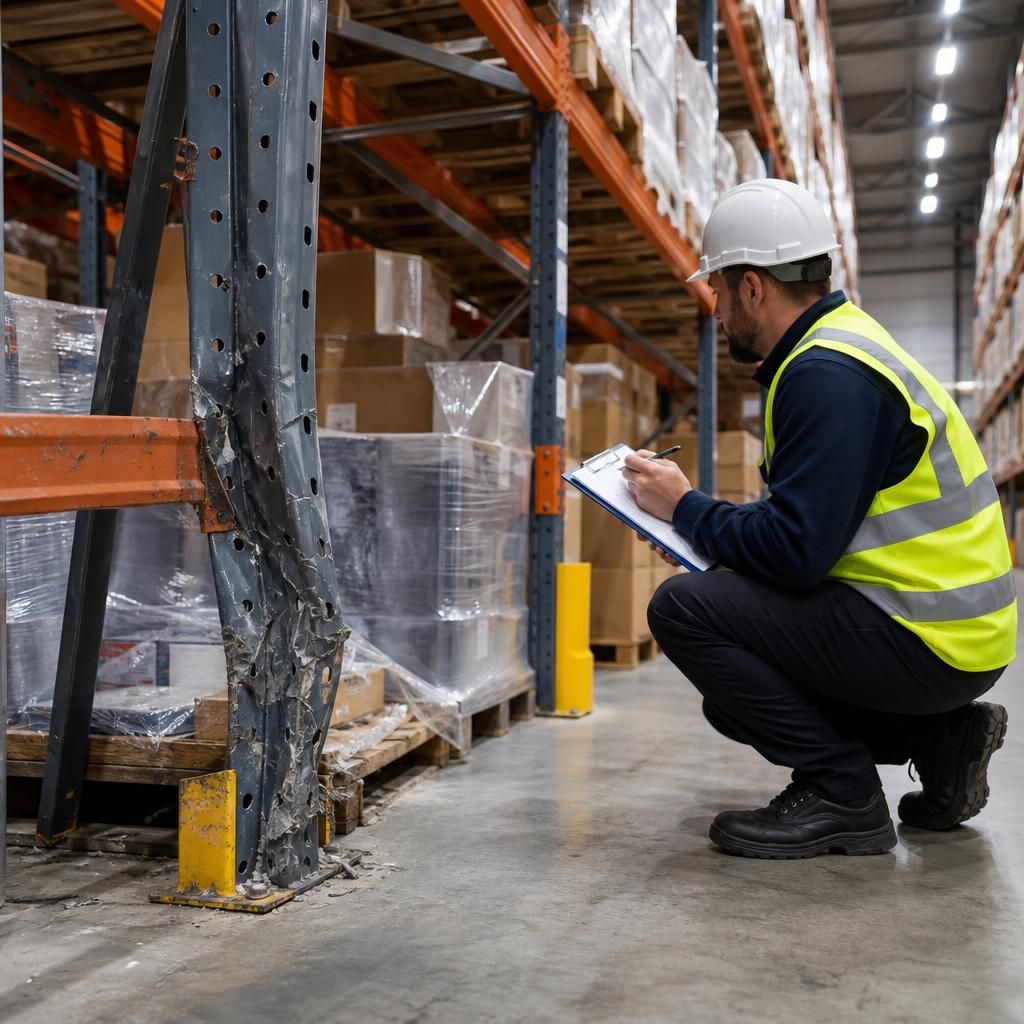
Neglecting regular pallet racking inspections allows structural damage and unsafe loading conditions to remain in use. Bent uprights, damaged beams, missing safety locks, displaced pallets and overloaded levels can reduce stability and increase the risk of falling goods, collapse, injury and operational disruption.
Where damage or an unsafe condition is identified, the affected area should be reported, assessed and isolated where necessary. Prompt expert inspection and corrective action can prevent a local defect from developing into wider warehouse racking damage, stock loss or avoidable downtime.
Book a professional pallet racking inspection
Arrange a professional pallet racking inspection with Able Racking to identify defects, assess risks and support safe, compliant warehouse operations. Contact our experienced team to book your inspection.