
What specific benefits do regular pallet racking inspections provide?
Regular pallet racking inspections identify damage, instability and other safety issues before they lead to injuries, stock loss or operational disruption. They also support compliance, enable timely repairs, extend the service life of storage systems and help keep warehouse operations safe and efficient.
Regular pallet racking inspections provide an early warning system for damage, instability and unsafe use. They help identify problems before they cause injury, stock loss or operational disruption, while supporting legal compliance, planned maintenance, longer equipment life and more reliable warehouse operations.
A professional inspection is more than a visual check that the pallet racking appears tidy. A competent inspector examines the condition of the storage system, considers how it is being used and records defects according to their potential risk. This provides a structured basis for deciding what needs immediate action, what can be monitored and what should be repaired during planned maintenance.
- Improved protection for people: Damaged frames, bent uprights, displaced beams, missing safety components and overloaded locations can all increase the risk of collapse or falling goods. Identifying these conditions early allows the affected area to be made safe before the problem becomes more serious.
- Earlier identification of damage: Impacts from forklift trucks and other handling equipment may cause damage that is not immediately obvious during normal warehouse activity. Inspections examine vulnerable components and help detect progressive distortion, loose connections, inadequate protection and other defects that can worsen if left untreated.
- Better control of compliance responsibilities: Employers must manage workplace risks and keep work equipment safe for use. Regular pallet racking inspections provide documented evidence that the condition of the storage system is being actively monitored. They do not replace a suitable risk assessment, safe operating procedures or required maintenance, but they form an important part of a responsible safety management system.
- More effective prioritisation of repairs: Inspection findings can be categorised by urgency, making it clearer which locations need to be unloaded, isolated or repaired without delay. This reduces the risk of defects being overlooked and helps warehouse managers coordinate remedial work with stock movements and operational requirements.
- Lower risk of unplanned costs: A minor defect is generally easier to address than extensive damage involving several connected components or a collapsed section. Preventative inspections can therefore help reduce emergency repair requirements, stock damage, temporary storage arrangements and disruption to picking, loading and dispatch activities. An inspection cannot eliminate unexpected costs, but it improves the opportunity to control them.
- Longer service life for storage equipment: Prompt repairs, correct loading practices and attention to repeated impact points help prevent avoidable deterioration. Maintaining the system in accordance with its design and the manufacturer’s requirements can support its continued performance and delay premature replacement.
- More accurate stock and load control: Inspections can highlight missing or unclear load notices, unsuitable pallet placement, inconsistent beam levels and signs that the system is being used outside its intended configuration. Correcting these issues helps ensure that loads are stored in suitable locations and that operators can work to clear, reliable information.
- Improved warehouse efficiency: Safe, well-maintained pallet racking supports predictable storage, replenishment and retrieval. Resolving defects before they cause closures or restricted access helps reduce interruptions and makes it easier to plan maintenance rather than react to failures.
- Useful records for ongoing management: Inspection reports create a traceable record of observations, recommended actions and completed repairs. Comparing reports over time can reveal recurring impacts, poorly protected areas, training needs or changes in working practices. This information can then support improvements to traffic routes, protection measures, supervision and operator training.
The value of an inspection depends on what happens afterwards. Findings should be reviewed by the person responsible for the warehouse, actions should be assigned and completed within the recommended timescale, and any unsafe area should be controlled immediately. A repair should also be checked to confirm that the equipment has been restored correctly before it is returned to normal use.
Regular inspections are most effective when combined with routine operator observations, good housekeeping, clear load limits, suitable impact protection and a reporting process for damage. The inspection frequency should reflect the warehouse environment, traffic levels, equipment condition, history of impacts and the manufacturer’s or competent person’s recommendations. Higher-risk operations may require closer monitoring.
In practical terms, regular pallet racking inspections give warehouse managers better information and more time to act. They help prevent avoidable incidents, demonstrate organised safety management, control maintenance decisions and keep storage equipment available for its intended purpose. They are a preventative measure that supports safer and more efficient warehouse operations, rather than simply a record-keeping exercise.
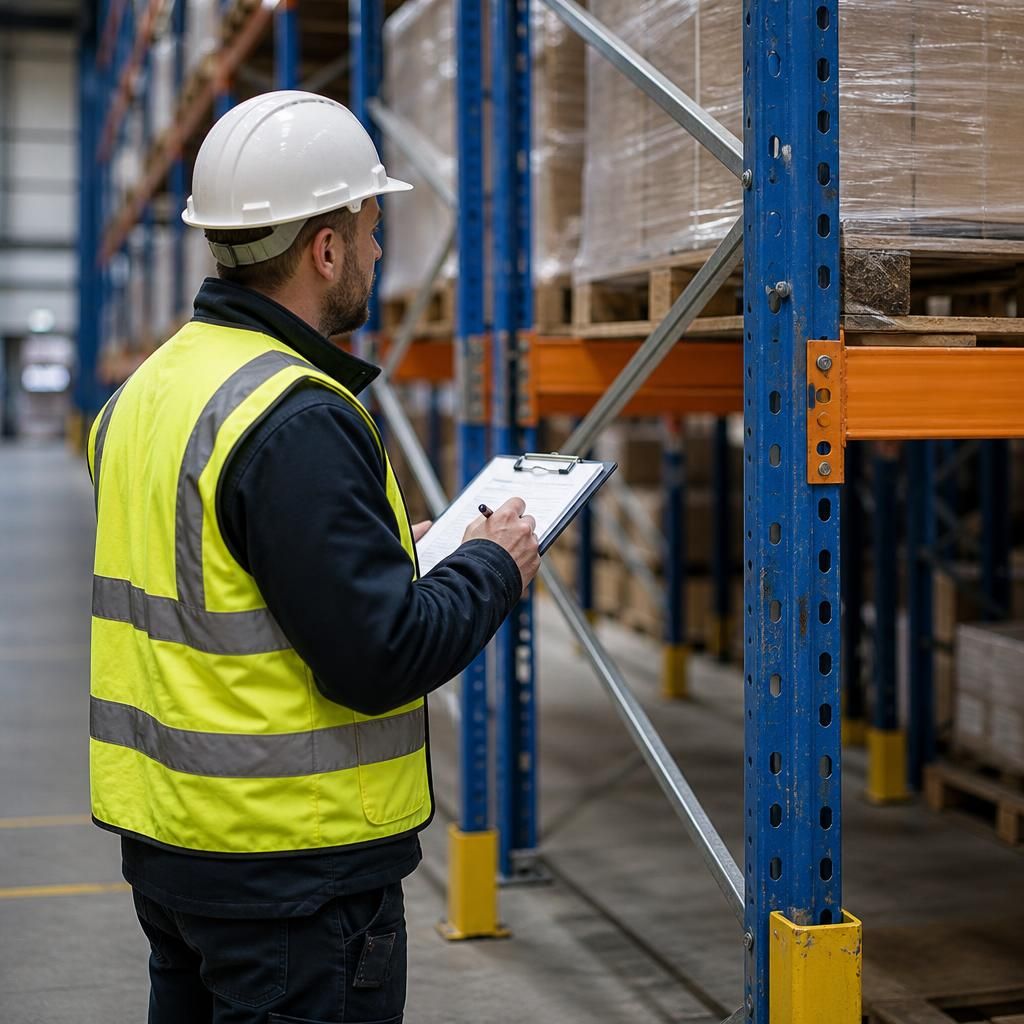
Regular pallet racking inspections provide an early warning of damage, instability and unsafe loading conditions. A competent inspector records defects according to their potential risk, helping the responsible person decide whether an area needs immediate isolation, prompt repair or continued monitoring.
This prioritisation helps prevent minor damage from developing into more serious structural problems. It also supports better maintenance planning by identifying recurring forklift impacts, inadequate protection and changes in how storage locations are being used. Acting on the findings can reduce disruption, protect stored goods and help keep warehouse operations safe and available for normal use.
Book Your Pallet Racking Inspection
Arrange a professional pallet racking inspection to identify defects, prioritise remedial work and support safe, compliant warehouse operations. Contact Able Racking to discuss your inspection requirements.