
What procedures are involved in a comprehensive pallet racking safety check?
A comprehensive pallet racking safety check involves a systematic visual inspection of the warehouse racking, including frames, beams, connectors, protection, load notices, flooring and surrounding conditions. The inspector records damage or non-compliance, assesses the level of risk, recommends immediate controls or repairs where necessary, and provides a clear report for follow-up and ongoing safety management.
A comprehensive pallet racking safety check is a systematic inspection of the warehouse racking, its protective equipment and the surrounding working conditions. A competent inspector examines the structure for damage, instability, overloading, missing components and other hazards; records the findings; assigns an appropriate level of risk; and recommends controls, repairs or further investigation.
The process should be proportionate to the condition and use of the installation. A routine visual check may identify obvious damage, whereas a comprehensive safety check considers the complete storage system, available documentation and the way the warehouse operates.
1. Preparing for the inspection
Before entering the warehouse, the inspector gathers information about the installation and its use. This may include:
- Available layout drawings, design information and previous inspection reports.
- Specified safe working loads for frames, beams, bays and other components.
- Records of previous damage, repairs, alterations or reported incidents.
- The types, sizes and weights of pallets stored in the system.
- Changes to forklift routes, loading practices, building use or warehouse layout.
This information provides important context. For example, a component may appear suitable in isolation but be inappropriate for the loads currently being stored. Any unauthorised alterations or changes in use should be identified rather than assumed to be acceptable.
2. Establishing the inspection scope
The inspector confirms which areas and equipment are included. This normally covers accessible aisles, pallet positions, end frames, beam levels, protection and the immediate floor and traffic areas. The inspection should also consider locations that are difficult to see, including lower frame sections, rear areas, beam connections and places where impact damage or corrosion may be concealed.
Where an area cannot be inspected safely or is obstructed by stock, this limitation should be recorded. A report should make clear whether a conclusion is based on direct observation, available records or a recommendation for further assessment.
3. Checking the overall condition of the warehouse racking
The inspector looks for signs that the installation is no longer in its intended condition. This includes checking whether frames are upright, beams are correctly seated and the structure remains aligned. Visible movement, leaning, distortion, missing components or unusual gaps can indicate a problem requiring investigation.
Particular attention is given to:
- Uprights, bracing members and frame connections.
- Beams, beam connectors, safety locks and retaining devices.
- Baseplates, floor fixings and anchor bolts.
- Row spacers, ties and other structural components.
- Pallet supports, decking, mesh and other load-supporting equipment.
- Backstops, gates and equipment intended to prevent pallets from falling.
Damage is not limited to visibly bent steel. Cracks, separated welds, loose fixings, corrosion, missing locks and displaced components can also affect the system’s capacity or stability. Damage should be considered in relation to its position, extent and effect on the load path.
4. Identifying impact and operational damage
Forklift and handling equipment impacts are a common cause of warehouse racking damage. The inspection considers dents, bends, scrapes, buckled sections and damage to protective barriers. Lower-level components are often especially vulnerable, but damage at higher levels can also be significant if it affects a connection or load-bearing member.
The inspector should establish whether damage is isolated or repeated across the installation. Repeated impact may indicate inadequate aisle clearance, poor traffic management, unsuitable protection or an operating practice that needs to change. Repairing an individual component without addressing the cause may leave the wider risk unresolved.
5. Verifying loads, signage and configuration
Safe working load notices should be present, legible and relevant to the configuration being used. The inspection checks whether the stated information corresponds with the actual beam levels, bay arrangement and stored loads. It also considers whether pallets are suitable, stable and positioned correctly.
Common concerns include:
- Loads that exceed the specified capacity or are not supported evenly.
- Pallets that are damaged, incorrectly sized or overhanging the intended position.
- Uneven loading or unsafe gaps between pallets and structural members.
- Changes to beam positions or bay layouts without supporting design information.
- Missing or unclear load notices and identification labels.
Capacity cannot be judged reliably from appearance alone. If the configuration, component type or load information is uncertain, the inspector should recommend verification by the appropriate technically competent person.
6. Assessing protection and the surrounding environment
Frame guards, end-of-aisle protection and other barriers are checked for correct positioning, secure fixing and signs of damage. Protection should be suitable for the risks created by the site’s handling equipment and traffic routes. A barrier that is loose, displaced or already damaged may not provide effective protection.
The inspection also considers the floor and nearby conditions. Uneven or damaged flooring, standing water, poor lighting, obstructions, restricted visibility and inadequate housekeeping can all increase the likelihood of an impact or make damage harder to identify. Fire routes, emergency access and pedestrian segregation should remain clear where they form part of the warehouse layout and safety arrangements.
7. Recording and categorising findings
Each issue should be recorded clearly enough for the responsible person to locate and understand it. A useful record identifies the affected bay, level or component, describes the damage, includes photographs where appropriate and explains the potential consequence.
Findings are commonly categorised according to the level of risk. Serious damage may require the affected area to be taken out of service immediately, with loads removed or the location isolated until suitable action is completed. Less serious defects may require prompt repair and closer monitoring. Minor issues should still be recorded and managed before they develop into a more significant defect.
The category should reflect the actual condition and risk, not simply the age or appearance of the warehouse racking. If the inspector cannot safely determine the significance of a defect, the report should recommend further technical assessment rather than provide unwarranted reassurance.
8. Providing immediate controls and repair recommendations
Where an unsafe condition is found, the inspection process should identify what needs to happen before normal use continues. Possible controls include isolating a damaged bay, preventing access to an affected aisle, unloading a location, reducing the permitted load or improving traffic arrangements.
Repairs should be carried out using suitable, compatible components and by people with the necessary competence. Straightening, welding or improvised alteration of damaged structural members should not be treated as an automatic solution. The repaired installation should be checked before it is returned to service, and any removed protection or safety equipment should be reinstated.
9. Producing the inspection report
A comprehensive report should set out the inspection date, areas covered, limitations, observed conditions, photographs or location references, risk classifications and recommended actions. It should distinguish between defects that need immediate control and matters that can be scheduled for planned maintenance.
The report should also identify who is responsible for each action and, where appropriate, the expected completion priority. Clear documentation helps warehouse managers brief operators, arrange repairs and demonstrate that reported defects are being managed rather than merely noted.
10. Completing follow-up and ongoing checks
The process is not complete when the report is issued. The responsible person should confirm that unsafe areas have been controlled, repairs have been completed correctly and outstanding recommendations have been reviewed. Updated records, photographs and repair documentation provide a useful audit trail.
Formal inspections should sit alongside the warehouse’s own reporting arrangements and regular visual checks. Operators should be encouraged to report impacts, missing components, unstable loads or other changes as soon as they are noticed. A competent person can then determine whether the issue requires immediate isolation, repair or inclusion in the next scheduled inspection.
Using a structured procedure in this way gives a reliable assessment of the warehouse racking, links defects to practical actions and supports continued compliance, safe loading and efficient warehouse operations.
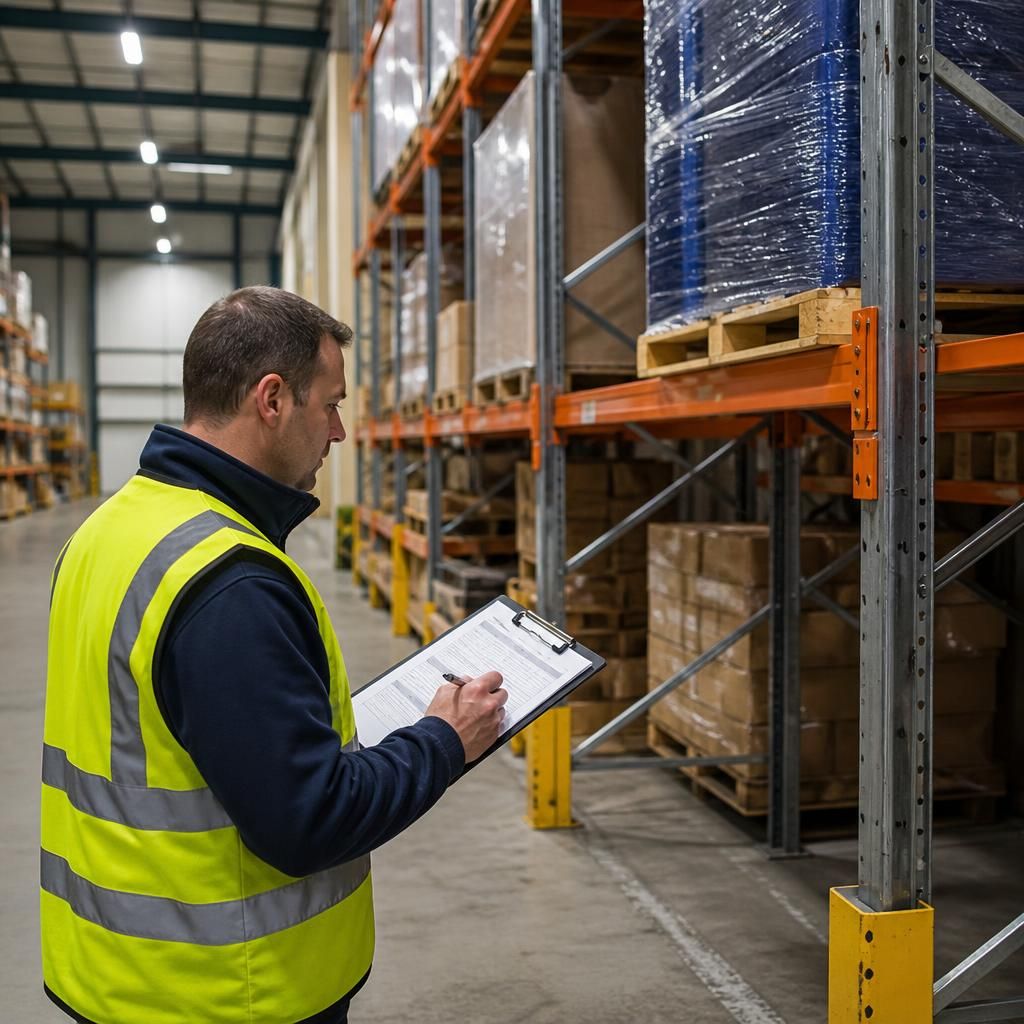
A comprehensive pallet racking safety check must link every defect to a clear action. The inspector records the affected bay or component, describes the condition and assesses the risk so the responsible person knows whether to isolate the area, arrange urgent repair or monitor the issue through planned maintenance.
Photographs, location references and follow-up records help confirm that corrective work has been completed before the affected warehouse racking is returned to normal use.
Arrange your comprehensive pallet racking safety check
Arrange a comprehensive pallet racking safety check with Able Racking to identify defects, assess risks and plan any necessary repairs or corrective actions. Our experienced inspection team can provide clear findings and practical follow-up guidance for your warehouse.