
What are the common consequences of neglecting regular pallet racking safety checks in a warehouse setting?
Neglecting regular pallet racking safety checks can allow damage, overloading, instability and unsafe loading practices to go unnoticed, increasing the risk of falling goods, structural collapse, injuries, operational disruption and costly repairs. Routine inspections identify defects early so corrective action can be taken before they compromise warehouse safety or compliance.
Neglecting regular pallet racking safety checks allows damage, overloading, instability and unsafe loading practices to remain unnoticed. The resulting consequences can include falling goods, progressive structural failure, serious injury, operational disruption, regulatory action and significantly higher repair costs. Routine checks identify defects while they are still manageable, allowing corrective work to be planned before a local problem affects the wider warehouse.
Damage can become progressively worse
Minor damage to an upright, beam, brace or connection may initially appear to have little effect on the storage system. However, a damaged component may have reduced load-carrying capacity and can be further weakened by forklift impact, vibration, repeated loading or accidental contact. Without regular inspection, the original defect may worsen and affect connected components.
Checks should identify issues such as bent uprights, damaged beams, displaced safety pins, missing protection, loose connections, corrosion, cracked concrete around base fixings and signs that the structure is no longer aligned. Early identification makes it more likely that the affected area can be isolated and repaired without extensive disruption.
There is a greater risk of falling goods
Unsafe storage conditions can cause pallets or individual products to fall into working areas. This may happen because loads are damaged, incorrectly positioned, unsuitable for the pallet locations or heavier than the stated capacity. Poorly maintained beams and missing components can also reduce the stability of stored loads.
Falling goods can injure employees, visitors and contractors, as well as damage stock, vehicles, plant and buildings. Even where no one is hurt, a dropped load may block aisles, damage adjacent bays and require an urgent response to make the area safe.
Structural collapse becomes more likely
Warehouse storage systems are designed to work within specified load and configuration limits. Overloading, unapproved alterations, impact damage and missing components can reduce the safety margin. If defects are not found and addressed, a local failure may place additional force on neighbouring frames and beams, potentially causing a wider collapse.
A collapse can create an immediate exclusion zone and may require specialist assessment before the affected area can be used again. It can also damage stock across several locations, compromise access routes and affect other warehouse equipment.
Unsafe working practices may become normalised
Regular checks do more than identify physical defects. They also reveal recurring problems with loading, housekeeping and vehicle movements. For example, inspections may show that pallets are being placed unevenly, loads are overhanging, capacity notices are missing or forklift operators are repeatedly striking the same areas.
If these issues are not recorded and corrected, unsafe practices can become accepted as normal. This increases the likelihood of further damage and makes it harder to establish whether the storage system is being used in accordance with its design requirements and site procedures.
Repairs and disruption are likely to cost more
Ignoring a small defect does not remove the need to deal with it; it can allow the issue to develop into a larger repair. A damaged beam may later require replacement of additional components, while an unaddressed impact can affect multiple bays or require stock to be unloaded before work begins.
Unplanned repairs may involve isolating aisles, moving inventory, arranging urgent labour and delaying despatch or production activities. Planned corrective action is generally easier to manage because the affected stock, access arrangements and repair requirements can be considered in advance.
Business operations can be interrupted
A serious incident or suspected structural defect may require part of the warehouse to be closed immediately. This can reduce storage capacity, restrict vehicle routes, delay picking and replenishment, and affect delivery schedules. If the issue is widespread, temporary storage arrangements may also be needed.
Regular safety checks support preventative maintenance and help site managers prioritise work according to risk. They do not eliminate the need for daily visual observations, but they provide a more systematic review of the condition of the storage system and the way it is being used.
Legal, insurance and compliance problems may follow
Employers have responsibilities to protect people who may be affected by workplace activities, including employees, contractors and visitors. A lack of suitable inspection arrangements, incomplete records or failure to act on reported defects may make it more difficult to demonstrate that reasonable precautions were taken.
Following recognised guidance, manufacturer instructions and the storage system’s design limits helps support a defensible safety process. Inspection records should show what was examined, which defects were found, how risks were graded, who was responsible for corrective action and when issues were closed. Records alone do not make a system safe; identified defects must be acted on promptly.
How to reduce these consequences
- Carry out routine visual observations by trained warehouse personnel and report damage immediately.
- Arrange periodic inspections by a competent person with appropriate knowledge of pallet racking systems and relevant safety guidance.
- Keep load notices visible and ensure stored loads remain within the stated capacity and configuration.
- Remove damaged pallets, prevent unsafe loading and control vehicle movements around storage areas.
- Isolate locations where damage presents an immediate risk, using a clear procedure for tagging and restricting access.
- Record findings, assign corrective actions and verify that repairs have been completed properly.
- Review recurring damage to identify problems with traffic routes, operator practices, protection or warehouse layout.
The main purpose of regular pallet racking safety checks is prevention. Finding a bent component, overloaded location or unsafe loading practice before it leads to falling goods or collapse gives the business an opportunity to control the risk with proportionate action. A consistent programme of observations, professional inspections, maintenance and staff training helps keep the storage system safe, compliant and available for use.
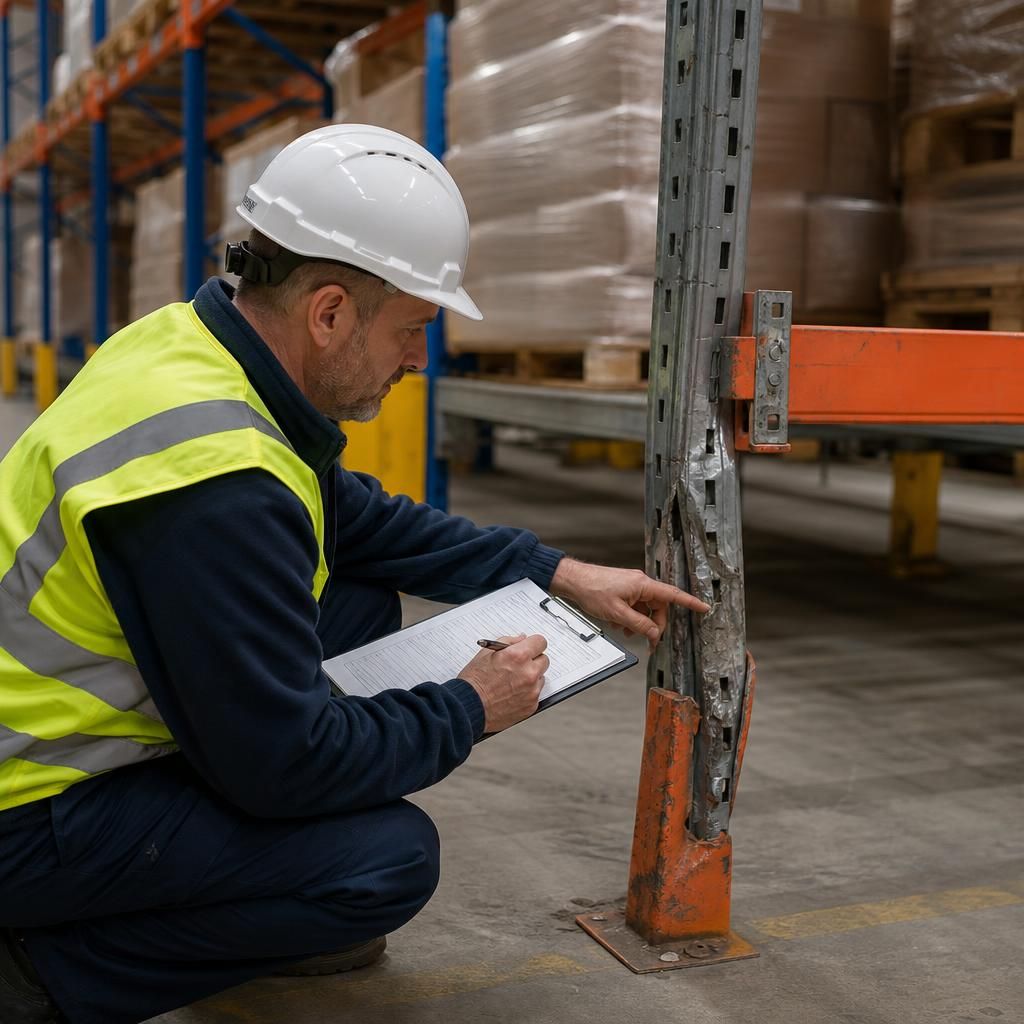
Neglecting regular pallet racking safety checks allows minor damage to develop into a more serious structural hazard. A bent upright, damaged beam, missing safety pin or loose connection can reduce the stability and load-carrying capacity of the affected bay, particularly when the damage is worsened by further forklift impact or loading.
Professional checks help identify these defects before they lead to falling goods, stock damage or a wider collapse. Where an immediate risk is found, the affected location should be isolated, unloaded where necessary and repaired or assessed by a competent person before it is returned to service.
Arrange your professional pallet racking safety check
Arrange a professional pallet racking safety check with Able Racking to identify damage, overloading and unsafe loading conditions before they lead to injury, falling goods or operational disruption. Contact our experienced inspection team to discuss your warehouse requirements and plan the appropriate next step.