
How often should pallet racking safety checks be conducted in a warehouse environment?
Pallet racking should receive routine visual checks at intervals based on the warehouse risk assessment, with a formal inspection by a technically competent person at least every 12 months. Any damage, impact or change to the storage system should prompt an immediate check and, where necessary, repair or isolation.
Pallet racking safety checks should be carried out at a frequency determined by the warehouse risk assessment, with routine visual checks during normal operations and a formal inspection by a technically competent person at intervals of no more than 12 months. Any collision, visible damage, instability, change to the storage layout or other unusual event requires an immediate check, followed by repair or isolation where necessary.
The exact inspection programme should reflect how the warehouse operates rather than relying on the annual inspection alone. Factors such as vehicle movements, forklift traffic, loading practices, the type and condition of the pallet racking, site layout, working hours and the history of damage should all be considered. Higher-risk areas may require more frequent documented inspections.
Routine visual checks
Employees should report damage or unsafe conditions as soon as they are noticed. In addition, a nominated person should carry out regular visual checks of the pallet racking and surrounding areas. These checks are often completed weekly, although the appropriate interval should be established through the site risk assessment. In busier or higher-risk environments, daily checks may be appropriate.
A routine check should look for obvious problems, including:
- Bent, twisted, cracked or otherwise damaged uprights, beams, bracing or guards.
- Dislodged, missing or incorrectly positioned components.
- Loads that are unstable, overhanging, damaged or unsuitable for the location.
- Overloaded bays or signs that load limits are not being followed.
- Missing or illegible load notices and safety signage.
- Impact damage caused by forklift trucks or other handling equipment.
- Changes to the warehouse floor, access routes or surrounding structures that could affect stability.
Routine checks are not a substitute for a formal inspection. They are intended to identify visible issues promptly so that unsafe conditions can be controlled before they become more serious.
Formal inspection at least every 12 months
HSE guidance and the recognised European standard for the use and maintenance of storage equipment require a formal expert inspection at intervals of no more than 12 months. This inspection should be completed by a technically competent person who understands the design, use and potential failure points of pallet racking systems.
A competent inspector will assess the system methodically, identify damage or unsafe conditions, consider the likely cause and classify the level of risk. The inspection should include the structure, components, protection, load notices, installation and use of the system. A written report should record the findings and specify the action required, such as monitoring, repair, replacement or immediate isolation.
An annual inspection does not make the system safe indefinitely. Damage can occur immediately after the inspection, so the warehouse must continue its routine checks and reporting procedures throughout the year.
When an immediate check is required
An additional check should be arranged promptly after any event that could affect the safety or stability of the pallet racking. This includes:
- A forklift or other vehicle striking a frame, beam, guard or associated component.
- A pallet being dropped, dragged or placed incorrectly.
- Evidence of impact, deformation, corrosion or component failure.
- Movement, settlement or damage to the warehouse floor.
- Changes to bay configuration, beam levels, load capacity or system layout.
- Installation of new components or alterations carried out by contractors or site personnel.
- Fire, flooding, significant vibration or another unusual event.
- A report from an employee that a load, component or bay appears unsafe.
Any area presenting an immediate danger should be isolated and unloaded where it is safe to do so. Damaged components should not be straightened, welded or modified as an informal repair. Remedial work should be specified and completed by appropriately qualified personnel, using compatible components and following the system manufacturer’s requirements.
Keeping the inspection programme effective
The person responsible for warehouse safety should maintain an inspection schedule, ensure staff know how to report damage and keep records of checks, findings and completed corrective actions. Records should identify the location inspected, the date, the person completing the check, the issues found and the action taken. Outstanding repairs should be tracked until they are closed.
Inspection frequency should also be reviewed after a significant incident, a change in working methods, an increase in forklift activity, a change of stored loads or repeated findings of damage. This helps ensure that the programme remains proportionate to the actual risks in the warehouse.
In practical terms, a safe inspection programme combines frequent workplace checks, immediate checks after damage or change, and a documented inspection by a technically competent person at least every 12 months. Following this approach supports compliance with UK workplace safety duties, helps protect staff and reduces the likelihood that minor pallet racking damage will develop into a serious structural or operational problem.
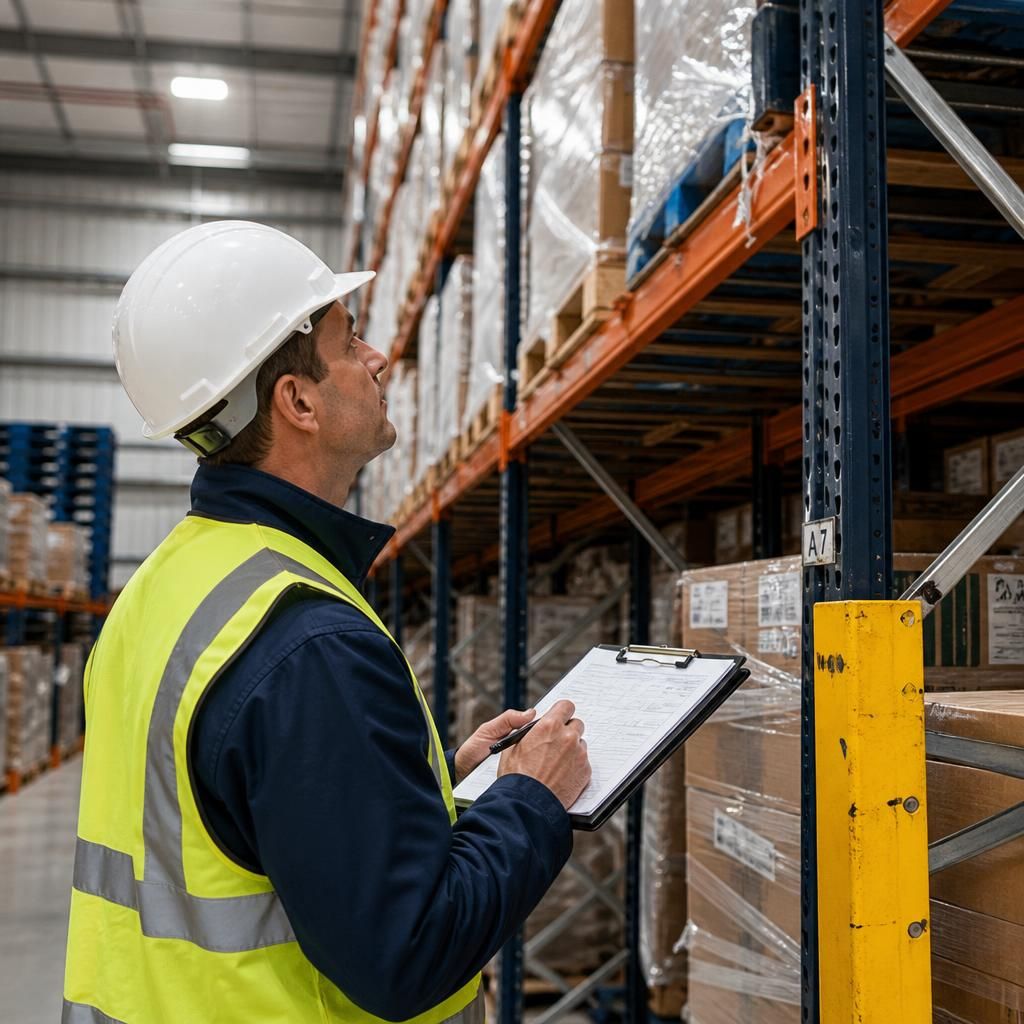
A formal pallet racking safety inspection should be completed by a technically competent person at intervals of no more than 12 months. This does not replace routine visual checks: staff should report damage immediately, while nominated personnel should inspect the warehouse racking regularly and after any impact, alteration or unusual event.
The inspection frequency should reflect the site risk assessment. Areas with frequent forklift movements, repeated impact damage, intensive loading activity or changing storage arrangements may need more frequent documented checks. Any damaged or unstable section should be isolated promptly until suitable remedial work has been completed.
Arrange your pallet racking safety check
Arrange your pallet racking safety check with Able Racking to confirm that your warehouse racking remains safe, compliant and fit for use.