
What qualifications and certifications should a pallet rack inspection team possess? A competent inspection team should have recognised rack inspection training, practical experience with warehouse storage systems, and a thorough working knowledge of BS EN 15635, HSG76 and relevant workplace safety duties. SEMA-approved inspector training is a strong indicator of technical competence, supported by appropriate site safety training, documented inspection procedures and clear reporting skills.
A competent pallet rack inspection team should hold recognised rack inspection training, practical experience with warehouse storage systems, and a sound understanding of BS EN 15635, HSG76 and relevant workplace safety duties. SEMA-approved inspector training is a strong indicator of technical competence, supported by appropriate site-safety training, documented inspection procedures and the ability to produce clear, accurate reports.
A competent pallet rack inspection team should have recognised inspection training, relevant practical experience and a working knowledge of the standards and duties that apply to warehouse storage systems. SEMA-approved inspector training is a strong indicator of technical competence, but it should be supported by site-safety training, documented procedures, accurate reporting and evidence that the team can assess real installations safely and impartially.
There is not one universal legal certificate that automatically qualifies a person to inspect every pallet rack system. Competence depends on the inspector’s training, experience, technical understanding and ability to apply that knowledge to the equipment and environment being assessed. When selecting or reviewing an inspection provider, consider the following qualifications and evidence.
Recognised inspection training
Inspectors should have completed suitable training in the inspection of industrial storage equipment. SEMA-approved inspector training is widely recognised in the UK and covers the principles of systematic rack inspections, damage classification, risk assessment and reporting. Training should enable the inspector to identify defects, understand their potential consequences and recommend proportionate corrective action.
Training should also cover the relevant requirements of BS EN 15635, which sets out principles for the use and maintenance of steel static storage systems. Inspectors should understand the difference between routine visual checks carried out by warehouse staff and a more detailed expert inspection by a technically competent person.
Knowledge of applicable guidance and workplace duties
A suitable team should understand HSG76, Warehousing and storage, as well as the general duties placed on employers and equipment users under UK health and safety legislation. This includes recognising how workplace traffic, loading practices, poor housekeeping, unauthorised alterations and inadequate maintenance can affect storage-system safety.
The inspector should be able to relate the condition of the rack to the way it is being used. This includes checking whether loads are suitable for the beam levels, whether load notices are present and accurate, whether components match the intended design, and whether changes to the layout or configuration have been properly controlled.
Practical experience with warehouse storage systems
Certificates alone do not demonstrate full competence. Inspectors need practical experience of different pallet rack designs, components and installation arrangements. They should be familiar with common issues such as bent uprights, damaged beams, displaced safety pins, missing bracing, loose or missing anchors, inadequate protection, overloading and unauthorised modifications.
Experience should include assessing the surrounding conditions as well as the rack itself. Floor condition, vehicle impact risks, aisle clearances, lighting, access equipment, housekeeping and the interaction between storage equipment and warehouse operations can all influence the risk level.
Ability to assess damage and prioritise action
A qualified inspector must be able to distinguish between damage that requires immediate isolation, damage requiring urgent repair and lower-risk defects that can be monitored or scheduled for action. The assessment should be based on the location, severity and likely effect of the defect, rather than on appearance alone.
The team should understand the importance of preventing continued use where a serious defect could compromise stability. They should also be able to explain temporary controls clearly, such as unloading an affected bay, restricting access or arranging a suitably specified repair. An inspection team should not recommend improvised repairs or treat damage as resolved without appropriate technical confirmation.
Relevant site-safety training
Inspectors must be trained to work safely in an active warehouse. Depending on the site, this may include manual handling, personal protective equipment, workplace transport awareness, pedestrian and vehicle segregation, work at height and the safe use of access equipment. Where a mobile elevating work platform or other specialist equipment is required, the operative should hold the appropriate current training or work alongside someone who does.
The team should follow a documented risk assessment and method statement, comply with site rules and communicate effectively with warehouse personnel. They should never create additional risks by entering vehicle routes, climbing storage equipment or inspecting from an unsuitable position.
Technical reporting and documentation skills
A professional inspection team should produce a report that allows the responsible person to understand what was inspected, what was found and what must happen next. Reports should normally identify the areas or bays inspected, record defects with sufficient detail, classify their urgency and include photographs or other location references where useful.
The report should also make clear whether an item is a recommendation, a required repair or an immediate safety concern. Vague descriptions such as “damaged rack” are not sufficient. A useful report identifies the component, its location, the observed condition and the recommended control or remedial action.
Evidence of competence and quality control
Before appointing an inspection team, ask for evidence of relevant training, experience and insurance, together with examples of the inspection process or report format. It is also reasonable to confirm how inspectors maintain their competence, keep up to date with changes in guidance and ensure consistency between different members of the team.
The provider should have a clear process for recording findings, escalating serious defects and retaining inspection records. Independence is also important: the inspection should be an objective assessment of condition and risk, even where the same provider may later be asked to carry out repairs.
In practical terms, the strongest inspection team combines recognised SEMA-related training with hands-on warehouse experience, knowledge of BS EN 15635 and HSG76, appropriate site-safety competence and disciplined reporting. Reviewing these points helps ensure that the inspection is more than a visual walk-through and provides a reliable basis for safe use, maintenance and corrective action.
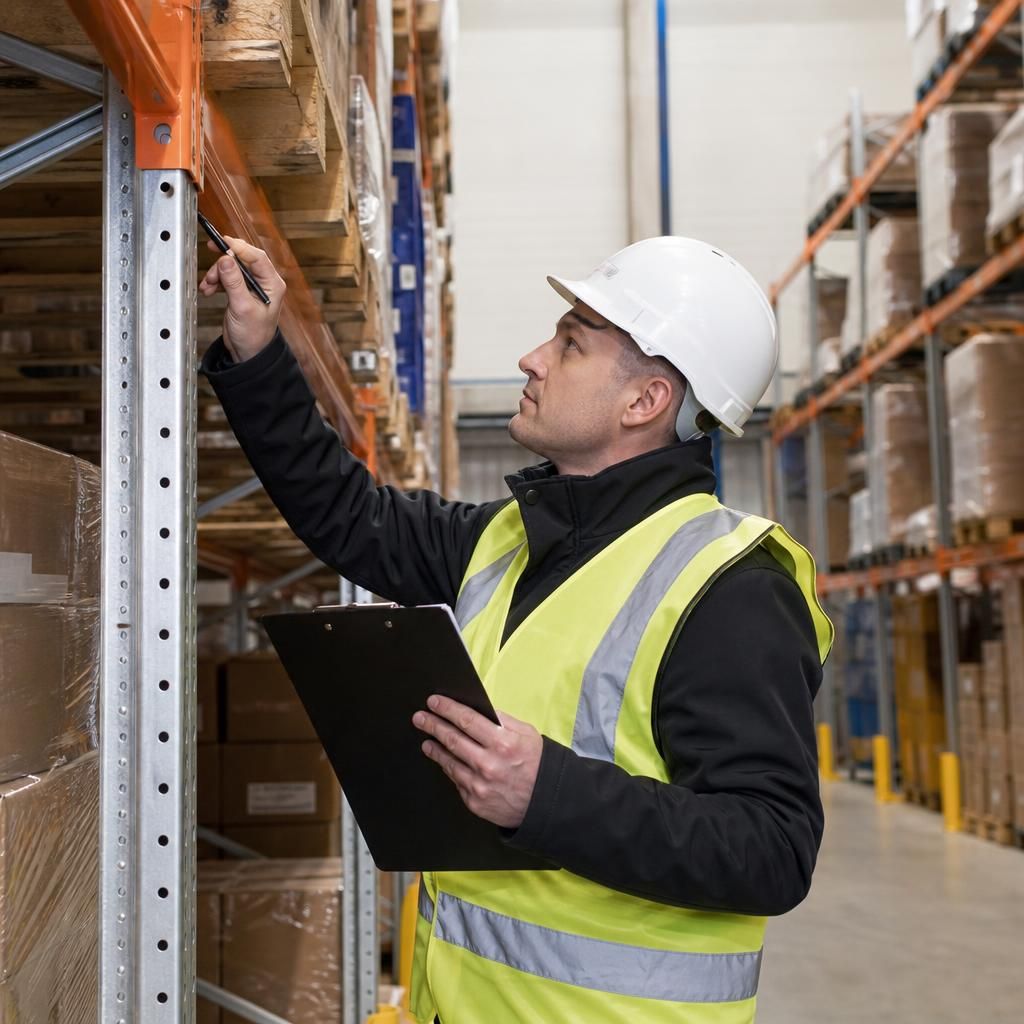
Recognised inspection training is an important part of a competent warehouse racking inspection team’s qualifications. SEMA-approved inspector training helps operatives assess damage, understand risk categories and produce consistent inspection reports in line with the principles of BS EN 15635.
Training should be supported by practical experience of warehouse racking systems, including uprights, beams, bracing, anchors, safety pins and load notices. Inspectors also need suitable site-safety training so they can work safely around vehicle movements, access equipment and active warehouse operations. When reviewing an inspection provider, ask for evidence of relevant training, experience, documented procedures and clear escalation arrangements for serious defects.
Arrange Your Pallet Rack Inspection
Arrange your pallet rack inspection with Able Racking to obtain a clear assessment of condition, compliance and any required corrective action. Contact our experienced inspection team to plan a suitable visit for your warehouse.