
What is the role of documentation and reporting in pallet rack inspections?
Documentation and reporting provide a clear record of pallet rack inspections, including identified damage, risk levels, recommended actions and completion dates. This evidence supports compliance, helps track recurring issues and enables timely repairs before defects affect warehouse safety or operations.
Documentation and reporting turn a pallet rack inspection into a clear, traceable safety process. The inspection report records the condition of the warehouse racking, identifies defects and risk levels, sets out the required action and provides evidence that issues have been addressed. Without accurate records, it is difficult to demonstrate compliance, track deterioration or confirm that repairs were completed.
A report should provide an accurate snapshot of the storage system on the inspection date. It should be detailed enough for the person responsible for the site to understand what was inspected, what was found and what must happen next. Good documentation supports practical safety decisions rather than simply creating an administrative record.
What inspection documentation should include
The precise format may vary according to the site and inspection arrangement, but a useful report will normally identify:
- the site, inspection area and date of the inspection;
- the person or team carrying out the inspection;
- the warehouse racking or individual runs, bays and components examined;
- any visible damage, deterioration, overloading, instability or unauthorised alteration;
- photographs, sketches or location references where these help identify the defect;
- the assessed level of risk and the reason for that assessment;
- recommended actions, including any requirement to unload, isolate or restrict use;
- the person responsible for arranging the corrective work;
- the target date for completion and the date on which the action was closed; and
- details of any follow-up inspection or verification required.
Clear location references are particularly important in larger warehouses. A description such as “damage to upright” may not be sufficient if several similar components are present. Bay numbers, aisle references, photographs and marked-up plans help maintenance teams find the correct location quickly and reduce the risk of an issue being overlooked.
How reporting supports risk control
Inspection findings should distinguish between minor observations and defects that could affect structural performance or safe use. A report may identify damage requiring monitoring, repair or immediate action, depending on its nature, location and severity. The inspector should explain the required response rather than leaving site personnel to interpret a photograph or technical description without guidance.
Where a defect presents an immediate risk, the report should make the urgency unambiguous. Appropriate controls may include removing loads, preventing access to an affected bay or taking the relevant section out of service until it has been assessed and made safe. Recording the control measures creates an audit trail and helps ensure that a warning is not lost during a shift change or handover.
Creating a complete inspection trail
A single report is only part of effective safety management. Previous reports should be available so that the inspector and site team can identify recurring damage, unresolved actions and areas where the same problem continues to occur. Comparing records over time can reveal patterns linked to vehicle movements, loading practices, poor housekeeping, unsuitable pallets or changes to the storage arrangement.
Keeping records also helps establish whether repairs have solved the original problem. A closed action should normally be supported by suitable evidence, such as a repair record, completion photograph or follow-up inspection. If an item remains outstanding, its status should be updated rather than removed from the record. This prevents incomplete work from appearing to have been resolved.
Supporting compliance and accountability
Employers and duty holders need to demonstrate that workplace risks have been assessed and controlled. Inspection documentation can support this by showing that checks were planned, findings were communicated and corrective actions were managed. It may also be requested during an internal review, external audit, insurer assessment or investigation following an incident.
Records are most useful when responsibilities are clear. The inspection team documents the findings and recommendations, while the responsible site management team must decide how the actions will be implemented. Warehouse operatives, supervisors and maintenance personnel may all need access to relevant information, particularly where a defect affects loading, unloading or access around an aisle.
Paper and digital reporting systems
Paper forms can be effective when they are completed consistently, stored securely and made available to the people who need them. Digital systems can make it easier to attach photographs, search historic records, assign actions and monitor overdue work. The method is less important than the quality of the information and the discipline used to maintain it.
Electronic records should be protected against unauthorised changes and backed up in line with the organisation’s document-control procedures. If reports are amended, the original finding and the reason for the amendment should remain traceable. A digital dashboard should support the underlying report, not replace the technical detail needed to understand the defect.
Using reports to improve warehouse safety
Reporting should lead to practical prevention. Repeated impact damage may justify changes to traffic routes, vehicle controls, protection measures or operator training. Recurring overloading may indicate that load information is unclear or that the storage layout no longer reflects operational requirements. Records can therefore inform maintenance planning and wider warehouse controls, not just individual repairs.
Inspection documentation does not replace competent assessment, safe working procedures or timely repairs. It provides the evidence and structure needed to connect those activities. When findings are precise, actions are assigned and completion is verified, documentation and reporting help keep warehouse racking safe, compliant and fit for continued use.
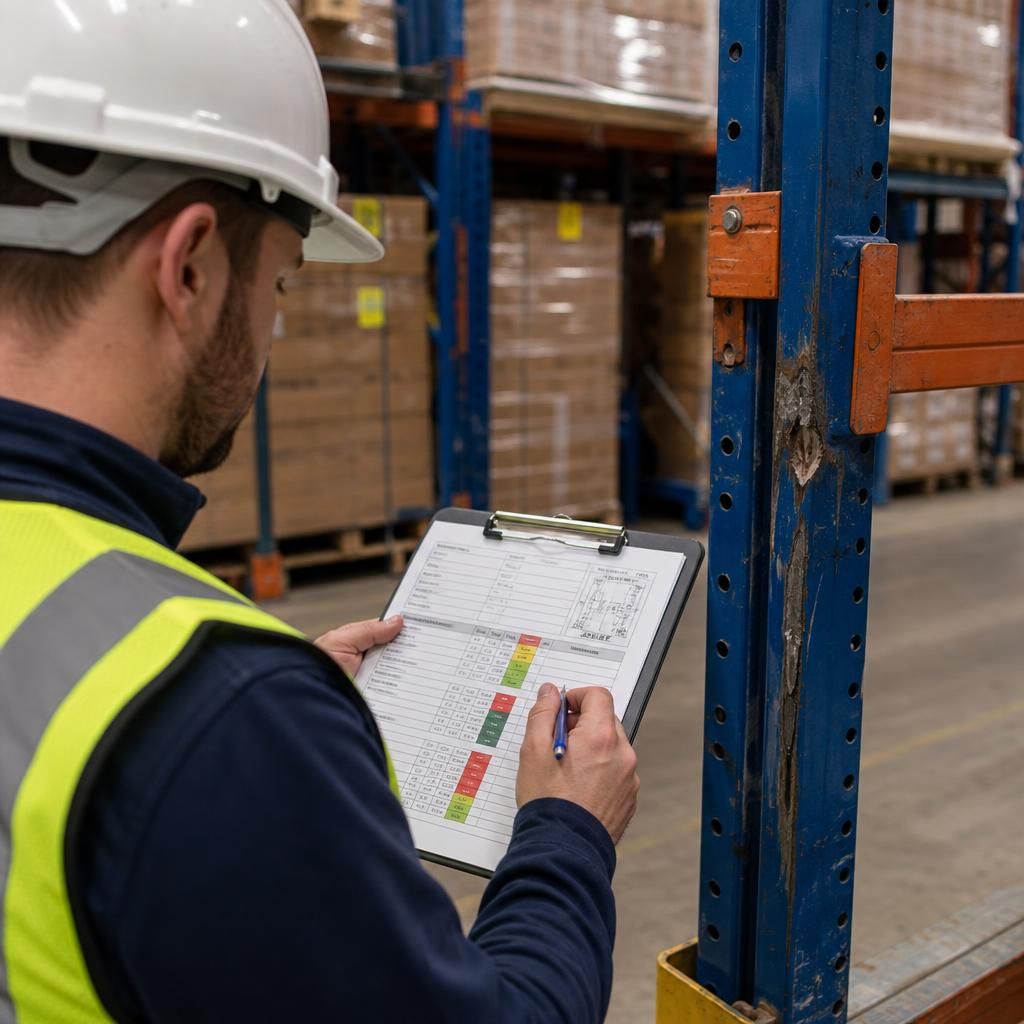
Inspection reporting provides a traceable record of each defect, the action required and whether that action has been completed. This allows site teams to control immediate risks, assign responsibility and verify that repairs have been properly addressed.
Clear location references, photographs and risk descriptions help maintenance personnel identify the affected bay or component without delay. A completed action should remain supported by suitable evidence, such as a repair record or follow-up inspection, so unresolved issues are not mistakenly treated as closed.
Arrange Your Pallet Rack Inspection
Arrange your pallet rack inspection with Able Racking to document defects, prioritise corrective action and support continued warehouse safety and compliance. Contact our experienced inspection team to discuss your requirements and agree a suitable appointment.