
How often should pallet rack inspections be conducted to ensure safety and compliance?
Pallet racking should receive routine visual checks by trained warehouse staff, with a documented expert inspection carried out at intervals of no more than 12 months, or more frequently where a risk assessment requires it. An additional inspection is necessary after impact, significant alteration, relocation or any event that could affect the system’s stability or condition.
Pallet racking should be checked routinely by trained warehouse staff, with a documented expert inspection completed at intervals of no more than twelve months. More frequent inspections may be necessary where the risk assessment, operating conditions or previous damage indicates a higher level of risk. An additional inspection should also be arranged after an impact, significant alteration, relocation or any other event that could affect the system’s stability or condition.
The inspection frequency should be based on how the warehouse operates rather than treated as a fixed calendar exercise. Factors to consider include the volume and type of forklift traffic, the frequency of loading and unloading, the nature of the stored goods, the height and configuration of the system, the condition of the floor and the likelihood of collisions or overloading. Sites with intensive activity or a history of damage may need more frequent formal inspections than the annual minimum.
Routine visual checks by warehouse staff
Trained employees should carry out regular visual checks as part of normal warehouse safety procedures. Depending on the risk assessment, these may be completed at the start of each shift, daily or at another defined interval. Staff should look for obvious problems such as:
- Impact damage to uprights, frames, beams, bracing or protection equipment
- Loads that are unstable, overhanging or positioned incorrectly
- Missing, loose or displaced components, including beam locks
- Deformation, corrosion, cracks or other deterioration
- Signs that the structure has moved, become out of level or is no longer operating as intended
Employees carrying out these checks should know what damage looks like and understand the site’s reporting and isolation procedure. A visual check does not replace a competent expert inspection. It is an early-warning measure intended to identify problems before they become more serious.
Documented expert inspections
A competent person should complete a systematic inspection at least every twelve months, or more often where the risk assessment requires it. This inspection should cover the condition and performance of the complete warehouse racking system, including structural members, connections, protection, load notices, configuration and the surrounding operating environment. The inspector should also consider whether the system is being used in accordance with its design and whether changes to loads, equipment or layout have introduced new risks.
UK workplace safety duties require employers to maintain work equipment in a safe condition and arrange suitable inspections where deterioration could create a significant risk. Guidance commonly used for pallet racking supports regular visual checks and a thorough inspection by a competent person at intervals based on risk, with an interval of no more than twelve months commonly applied for the expert inspection. The site’s risk assessment and safe operating procedures remain important when deciding whether a shorter interval is appropriate.
When an inspection is needed sooner
The annual inspection interval must not be used to delay an inspection when circumstances change. Arrange an additional assessment promptly after:
- A forklift, pallet truck or other vehicle strikes the system
- A component is bent, displaced, detached or otherwise damaged
- The layout, beam levels, loading arrangement or system configuration is changed
- The system is dismantled, moved or reinstalled
- There has been an unusual event, such as a building movement, impact from stored goods or another incident affecting stability
- A recurring defect, unsafe loading practice or deterioration has been identified during routine checks
Following an impact, the affected area should be assessed before it is returned to normal use. Damaged sections may need to be unloaded, clearly isolated and kept out of service until a competent person has determined whether repair or replacement is required.
Records and follow-up
Every formal inspection should produce a clear written report identifying the areas examined, defects found, their level of risk and the corrective action required. Records of routine checks, reported impacts, repairs and follow-up inspections should also be retained. This creates an auditable history and helps identify recurring problems, such as poor loading practices, inadequate protection or frequent vehicle contact.
Inspection frequency should be reviewed whenever the warehouse operation changes. New handling equipment, different pallet weights, altered traffic routes, increased throughput or changes to the storage layout can all affect the original risk assessment. A documented programme combining routine staff checks, scheduled expert inspections and prompt post-incident assessments provides a practical basis for keeping warehouse racking safe, compliant and fit for use.
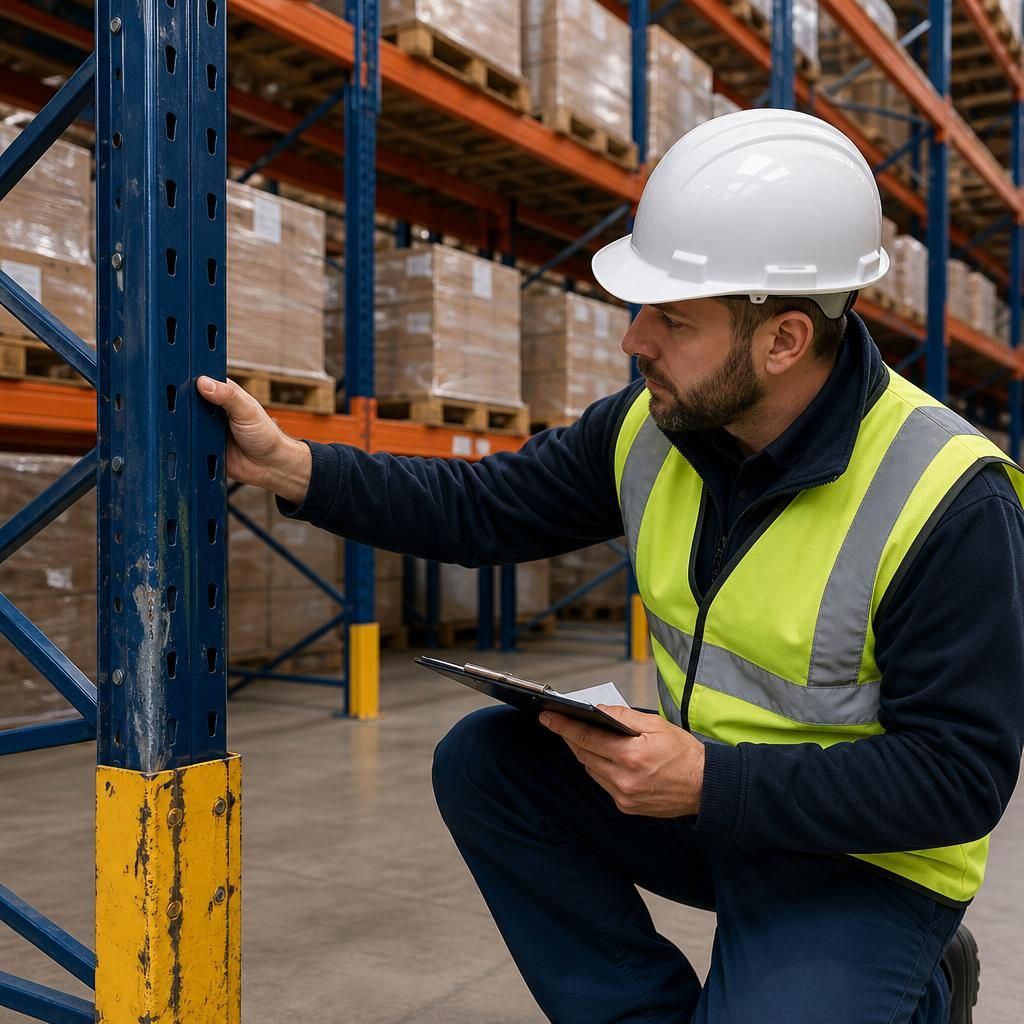
A formal pallet rack inspection should be arranged at least every twelve months, but an additional inspection is needed immediately after an impact, alteration, relocation or other event that may affect stability. The annual interval should never delay an assessment when damage or changing conditions create a safety concern.
After a forklift or pallet truck strikes the system, isolate the affected area and unload it where safe to do so. A competent inspector should assess uprights, beams, bracing, connections, protection and the surrounding floor before the area is returned to use. Routine checks by trained warehouse staff should continue between formal inspections, helping identify damage or unsafe loading at an early stage.
Arrange your pallet rack inspection
Arrange your pallet racking inspection with Able Racking to confirm that your system remains safe, compliant and suitable for current warehouse conditions. Contact our experienced inspection team to schedule a competent assessment or discuss an inspection following damage or operational changes.