
Can damage be fixed during a pallet rack inspection?
Damage may be repaired during a pallet rack inspection only where the work is safe, within the inspector’s competence and does not compromise the assessment. Significant damage usually requires the affected bay to be unloaded and isolated, followed by a planned repair or replacement by a suitably qualified specialist.
Damage may be fixed during a pallet racking inspection only when the work is safe, within the inspector’s competence and does not interfere with the inspection. Minor issues may sometimes be corrected immediately, but structural damage normally requires the affected bay to be unloaded and isolated before a planned repair or replacement is completed by a suitably qualified specialist.
An inspection and a repair are separate activities. The inspection establishes the condition of the pallet racking, identifies hazards and assesses whether the system remains suitable for use. A repair involves making a controlled alteration to the structure. Combining both activities is appropriate only where the repair can be carried out without exposing people to unnecessary risk or concealing the original condition of the damage.
Minor defects that may be addressed during the visit
Some non-structural or low-risk issues can be dealt with during an inspection, provided the necessary parts, tools and safe working arrangements are available. Examples may include:
- Refitting or securing a correctly specified locking device that has become displaced.
- Replacing a missing or damaged identification label where the relevant information is known and accurate.
- Removing an obstruction that prevents a clear visual inspection, where doing so does not involve moving an unsafe load.
- Making a minor adjustment to an approved accessory where the adjustment is within the manufacturer’s instructions and the operative’s competence.
These actions should still be recorded. A small correction does not remove the need to document the defect, the work completed and any follow-up required.
Damage that normally requires isolation and planned repair
Damage affecting load-bearing components or the stability of the pallet racking should not usually be repaired while the system remains loaded or in normal operation. This can include bent or twisted uprights, damaged beams, displaced frames, failed connections, damaged bracing, impact protection that no longer performs its intended function, or signs that the structure has moved from its original position.
Where significant damage is found, the usual control measures are to:
- Identify and assess the damaged component and the surrounding structure.
- Prevent further use of the affected location where continued use could create a risk.
- Unload the affected bay or section using a safe method, where required.
- Clearly mark or isolate the area so it cannot be used accidentally.
- Record the defect, its location, its severity and any immediate restrictions.
- Specify the correct repair or replacement components and the method of work.
- Complete the repair using competent personnel and suitable equipment.
- Reinspect the repaired area before it is returned to service.
A damaged component should not be straightened, welded, drilled or altered on site as an informal remedy. Such work can change the strength, geometry or load capacity of the system and may invalidate the original design assumptions. Replacement with a compatible, correctly specified component is often the safer approach, but the appropriate solution depends on the system design, the damage and the manufacturer’s requirements.
Why some repairs cannot be completed immediately
An inspector may need to finish the assessment before any remedial work begins. The original condition provides important evidence about the cause and extent of the problem. For example, an impact may have affected nearby connections or transferred force to another part of the structure, even if the most visible damage appears limited.
Immediate repair may also be unsuitable if it requires lifting, unloading, working at height or entering an area that has not been made safe. The correct decision is based on risk assessment, access, available equipment, the severity of the defect and the competence of the people carrying out the work. A competent inspector should not undertake structural repairs simply because the damage was discovered during an inspection.
What happens after a repair
The repaired pallet racking should be checked before loads are returned. The post-repair check should confirm that the correct components have been used, connections and locking devices are secure, frames are correctly positioned, protection is in place where required and the system remains consistent with its intended configuration and load information.
The inspection and repair records should identify the original defect, the action taken, any parts replaced, the person or organisation completing the work and the date the area was cleared for use. Updated photographs, repair notes or load information may also be appropriate. If the repair changes the configuration or capacity of the system, the relevant technical documentation should be reviewed before the location is used again.
Where damage is not repaired immediately, the affected area should remain subject to the stated restriction until the work is completed and verified. Removing a warning notice or returning a bay to service without confirmation that the repair is satisfactory can reintroduce the original risk.
In practice, the safest approach is to treat the inspection as the point at which damage is identified, controlled and specified, rather than assuming that every defect can be repaired on the same visit. Able Racking can advise whether an issue is suitable for immediate attention or requires isolation, replacement and a planned remedial visit. This ensures that repairs are based on the condition of the system and completed without compromising the safety assessment.
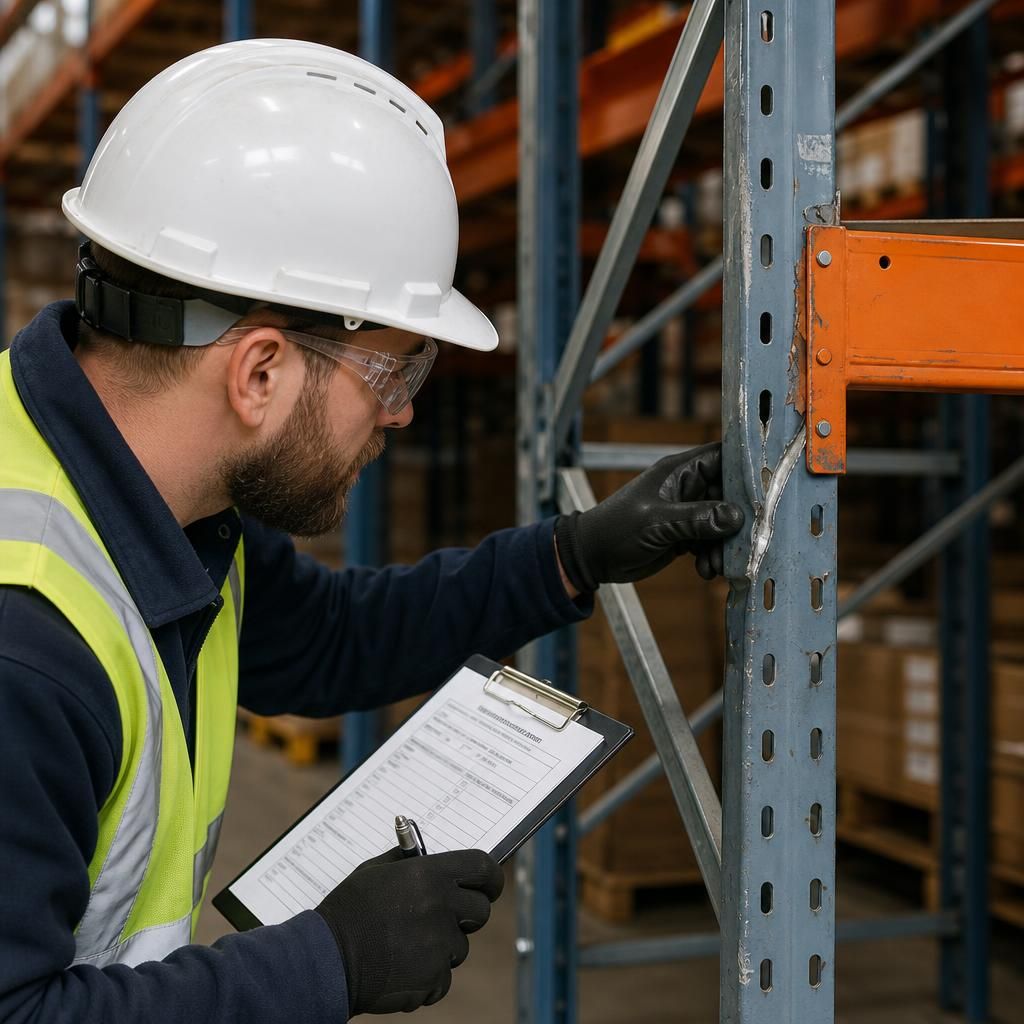
Damage found during a warehouse racking inspection is not automatically repaired on the same visit. Minor, non-structural issues may be corrected immediately if the work is safe and within the inspector’s competence, but damaged load-bearing components usually require isolation, unloading and planned remedial work.
Where a repair is appropriate, the original defect should first be recorded and assessed. The affected bay may then be restricted or taken out of use until the correct replacement component, tools and safe working method are available. Structural components should not be straightened, welded or altered as an informal fix, because this can affect the system’s strength and capacity.
After repair, the area should be checked before it returns to service. Records should confirm what was damaged, what work was completed and whether the warehouse racking remains suitable for its intended loads.
Discuss damage found during your pallet rack inspection
Discuss any damage identified during your pallet rack inspection with Able Racking so we can advise whether it requires immediate control, planned repair or component replacement. Contact our team to arrange the appropriate remedial support.