
How often should pallet racking inspections be conducted?
Pallet racking should receive a detailed inspection by a technically competent person at least every 12 months, or more frequently where the risk assessment, usage or working environment requires it. In addition, trained staff should carry out regular visual checks, with an immediate inspection following any impact, significant alteration or other event that could affect the system’s safety.
Pallet racking should be inspected by a technically competent person at least every 12 months. More frequent inspections may be necessary where the risk assessment, operating conditions, traffic levels, loading practices or history of damage indicate a higher risk. This formal inspection should be supported by routine visual checks carried out by trained warehouse staff and an immediate inspection after any impact, significant alteration or other event that could affect the system’s safety.
The 12-month interval is a maximum, not a target that suits every warehouse. The appropriate frequency should be determined by the risks associated with the particular pallet racking system and how it is used. A busy warehouse with frequent forklift movements, changing loads or previous damage may need inspections more often than a quieter, controlled environment.
Routine visual checks should be carried out by a trained, responsible person at a frequency set by the site’s risk assessment. Weekly checks are commonly used, although the correct interval depends on the workplace. These checks should look for visible damage, displaced components, missing locking devices, leaning frames, overloaded beams, deteriorated floor fixings and changes to the way the system is being used.
Any concern identified during a routine check should be reported promptly to the person responsible for warehouse racking safety. Damaged areas should be assessed and, where necessary, unloaded, isolated and repaired before they are returned to service. A visual check does not replace the more detailed inspection conducted by a technically competent inspector.
An immediate inspection is required after an event that could have compromised safety. This includes forklift or vehicle impact, a collision involving stored loads, the collapse or displacement of goods, unauthorised alterations, changes to load configuration and any other incident that may have affected the structure. Do not wait for the next planned inspection if damage or instability is suspected.
A formal inspection normally considers the overall condition and suitability of the installation, including:
- upright frames, columns, bracing and beam connections;
- beams, safety locks and other load-supporting components;
- guards, protectors, end barriers and other impact protection;
- floor fixings, baseplates and the condition of the supporting floor;
- signs of deformation, corrosion, cracking, missing parts or unauthorised modifications;
- load notices and whether the system is being used within its stated capacity; and
- clearances, access routes and the relationship between the installation and nearby warehouse activities.
The inspection frequency should also be reviewed when there are changes to the warehouse or its operation. Examples include installing new warehouse racking, changing beam levels, introducing different pallets or loads, increasing forklift activity, altering traffic routes, changing the type of handling equipment or modifying the floor. These changes can affect load capacity, impact risk and the suitability of the original design.
Inspection findings should be recorded clearly, including the date, areas examined, defects identified, risk classification where used, actions required and the person responsible for completing them. Keeping these records provides a practical maintenance history and helps demonstrate that reported defects have been managed rather than simply noted.
UK health and safety guidance expects storage equipment to be maintained and examined at suitable intervals by people with the necessary knowledge, training and experience. The inspection schedule should therefore be based on a documented risk assessment and the manufacturer’s or designer’s information where available. An annual expert inspection is the minimum interval generally applied to pallet racking, but it should not be treated as evidence that the system is safe if routine checks, reporting or repairs are not being managed properly.
For most sites, an effective arrangement is to combine trained staff checks at a risk-based frequency, a documented formal inspection at least every 12 months, and immediate assessment after damage or significant change. Able Racking can help review the inspection schedule, identify conditions that require more frequent attention and provide a clear report of defects and recommended actions.
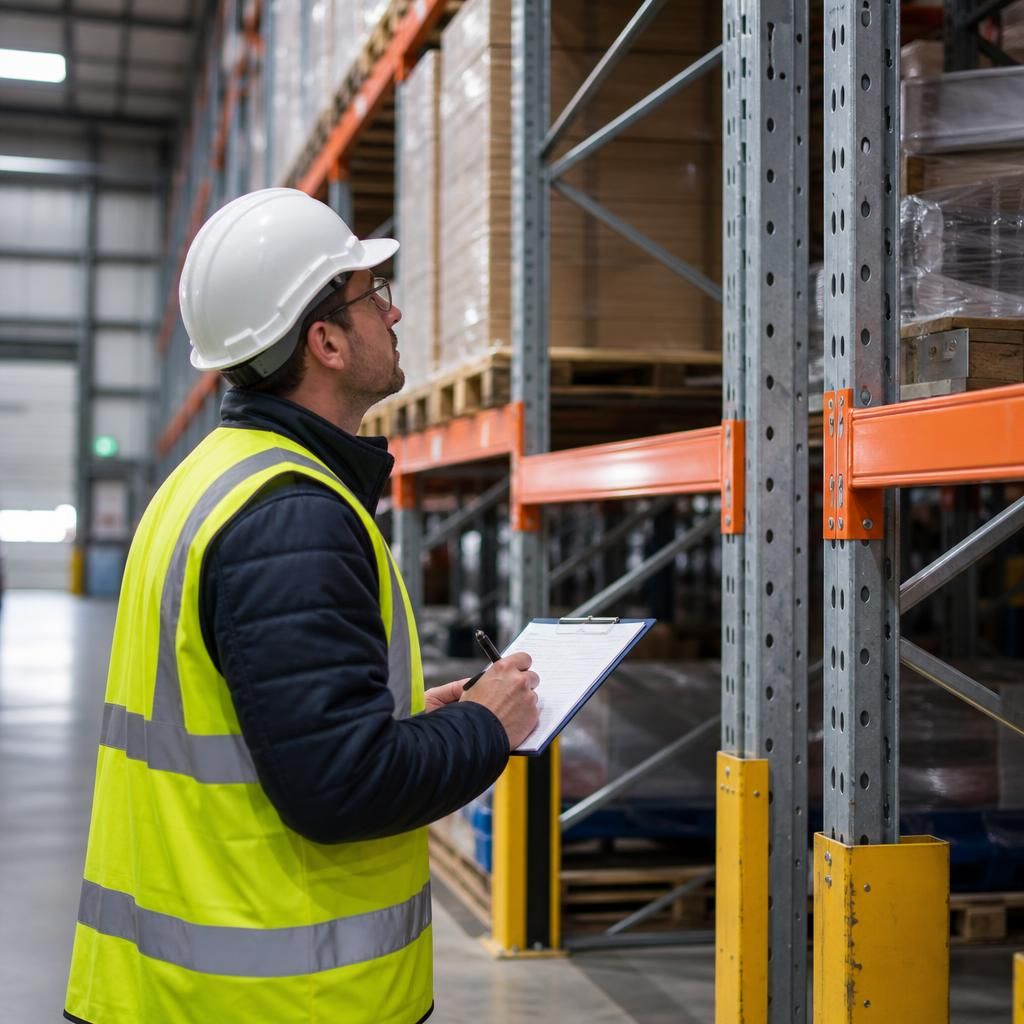
Pallet racking should be inspected by a technically competent person at least every 12 months, with the interval shortened where the risk assessment identifies greater exposure to impact, overloading, frequent use or changing operating conditions.
This formal inspection should be supported by routine visual checks from trained warehouse staff and an immediate assessment after any forklift impact, displaced load, unauthorised alteration or other incident that could affect the system. Any damaged area should be reported, isolated and assessed before it is returned to service; waiting for the next planned inspection can leave a known safety risk unmanaged.
Arrange Your Next Pallet Racking Inspection
Arrange your next pallet racking inspection with Able Racking to confirm your system remains safe, compliant and suitable for current warehouse use. Contact our experienced inspection team to review your requirements and agree an appropriate inspection schedule.