
What steps should be taken after an annual warehouse racking inspection?
After an annual warehouse racking inspection, review the report, prioritise any hazardous defects, and restrict access to affected areas until urgent repairs are completed. Arrange suitable remedial work, update inspection and repair records, and brief relevant staff on any changes or ongoing precautions.
After an annual warehouse racking inspection, the inspection report should be reviewed promptly, defects should be prioritised by risk, and unsafe areas should be controlled until suitable remedial work is completed. The actions taken, repairs carried out and any follow-up checks should then be recorded as part of the warehouse racking safety programme.
An inspection identifies the condition of the storage system at a particular time. It is the actions taken afterwards that reduce risk and help maintain compliance. The appropriate process will depend on the severity and type of defect, but the following steps provide a practical approach.
Review the inspection report
Read the full report rather than relying only on the summary. Check the locations of affected bays, the components involved and the inspector’s description of each issue. Reports commonly identify damage, missing or unsuitable components, loose connections, inadequate protection, overloading, poor housekeeping or changes that have affected the original design.
Make sure the report is understood by the person responsible for warehouse racking safety. If any recommendation is unclear, obtain clarification from the inspector or another suitably competent specialist before deciding what action is required.
Prioritise defects by risk
Not every defect requires the same response. Items should be assessed according to their potential effect on the stability of the installation, the likelihood of further damage and the consequences of continued use.
- Immediate risk: restrict access to the affected bay or area, prevent loading and unloading, and arrange urgent action. Where necessary, unload the affected location safely and only under the direction of a competent person.
- Significant defect: arrange remedial work within the recommended timescale and apply temporary controls until the work is complete.
- Lower-risk issue: plan the repair or improvement, monitor the condition and ensure it is not allowed to deteriorate.
Colour classifications used in an inspection report should not be treated as a substitute for professional judgement. The report’s recommendations, the site conditions and the type of damage all need to be considered.
Control unsafe areas
Where damage could affect safe use, clearly identify the affected location and prevent access until it has been assessed. This may involve barriers, temporary signage, removing stored goods or stopping the use of a bay. Inform warehouse operatives, supervisors and anyone else who may work in the area.
Do not simply remove a warning label because the defect is inconvenient or because the location appears stable. A damaged upright, beam, brace, connection or protection component can have implications that are not obvious during a routine visual check.
Arrange suitable remedial work
Repairs should be specified and completed by people with appropriate knowledge and experience of the particular storage system. The correct repair may involve replacing a component, installing an approved repair system, realigning parts, improving protection or removing and rebuilding an affected section.
Do not straighten, weld, drill or modify damaged components without confirmation that the proposed method is suitable. Unauthorised alterations can affect the design assumptions and may create a further safety issue. Replacement parts should be compatible with the existing installation and fitted in accordance with the manufacturer’s or designer’s requirements where applicable.
If the report identifies overloading or unsuitable loading, review the permitted load information and the way goods are stored. Loads should be stable, correctly positioned and within the stated capacity. Any change in configuration, beam levels, components or loading arrangements may require a competent design review before the installation is used again.
Check the work after repairs
Once remedial work is complete, verify that the reported defect has been addressed and that the surrounding installation has not been affected. Check that components are correctly fitted, fixings are secure, protection is in place and load notices or other safety information remain accurate.
For significant damage or structural work, arrange a documented follow-up inspection by a suitably competent person before releasing the area for normal use. Keep evidence of the repair, including the location, work completed, parts used and any restrictions that remain.
Update records and inspection information
Record the inspection date, report findings, risk decisions, temporary controls, repair instructions, completion dates and follow-up checks. Updating the site plan or defect register can make it easier to identify recurring problems and confirm that no recommendation has been overlooked.
Records should be accessible to the person responsible for warehouse racking safety and to relevant managers. They should also support the next planned inspection by showing previous damage, repeated impact points and repairs that may need closer monitoring.
Investigate the cause of damage
A repair addresses the immediate defect, but it may not prevent a recurrence. Consider whether the damage was caused by vehicle impact, poor visibility, unsuitable handling practices, inadequate protection, unstable loads, insufficient clearance or a change in how the warehouse is being used.
Where appropriate, improve traffic routes, review vehicle operation, replace or enhance protection, alter storage practices, or provide additional training. Repeated damage in the same location should be treated as evidence that the underlying control measures need review.
Brief relevant staff
Tell affected employees what has been found, which areas are restricted and what changes apply after the inspection. Briefings should cover safe loading, reporting new damage, keeping aisles clear, observing load information and following any temporary arrangements.
Warehouse operatives should know how to report damage immediately rather than waiting for the next planned inspection. Supervisors should also understand when a bay must be taken out of use and who is authorised to release it.
Maintain ongoing checks
An annual warehouse racking inspection does not replace regular in-house checks or immediate reporting of damage. The storage system should continue to be monitored during normal operations, with concerns escalated when they are identified.
After the inspection, confirm that routine checks are being completed, findings are recorded and corrective actions are closed properly. Any substantial change to the layout, loading arrangements or storage equipment should also be assessed rather than waiting for the next annual inspection.
The final step is to confirm that every recommendation has an owner and a completion date. A clear action tracker, prompt control of unsafe areas, competent repairs and documented follow-up will help keep the warehouse racking safe, compliant and suitable for continued use.
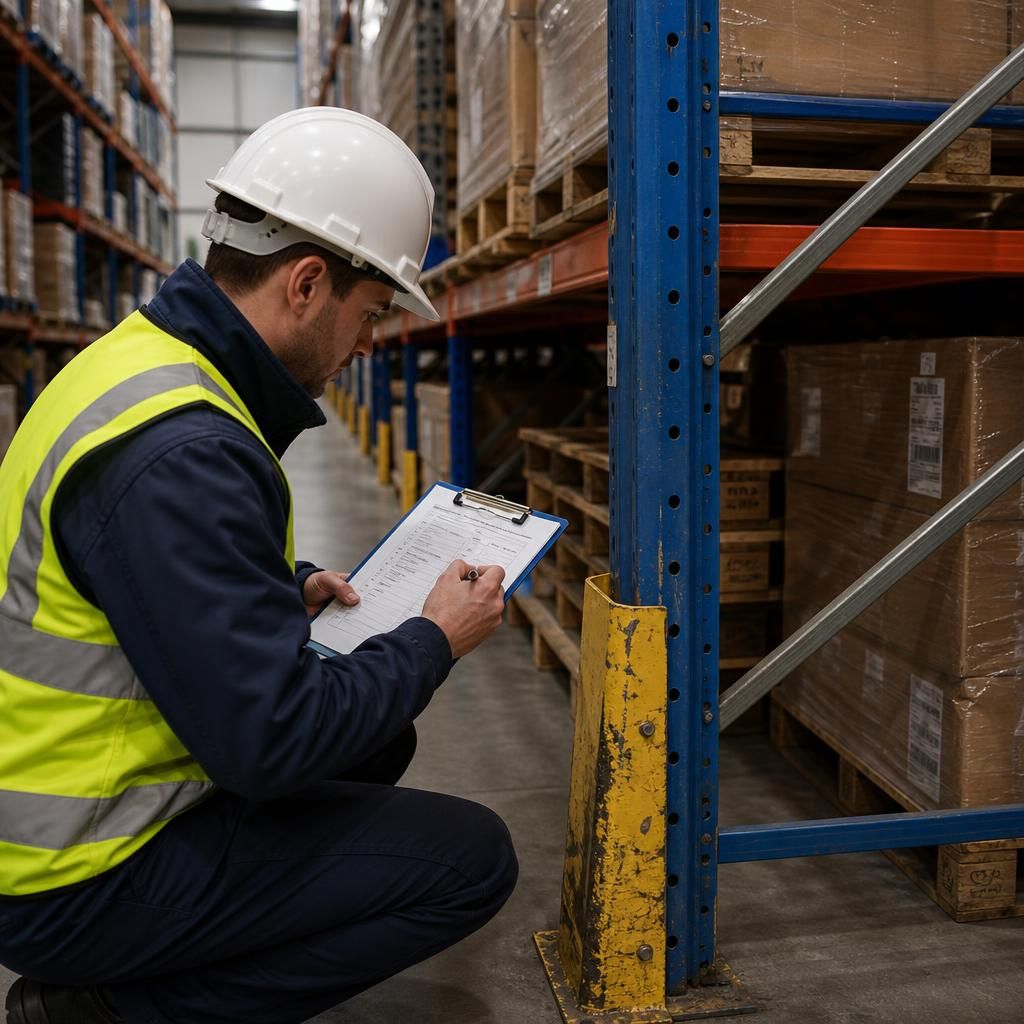
After an annual warehouse racking inspection, the inspection report should be turned into a clear action plan. Urgent defects must be controlled immediately, while other repairs should be assigned to a responsible person with a defined completion date.
Do not return an affected bay to service until suitable remedial work has been completed and, where necessary, a competent person has confirmed that it is safe to use. Record the defect, temporary restrictions, repair details and follow-up checks so there is a clear audit trail and future inspections can identify recurring damage.
Need help acting on your warehouse racking inspection report?
If you need help interpreting your warehouse racking inspection report or prioritising remedial work, speak to Able Racking’s experienced team. We can advise on suitable next steps and help keep your storage system safe and compliant.