
What qualifications do inspectors need for conducting warehouse racking inspections?
Warehouse racking inspectors should be technically competent, suitably trained and experienced in inspecting storage systems, identifying damage and assessing risks against applicable standards and guidance. In the UK, a SEMA-approved racking inspector qualification is widely recognised, alongside practical experience and a thorough understanding of warehouse operations, inspection procedures and reporting requirements.
Inspectors carrying out warehouse racking inspections should be demonstrably competent through relevant technical training, practical experience and a sound understanding of storage equipment, workplace risks and applicable UK guidance. There is not one universally mandated statutory qualification for every inspection, but the inspector must have sufficient knowledge, training and experience to identify defects, assess their significance and recommend suitable action.
A SEMA-approved Racking Inspector qualification is widely recognised in the UK as a strong indication of relevant competence. This training covers the inspection of storage systems, common forms of damage, safe working practices, risk classification and the preparation of inspection reports. It is particularly relevant where an inspector is responsible for carrying out a formal expert inspection of warehouse racking.
Qualification alone is not enough. A competent inspector should also have practical knowledge of:
- Different warehouse racking configurations, components and load-bearing arrangements
- How to identify damage to frames, uprights, beams, bracing, connectors, guards and other structural parts
- The effects of impact, overloading, unauthorised alterations, corrosion and poor installation
- Manufacturer information, load notices, design limitations and site-specific operating conditions
- Relevant workplace safety requirements and recognised industry guidance, including the principles set out in HSE guidance for the safe use of storage equipment
- Risk assessment, defect classification, prioritisation of remedial work and escalation of serious hazards
The inspector should be able to distinguish between superficial damage and defects that could affect structural integrity or safe use. This requires more than a visual walk-through. They need to understand how damage, missing components, displaced loads and changes to the warehouse environment can interact to create risk.
For an annual warehouse racking inspection, the inspector should be able to plan the inspection method, review available information, examine accessible areas systematically and record findings accurately. A suitable report should identify the equipment inspected, describe each defect clearly, indicate its location, explain the required action and provide an appropriate timescale or priority. Photographs, marked-up layouts and references to affected components can make the findings easier to act on.
Relevant experience is especially important where the site contains mixed equipment, unusual layouts, high operating activity, restricted access or a history of damage. An experienced inspector will also understand how forklift movements, loading practices, building conditions and changes in use can affect warehouse racking safety. Where a defect requires engineering analysis, specialist design advice or a repair outside the inspector’s competence, it should be referred to an appropriately qualified person rather than guessed at or overlooked.
Inspectors should maintain their competence through ongoing learning and exposure to current guidance, equipment developments and inspection practice. They should also work in a sufficiently impartial manner, follow a consistent inspection procedure and make clear where access restrictions or stored goods have prevented a full assessment. Evidence of training, experience, insurance and a documented inspection process can help a duty holder verify that the appointed inspector is suitable.
Before arranging an inspection, ask the provider to confirm:
- The inspector’s relevant qualification, such as SEMA-approved Racking Inspector training where appropriate
- Their practical experience with the type of warehouse racking installed at the site
- The standards, guidance and inspection procedure used
- How defects will be categorised, reported and escalated
- Whether the inspection includes a clear written report and photographic evidence where useful
- How limitations, inaccessible areas and recommendations for further technical assessment will be recorded
A properly qualified and experienced inspector will not simply confirm that the warehouse racking appears serviceable. They will provide a structured assessment that helps the duty holder understand the condition of the equipment, control immediate hazards and arrange proportionate repairs or further investigation. The inspection should form part of an ongoing safety process, alongside user checks, planned maintenance, staff awareness and prompt action on reported damage.
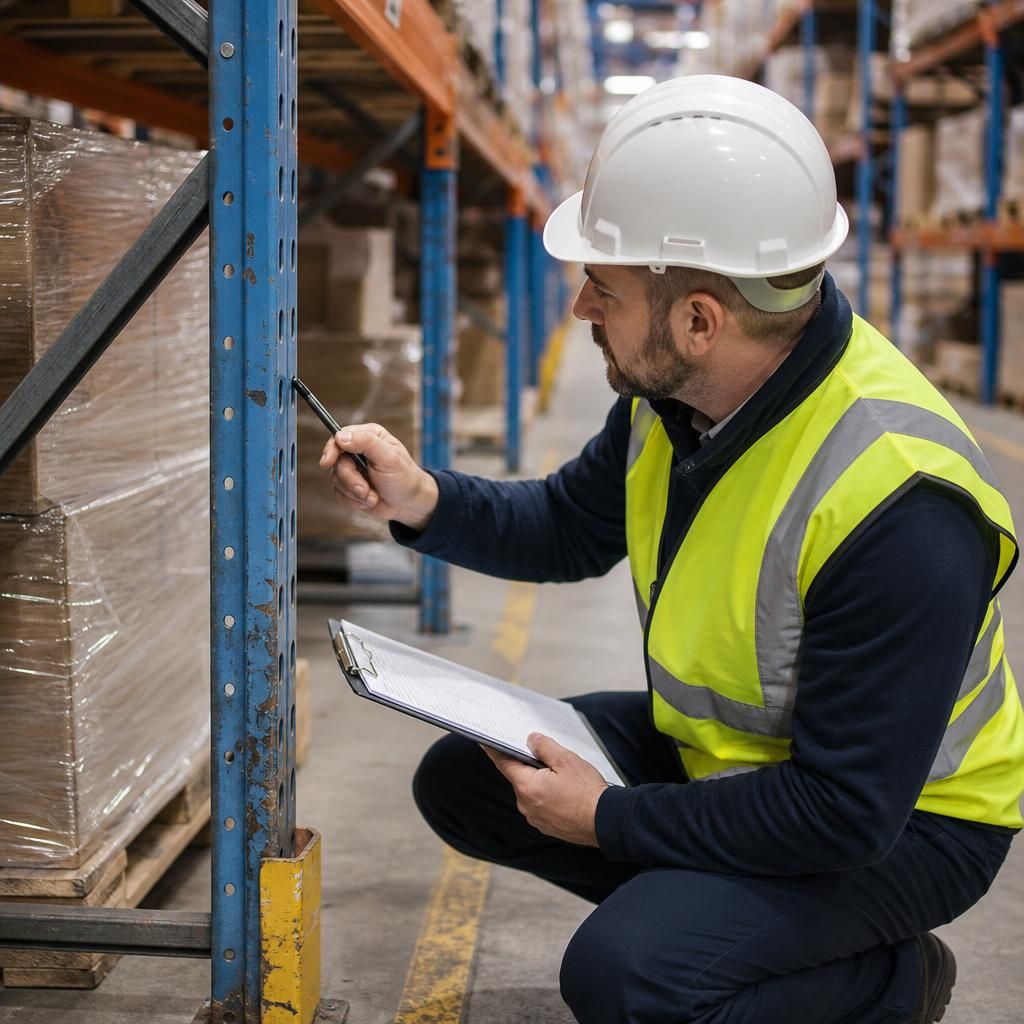
A competent warehouse racking inspector needs more than a certificate. They should hold relevant technical training, such as SEMA-approved Racking Inspector training where appropriate, and have practical experience assessing the type of storage equipment installed on site.
The inspector should be able to identify damage, understand its potential effect on structural integrity, assess risk against recognised guidance and produce a clear report with prioritised actions. They should also recognise when a defect requires specialist engineering advice rather than making an unsupported judgement.
Arrange a warehouse racking inspection with our qualified team
Arrange your warehouse racking inspection with Able Racking’s qualified and experienced team. Contact us to discuss your site requirements and book a thorough inspection with clear, practical reporting.