
How often should warehouse racking be inspected?
Warehouse racking should undergo a formal inspection by a competent person at least every 12 months, with more frequent inspections where the risk assessment, operating conditions or previous damage indicates a need. Staff should also carry out regular visual checks and report any damage, instability or changes in loading immediately.
Warehouse racking should receive a formal inspection by a competent person at least every 12 months. This is the accepted minimum interval for most warehouse racking systems under UK guidance and recognised industry practice, but the correct frequency must be based on a documented risk assessment. More frequent inspections may be necessary where the warehouse has intensive forklift traffic, a history of impact damage, difficult operating conditions, changing loads or other increased risks.
An annual inspection is not a substitute for routine checks. Warehouse operators should complete regular visual checks throughout the year, with the frequency determined by the risks in the workplace. In many warehouses, this includes checks by trained staff during normal operations and a more structured inspection at least weekly. Any damage, instability, missing components or unexpected change in condition should be reported immediately rather than waiting for the next scheduled inspection.
The recommended inspection cycle includes:
- Routine visual checks: Operators should look for visible damage, displaced loads, leaning frames, bent beams, missing safety components and obstructions around the warehouse racking.
- More detailed regular inspections: A responsible, trained person should review the condition of the warehouse racking at an interval set by the risk assessment. Weekly checks are common where forklift activity and the likelihood of impact are significant.
- Formal expert inspections: A technically competent inspector should examine the installation at intervals of no more than 12 months, or sooner where the risks require it.
- Immediate post-incident checks: Any suspected impact, overloading, instability or other serious event should trigger an assessment before the affected area is returned to normal use.
When should warehouse racking be inspected more often?
The annual interval should be shortened when the operating environment creates a higher likelihood of damage or deterioration. Relevant factors include frequent forklift movements, narrow aisles, high-level storage, poor visibility, heavy or irregular loads, corrosive or damp conditions, high staff turnover and previous damage. A warehouse that has experienced repeated impacts should not rely on an annual inspection alone; the inspection programme and site controls should be reviewed.
Additional inspections are also appropriate after warehouse racking has been altered, moved, extended or reconfigured. Changes to beam levels, load capacities, accessories or the layout can affect the stability and suitability of the installation. An inspection should confirm that the altered system has been correctly installed, that the configuration matches the design and that safe working loads remain clearly displayed.
Inspections should also be considered after an incident involving a vehicle, falling goods, excessive loading, fire, flooding or another event that could affect structural condition. If the cause or extent of damage is uncertain, the affected section should be taken out of service until it has been assessed by a competent person.
What happens during a formal inspection?
A formal warehouse racking inspection is more than a quick visual walk-through. The inspector should assess the installation systematically and identify conditions that could affect safe use. This normally includes checking frames, uprights, bracing, beams, connectors, baseplates, anchors, protection, safety pins, decking, load notices and the condition of stored goods where these affect stability or loading.
The inspection should also consider whether the warehouse racking is being used as intended. The inspector may review working load information, beam levels, loading arrangements, access routes, housekeeping, vehicle movement and evidence of unauthorised alterations. Damage should be recorded by location and severity so that repairs can be prioritised and tracked.
A suitable report should identify the areas inspected, the date, the inspector’s details, observed defects, photographs or location references where useful, and recommended corrective action. It should distinguish between damage requiring immediate isolation and lower-priority issues that can be scheduled for repair. The report should be retained with the warehouse safety records, along with evidence that corrective actions have been completed.
What should happen if damage is found?
Damage should be assessed promptly and not treated as cosmetic without professional advice. Affected bays or sections may need to be unloaded, marked as unsafe and prevented from further use. Temporary straightening, welding or other improvised repairs should not be carried out unless they form part of an approved repair method. Damaged components should be repaired or replaced using suitable parts, followed by a check that the warehouse racking is safe to return to service.
- Report the defect to the responsible person immediately.
- Prevent further loading or access where the damage could affect stability.
- Identify the exact location and preserve a clear record of the defect.
- Arrange assessment and repair by suitably competent personnel.
- Confirm that corrective action is complete before removing any restriction.
Why are routine checks and annual inspections both needed?
Routine checks help identify new damage quickly, particularly in busy warehouse environments where impacts can occur between formal visits. The formal inspection provides an independent, systematic review that can identify recurring problems, deterioration, unsuitable use and weaknesses in existing controls. Neither process replaces the other.
Inspection frequency should be reviewed whenever there is a significant change to the warehouse, its equipment, its workforce or its operating methods. The risk assessment should explain the chosen intervals and identify who is responsible for routine checks, reporting defects, arranging expert inspections and closing out repairs. Clear responsibilities help ensure that an inspection report leads to practical action rather than simply being filed.
In summary, arrange a formal inspection of warehouse racking at least once every 12 months, use regular trained-user checks between formal inspections and increase the frequency wherever site conditions or previous findings indicate greater risk. Any impact, alteration or suspected loss of stability should be assessed without delay.
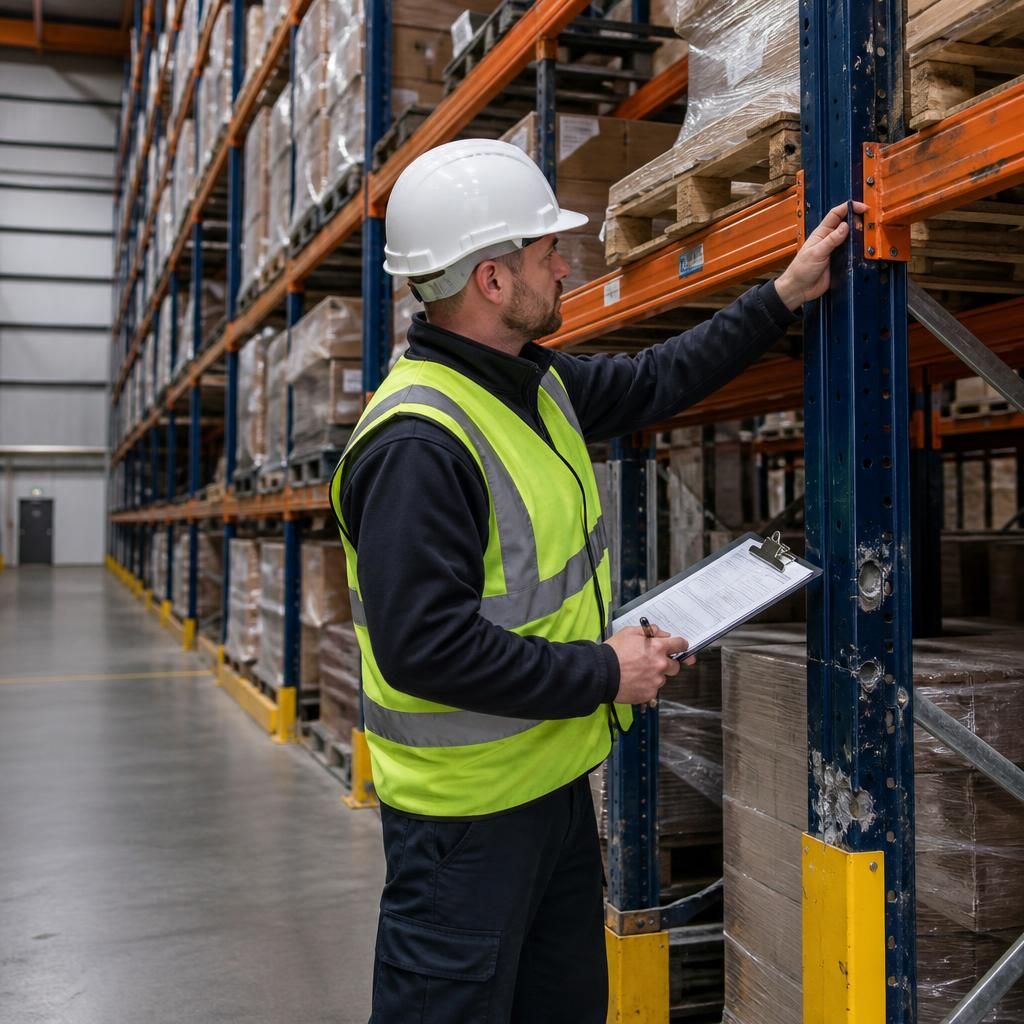
A formal warehouse racking inspection should take place at least every 12 months, but this does not replace routine visual checks. Trained warehouse staff should look for impact damage, leaning frames, displaced loads, missing safety components and other changes during normal operations.
Inspection frequency should increase when forklift traffic, previous damage, changing loads or other site conditions create additional risk. Any suspected impact, overloading or alteration should be assessed promptly by a competent person before the affected warehouse racking is returned to service.
Arrange your annual warehouse racking inspection
Arrange your annual warehouse racking inspection with Able Racking to confirm your system remains safe, compliant and suitable for continued use. Contact our experienced inspection team to schedule a professional assessment.