
What are the consequences of ignoring annual warehouse racking inspection compliance?
Ignoring annual warehouse racking inspection compliance can leave defects undetected, increasing the risk of collapse, falling loads, injury, stock damage and operational disruption. It can also result in enforcement action, invalidated insurance, unplanned repair costs and difficulty demonstrating that suitable safety measures are in place.
Ignoring annual warehouse racking inspection compliance can allow defects to remain undetected, increasing the risk of rack collapse, falling loads, workplace injuries, stock damage and operational disruption. It may also lead to enforcement action, difficult insurance claims, unexpected repair costs and problems demonstrating that suitable warehouse racking safety measures are in place.
An inspection is not simply an administrative exercise. It provides a structured assessment of the condition, use and protection of warehouse racking, allowing defects to be identified and controlled before they develop into a serious failure. Where an inspection is missed or findings are not acted upon, the business may remain exposed even if the warehouse racking appears sound during routine use.
Safety risks from undetected damage
Forklift impacts, overloading, poor load placement, missing components and gradual deterioration can weaken warehouse racking. Some damage may be difficult to identify without a systematic inspection by a competent person. Common issues include bent uprights, damaged beams, displaced safety pins, loose fixings, inadequate floor anchoring and missing protective guards.
If damage is overlooked, the affected warehouse racking may no longer perform as designed. A minor impact can reduce the capacity of a component, while repeated impacts or unauthorised alterations can increase the likelihood of progressive failure. Falling pallets, products or components can injure people working nearby and may affect areas beyond the original point of damage.
Operational and financial consequences
A warehouse racking failure can require an aisle, bay or wider operational area to be isolated at short notice. This can restrict access to stock, interrupt picking and dispatch activities, and create delays for customers. Emergency unloading, temporary storage, replacement components and urgent installation work may also cost more than planned preventative maintenance.
Even where a failure does not occur, unresolved inspection findings can reduce storage capacity. Bays may need to be taken out of service until repairs are completed, and damaged warehouse racking may limit how safely stock can be stored. The resulting loss of usable space can affect workflow and create pressure to place loads in unsuitable locations.
Enforcement and legal exposure
Employers have duties under UK health and safety legislation to protect employees and others who may be affected by their work. Warehouse racking forms part of the workplace equipment and storage arrangements that must be properly selected, used, maintained and managed. Guidance such as HSE publication HSG76 and the inspection principles of BS EN 15635 are commonly used to support a suitable warehouse racking safety regime.
There is not a single inspection certificate that removes all responsibility from the duty holder. The business must still manage risks, follow safe operating procedures, respond to reported damage and ensure that inspections are carried out at appropriate intervals by a suitably competent person. If an incident occurs after inspections have been missed or recommendations ignored, it may be harder to show that reasonably practicable precautions were taken.
Depending on the circumstances, a regulator may require unsafe warehouse racking to be unloaded, isolated or repaired. Enforcement action can cause additional disruption and may continue until suitable corrective measures have been completed and recorded.
Insurance and liability concerns
Insurance policies and internal safety procedures may require evidence of suitable inspection, maintenance and risk-control arrangements. Failing to complete inspections, retain reports or close out defects could complicate discussions with an insurer after an incident. It does not automatically mean that a claim will be rejected, but missing records and unresolved safety actions can make the position more difficult to establish.
The business may also face civil claims if an employee, contractor or visitor is injured because unsafe warehouse racking was not identified or repaired. Clear inspection reports, repair records, photographs and evidence of follow-up action help demonstrate how risks were managed.
Why records and corrective action matter
Compliance depends on more than arranging an inspection. The process should show:
- which areas and warehouse racking systems were inspected;
- who carried out the inspection and why they were competent to do so;
- what damage, unsafe practices or other defects were identified;
- which risks required immediate isolation or unloading;
- what repairs or remedial measures were recommended;
- who was responsible for completing the work; and
- when the corrective action was completed and verified.
Inspection findings should be communicated to the responsible warehouse team, with urgent hazards controlled immediately. A report that is filed without action does not restore the safety of the warehouse racking. Defects should be prioritised according to their severity, and affected areas should remain controlled until they are repaired or otherwise made safe.
Impact on day-to-day warehouse safety
Ignoring the inspection cycle can also weaken wider safety controls. Operators may become accustomed to working around damaged warehouse racking, loading practices may drift away from the design requirements, and reported impacts may not be escalated. Over time, this can create a gap between the warehouse racking’s intended use and its actual condition.
Regular inspections provide an opportunity to check practical issues such as load notices, aisle clearance, pallet condition, housekeeping, protection from vehicle impact and compliance with site procedures. These checks support safer working practices as well as the structural condition of the warehouse racking.
What to do if an inspection has been missed
If an annual warehouse racking inspection is overdue, arrange an assessment by a suitably competent inspector as soon as possible. Do not treat the absence of visible damage as evidence that the system is safe. Until the inspection is completed, review any known impact damage, changes to loading arrangements, previous outstanding repairs and reports from warehouse operatives.
Where serious damage is suspected, the affected section should be isolated and unloaded in accordance with the site’s emergency procedure. Repairs should use suitable components and be completed by appropriately experienced personnel. Substituting incompatible parts, straightening damaged structural members without a proper assessment or returning an area to service without verification can leave the original risk unresolved.
Maintaining a planned inspection programme, acting promptly on findings and keeping accurate records helps protect people, stock and business continuity. It also gives the duty holder clear evidence that warehouse racking is being managed as an active safety responsibility rather than treated as a one-off installation.
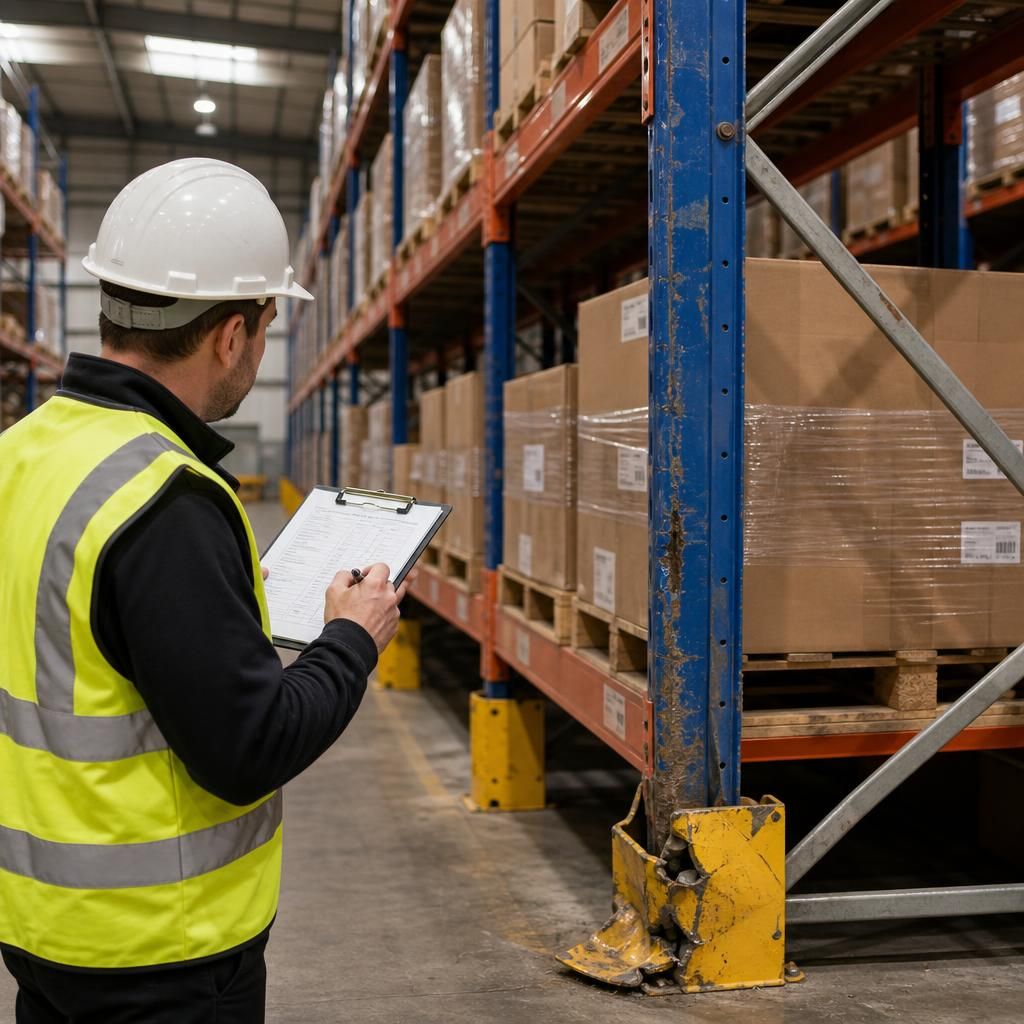
Ignoring annual warehouse racking inspection compliance means defects, unsafe loading practices and missing protective components may remain unidentified until they contribute to a failure. The consequences can include falling loads, injuries, stock damage, restricted access to affected bays and unplanned disruption to warehouse operations.
Inspection findings must also be acted upon. Damaged warehouse racking should be isolated or unloaded where necessary, with repairs completed by suitably competent personnel and verified before the area returns to service. Keeping inspection reports, repair records and evidence of follow-up action helps demonstrate that risks have been actively managed and supports a safer, more reliable warehouse.
Arrange your annual warehouse racking inspection
If your annual warehouse racking inspection is due or overdue, contact Able Racking to arrange a competent inspection and identify any defects requiring action.