
Are there specific qualifications or certifications that inspectors should possess to conduct annual warehouse racking inspections?
Annual warehouse racking inspections should be carried out by a technically competent inspector with suitable training, practical experience and knowledge of relevant UK safety guidance, including HSE guidance and applicable standards. A recognised qualification such as SEMA Approved Rack Inspector (SARI) status provides additional assurance, although UK law does not prescribe one specific certificate for every inspection.
Annual warehouse racking inspections should be completed by a technically competent person with appropriate training, practical experience and a sound understanding of the relevant UK safety guidance and standards. UK law does not prescribe one universal certificate for every inspection, but the inspector must be capable of identifying defects, assessing their significance and recommending suitable corrective action. A recognised qualification, such as SEMA Approved Rack Inspector (SARI) status, provides useful evidence of specialist competence.
Competence is broader than holding a certificate. The inspector should be able to understand how warehouse racking systems are designed, loaded, installed and used, and how damage or unauthorised changes can affect their structural performance. They should also understand the limitations of a visual inspection and know when a matter requires further assessment by a suitably qualified structural or design engineer.
Relevant knowledge and experience should include:
- warehouse racking components, configurations and load-bearing principles;
- common damage to frames, beams, bracing, connectors, guards and floor fixings;
- the effects of impact, overloading, poor installation, corrosion and missing components;
- safe access and inspection techniques in an active warehouse environment;
- the application of HSE guidance, including HSG76 Warehousing and storage;
- the principles of BS EN 15635 for the use and maintenance of steel static storage systems; and
- clear classification of hazards, recommended actions and inspection priorities.
Under the Health and Safety at Work etc. Act 1974 and the Management of Health and Safety at Work Regulations 1999, businesses must use people with suitable competence for the work being undertaken. The Provision and Use of Work Equipment Regulations 1998 (PUWER) may also be relevant to the safe use and maintenance of workplace equipment. These requirements support the use of a suitably competent inspector, but they do not create a single statutory qualification specifically titled for annual warehouse racking inspections.
BS EN 15635 recommends that storage equipment is inspected regularly by a technically competent person, with an expert inspection carried out at intervals of no more than twelve months unless a risk assessment justifies a shorter interval. This does not remove the need for routine checks by trained site personnel. Users should report damage immediately, while the person responsible for warehouse racking safety should arrange regular visual inspections at an appropriate frequency based on site conditions and risk.
A SEMA Approved Rack Inspector qualification is widely recognised as specialist evidence that an inspector has been assessed in the inspection of steel storage equipment. It should still be considered alongside the individual’s practical experience, continuing professional development, understanding of the particular system being inspected and ability to produce a technically useful report. Accreditation alone should not be treated as a substitute for sound inspection practice.
Before appointing an inspector, ask for evidence of:
- relevant qualifications, accreditation or formal inspection training;
- recent experience inspecting warehouse racking systems similar to those on your site;
- knowledge of the standards and guidance applicable to the installation;
- appropriate professional indemnity and public liability insurance;
- a documented inspection method and clear approach to risk classification;
- the ability to identify urgent hazards and communicate them promptly; and
- sample report content showing photographs, locations, defect descriptions and recommended actions.
The inspection should be impartial and sufficiently independent from the people responsible for day-to-day warehouse operations. An inspector must record what was actually examined rather than relying on previous reports or assurances that repairs have been completed. They should check the layout, visible components, protection, fixings, load notices and evidence of damage, while also discussing changes in use, incidents and outstanding remedial work with the responsible person.
The completed report should identify the date and scope of the inspection, areas not accessed, systems examined, defects found, photographs or location references, risk classifications and recommended timescales. It should distinguish between immediate actions, items requiring prompt repair and lower-priority monitoring. Any unsafe warehouse racking should be isolated or unloaded as appropriate until a competent person confirms that it is safe to use.
In practical terms, the most reliable choice is an inspector who combines recognised specialist training with substantial hands-on inspection experience and a disciplined reporting process. Able Racking’s inspection team can help review the competence evidence, inspection scope and documentation needed to support ongoing warehouse racking safety and compliance.
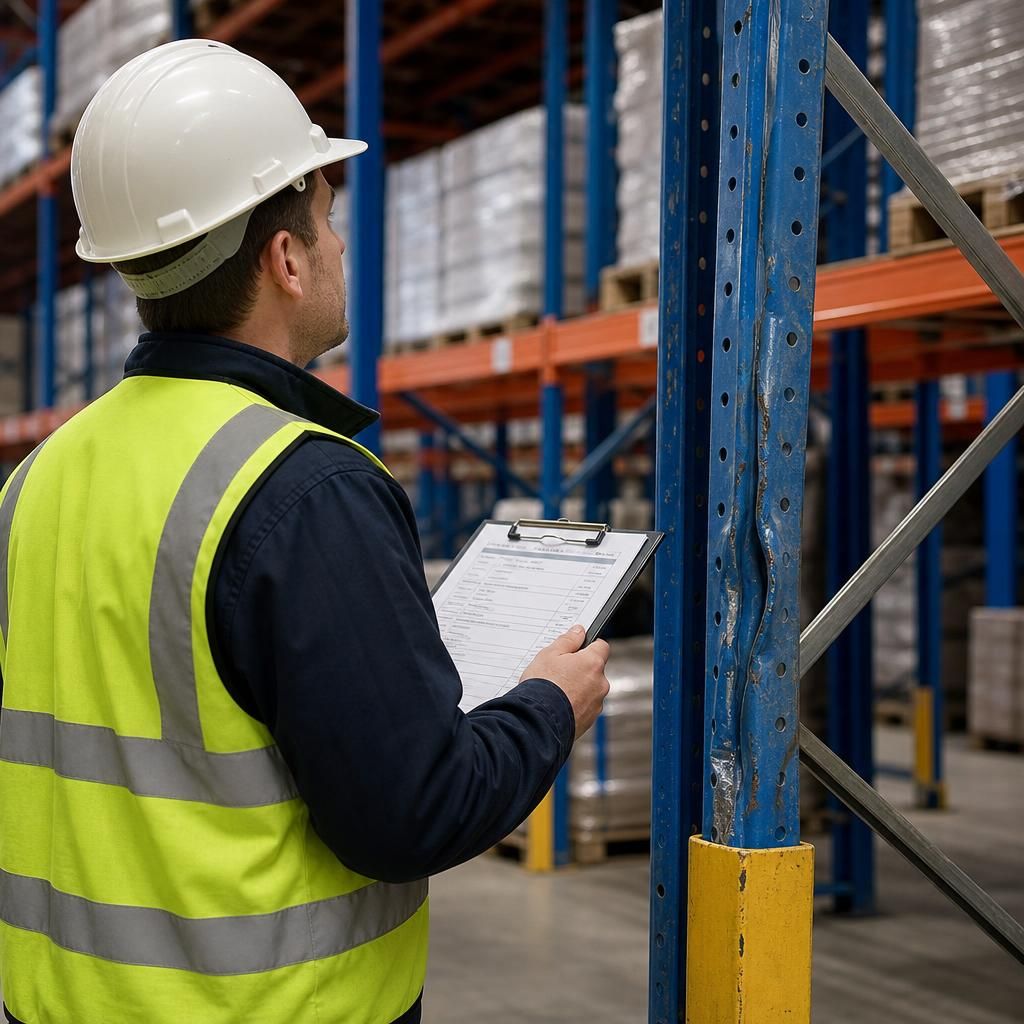
A recognised qualification, such as SEMA Approved Rack Inspector (SARI) status, is useful evidence that an inspector has specialist training in warehouse racking inspections. However, certification alone does not establish competence. The inspector should also have relevant practical experience, understand applicable UK guidance and BS EN 15635, and be able to identify damage, assess risk and recommend appropriate corrective action.
Before appointing an inspector, ask for evidence of current training, experience with comparable systems, insurance, a documented inspection method and sample reports. A suitable report should clearly record the inspection scope, defects, locations, photographs, risk classifications and required actions.
Check your inspector’s qualifications for an annual warehouse racking inspection
If you need to confirm an inspector’s competence or arrange an annual warehouse racking inspection, speak to Able Racking about the qualifications, experience and reporting standards required for your site.