
How can scheduling regular maintenance enhance warehouse racking system longevity?
Scheduling regular warehouse racking maintenance helps identify and correct damage, wear and alignment issues before they worsen, preserving the system’s structural performance and extending its service life. It also supports safe load capacity, reduces unplanned disruption and helps maintain compliance with workplace safety requirements.
Scheduling regular maintenance extends warehouse racking system longevity by identifying damage, wear, corrosion, loosened components and alignment problems before they reduce structural performance. Prompt corrective work preserves safe load capacity, limits the spread of damage, reduces unplanned disruption and helps keep the warehouse racking compliant with workplace safety requirements.
Maintenance should form part of a planned warehouse racking safety programme rather than being carried out only after a failure or visible incident. It works alongside routine in-house checks and formal inspections by a suitably competent person. Each activity has a different purpose: daily or regular user checks can identify obvious problems quickly, formal inspections provide a structured assessment of condition, and maintenance addresses defects and deterioration identified through either process.
How planned maintenance protects warehouse racking
- It prevents minor damage becoming structural damage. A bent upright, displaced beam connector or damaged protection component can worsen if it remains in service. Early isolation and repair reduce the likelihood of a more extensive failure.
- It preserves alignment and stability. Warehouse racking should remain correctly positioned, level and plumb, with frames, beams and bracing securely connected. Maintaining these features helps loads transfer as intended through the structure.
- It controls corrosion and material deterioration. Damaged finishes, exposed metal and persistent moisture can accelerate corrosion. Planned cleaning, environmental controls and appropriate remedial work help protect the underlying steel.
- It protects load capacity. Damage, missing components or unauthorised alterations can affect the capacity of a warehouse racking installation. Maintenance provides an opportunity to confirm that components remain suitable and that load notices and configuration information are still accurate.
- It reduces operational disruption. Planned repairs can be organised around warehouse activities, access requirements and stock movements. This is generally safer and more efficient than responding to an emergency closure after a serious defect is discovered.
What regular warehouse racking maintenance should include
The scope should reflect the design, age, environment and use of the installation. A competent maintenance review commonly considers upright frames, beams, bracing, connectors, baseplates, anchors, guards and other protective equipment. It should also consider the condition of floors and surrounding areas where these affect stability, access or impact risk.
- Inspecting for impact damage caused by forklift trucks, pallet movement or handling equipment.
- Checking that beams, connectors, pins, bolts, anchors and bracing are present, secure and correctly fitted.
- Confirming that frames remain vertical and that beams have not become displaced or visibly distorted.
- Examining protective guards and barriers to ensure they remain effective and are not themselves creating an obstruction or additional hazard.
- Checking for corrosion, cracking, sharp edges and deterioration associated with the warehouse environment.
- Removing unauthorised modifications, unsuitable repairs or stored items that interfere with safe operation.
- Reviewing load notices, bay identification and any changes to the warehouse racking layout or intended use.
Repairs should be based on the manufacturer’s information, the original design and the findings of a competent assessment. Damaged components should not be straightened, welded, drilled or replaced with improvised alternatives unless the repair has been properly specified and approved. Where safety cannot be confirmed, the affected area should be unloaded or isolated until suitable corrective action is completed.
How to schedule maintenance effectively
A maintenance schedule should be risk-based and recorded. Higher-risk areas may need closer attention where there is frequent vehicle movement, heavy or changing loads, a history of impact, corrosive conditions, restricted visibility or regular changes to the warehouse racking layout. Maintenance should also be reviewed after an impact, relocation, alteration, change of load configuration or other event that could affect the installation.
Each reported defect should be logged with its location, condition, immediate control measure, recommended action, responsible person and completion date. Photographs, inspection records and repair documentation provide a clear audit trail and make it easier to identify recurring damage. Repeated impact in the same location may indicate a need to improve traffic routes, operator controls, protection or training rather than simply replacing the damaged component.
Maintenance does not replace a formal warehouse racking inspection. A planned inspection provides an independent and systematic review of the installation, while maintenance ensures that identified defects are controlled and corrected. Combining both processes gives warehouse managers better visibility of condition, repair priorities and longer-term replacement requirements.
For Able Racking customers, a practical maintenance plan should be reviewed whenever operating conditions change and after completed repairs. Our experienced operatives can help assess defects, recommend proportionate remedial work and maintain clear records, supporting safe, efficient warehouse operations and prolonging the serviceable life of the warehouse racking system.
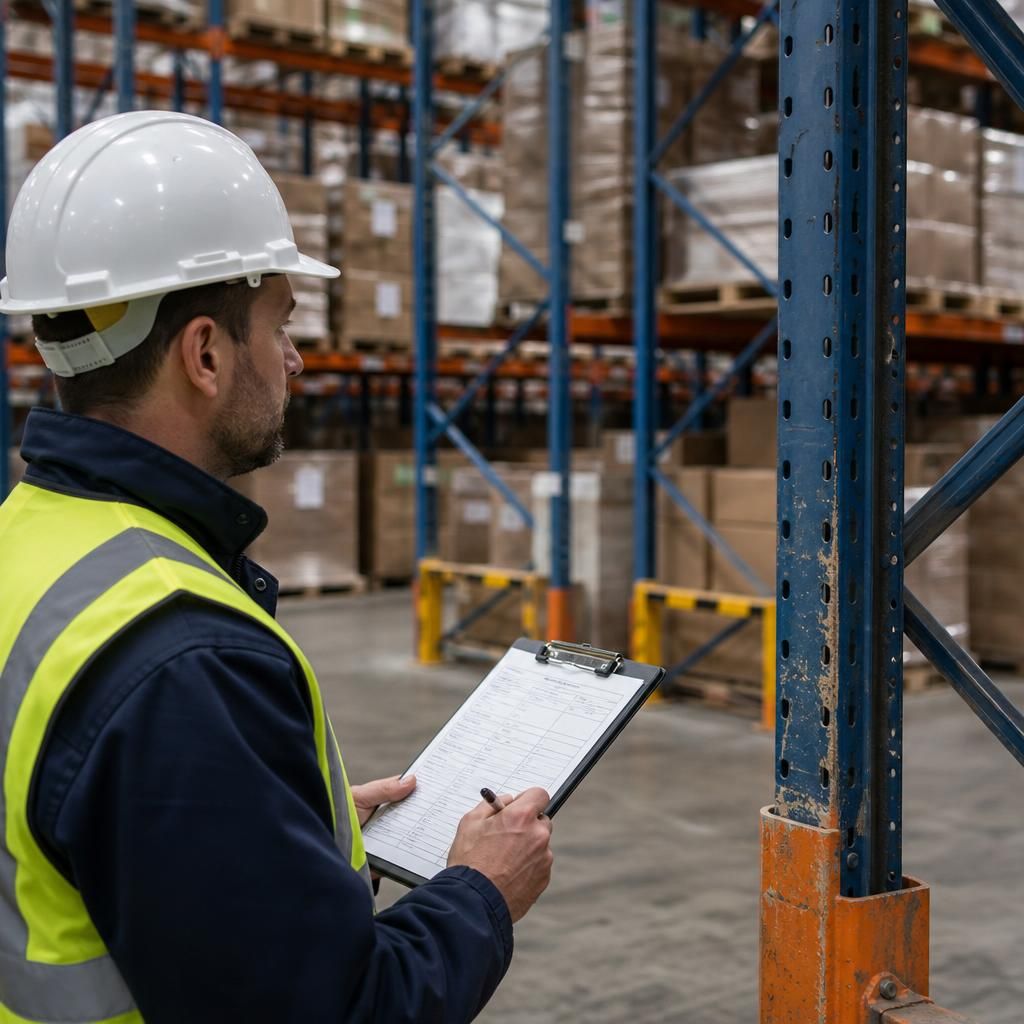
Planned maintenance extends warehouse racking life by ensuring defects are recorded, prioritised and corrected before they affect the wider structure. A maintenance record should identify the location and type of damage, the immediate control measure, the required repair and the person responsible for completing it.
Photographs and repair records help confirm that work has been completed correctly and reveal recurring problems, such as repeated forklift impacts in the same bay. This evidence can support practical improvements to protection, traffic routes or operator training, reducing repeat damage and helping the warehouse racking remain safe, stable and serviceable for longer.
Plan your warehouse racking maintenance
Review your warehouse racking maintenance schedule with our experienced team and identify any outstanding defects, repairs or changes in operating conditions. Contact Able Racking to plan practical remedial work and keep your warehouse racking safe, compliant and serviceable.