
What does a warehouse racking inspection include?
A warehouse racking inspection includes systematic checks of the frames, beams, connectors, protection, load notices and surrounding areas for damage, instability or conditions that could affect safe use. The inspector records findings, assesses their severity and provides a clear report identifying any remedial action required.
A warehouse racking inspection is a systematic assessment of the storage system, its components and the surrounding working conditions. It checks for damage, instability, overloading, unsuitable alterations and other conditions that could affect safe use. The inspector records the findings, assesses their significance and provides a report setting out any action required.
The inspection is focused on the condition and safe operation of the warehouse racking as installed. It is not simply a visual search for bent steel. An experienced inspector considers how the system is being used, whether it remains suitable for its loads and layout, and whether defects could worsen if they are not addressed.
Checks to the main structure
- Upright frames are checked for bending, dents, twisting, corrosion, loose components and signs that they have been struck by vehicles or handling equipment.
- Beams are checked for distortion, impact damage, damaged welds, displaced components and secure engagement with the frames.
- Bracing, ties, footplates, shims, anchors and other structural parts are examined for damage, movement, missing items or unsuitable repairs.
- Connections are checked to confirm that components are correctly positioned and secured, with no obvious signs of disengagement or movement.
- Base areas and floor interfaces are assessed for damage, instability, settlement or conditions that may affect the alignment of the structure.
Checks to protection and safety features
Protective equipment is inspected for damage, displacement and suitability for the areas where impacts are most likely. This can include upright guards, end-of-aisle protection, barriers and other measures intended to reduce the consequences of contact with handling equipment. The inspector also checks whether protection has been installed securely and whether it remains appropriate for the current layout and traffic routes.
Safety notices and load information are reviewed to confirm that they are present, visible and consistent with the system in use. Where load notices are missing, unclear or inconsistent with the installed arrangement, this is identified because operators need reliable information before placing or removing goods.
Checks to the surrounding environment
- Aisles and access routes are assessed for obstructions, restricted clearance and conditions that could increase the likelihood of impact.
- The inspection considers whether nearby equipment, doors, conveyors, lighting, sprinkler services or building elements interfere with safe use.
- Floor condition, housekeeping and storage practices are considered where they may affect stability, access or vehicle movements.
- Goods are checked for unsafe projections, poor positioning, unsuitable pallets or storage arrangements that place avoidable loads on the structure.
- Evidence of repeated impacts or recurring damage is noted, as this may indicate that traffic management, operator practices or protection need to be reviewed.
Review of changes and use
An inspection should take account of changes made since the system was installed or previously inspected. These may include altered beam levels, additional components, changes to pallet types, different goods, revised vehicle routes or increased loading demands. Components should not be moved, removed or substituted without confirming that the altered arrangement remains suitable.
The inspector may also discuss how damage is reported, how unsafe areas are isolated and how operators are informed about load limits and safe working practices. This helps distinguish an isolated defect from a recurring operational problem that requires a wider corrective measure.
Recording and classifying findings
Each relevant defect should be recorded clearly, normally with its location, description and supporting photographs where useful. Findings are assessed according to their likely effect on safety and the urgency of the response. A report may identify items requiring immediate isolation, prompt repair or monitoring and planned attention, depending on the inspection method and the condition found.
Where serious damage or instability is identified, the affected area should not continue in normal use until suitable action has been taken. The inspection report should make clear what has been found and what needs to happen next, but it does not replace competent repair advice or a structural assessment where the condition is outside the scope of a routine inspection.
What the inspection report should provide
- The date, location and areas examined.
- Details of the warehouse racking or storage arrangements inspected.
- A record of defects, damage, unsafe conditions and notable observations.
- Photographs or location references that help identify each finding.
- An indication of the priority for remedial action.
- Recommendations for repair, replacement, protection, layout review or further technical assessment where appropriate.
A professional warehouse racking inspection therefore provides both a condition check and a practical safety record. It helps the responsible person understand whether the system can continue to be used as intended, which areas need attention and whether recurring damage or operational changes require more than an isolated repair. Routine operator checks and prompt reporting should continue between professional inspections, because newly occurring damage needs to be identified as soon as possible.
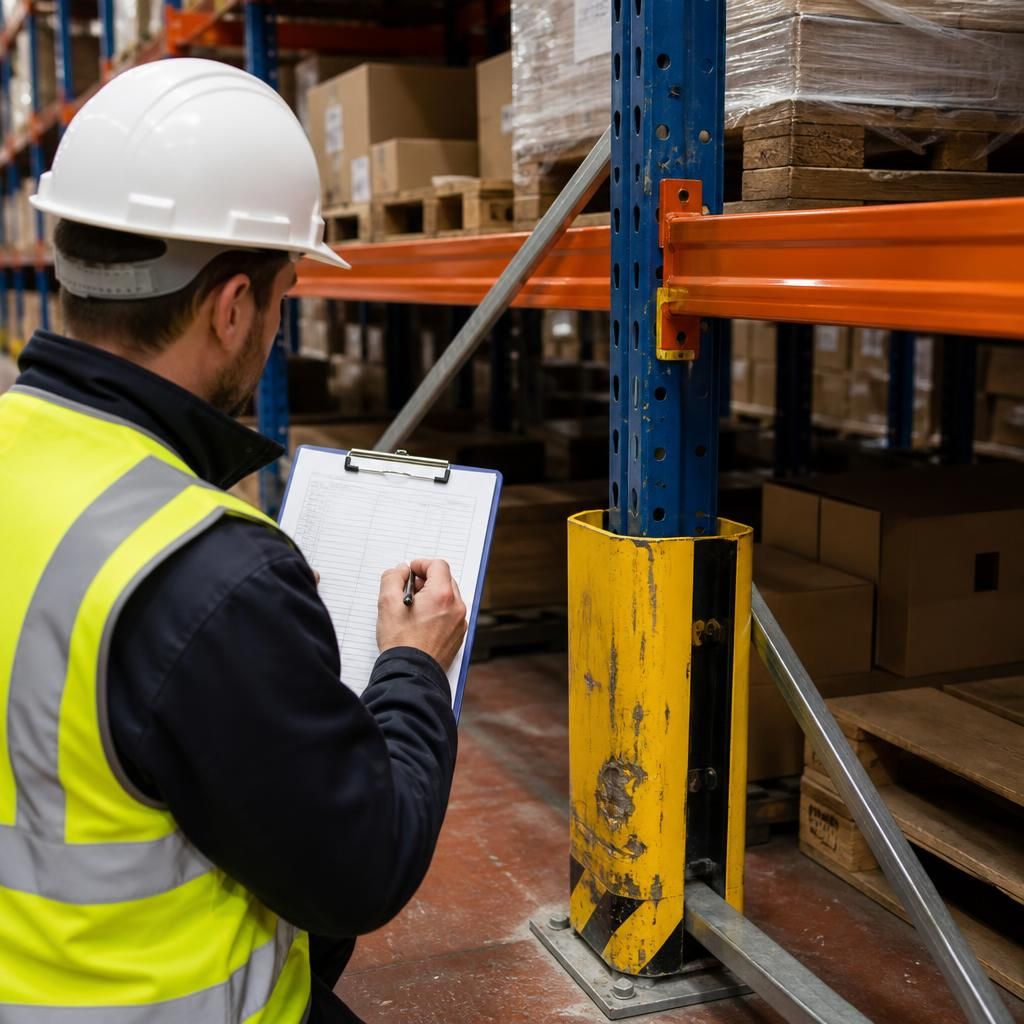
A warehouse racking inspection should produce a clear record of defects, their locations and the action required. This makes it easier to identify affected bays, isolate unsafe areas and arrange suitable repairs without relying on a general description of the problem.
Photographs, location references and notes about the condition of frames, beams, connections and protection help distinguish isolated damage from recurring issues. Findings should be prioritised according to their potential safety impact, with serious damage addressed before the affected warehouse racking is returned to normal use.
Arrange your warehouse racking inspection
Arrange your warehouse racking inspection with Able Racking to identify damage, unsafe conditions and any remedial action required. Contact our experienced team to discuss your inspection requirements and maintain a safe, compliant storage system.