
What are the critical steps involved in a SEMA Approved Inspector's warehouse racking evaluation process?
A SEMA Approved Inspector’s warehouse racking evaluation typically covers a systematic visual inspection, review of available design and load information, identification and classification of damage or non-compliance, and assessment of the system’s overall condition. The inspector then records findings in a formal report, recommends urgent controls or repairs where required, and supports follow-up actions to maintain safe, compliant warehouse racking.
A SEMA Approved Inspector’s warehouse racking evaluation is a structured process that combines a review of available information, a systematic visual inspection, risk classification, and formal reporting. The inspector assesses the condition and use of the warehouse racking against relevant SEMA guidance, manufacturer information and applicable workplace safety requirements, then identifies actions needed to control risks, arrange repairs and maintain safe operation.
The critical stages usually include the following:
- Defining the inspection scope
The inspection begins with confirmation of the areas, storage systems and equipment to be assessed. This includes identifying the types of warehouse racking in use, the operating environment, access arrangements and any known concerns, such as previous impact damage, changes to the layout or reported instability. The inspector will also clarify whether the visit is a routine safety inspection, a follow-up to earlier findings or part of a wider warehouse racking assessment. - Reviewing available information
Where available, the inspector reviews warehouse racking drawings, load notices, design information, installation records, manufacturer details and previous inspection reports. This information helps establish whether the system is being used as intended. It can also highlight missing or altered components, changes in beam levels, loading arrangements that differ from the original design, or areas where the design capacity cannot be confirmed. - Checking the general condition of the installation
The inspector carries out a methodical visual examination of the warehouse racking, working through each aisle, bay and relevant component rather than relying on a general impression. Uprights, frames, beams, bracing, footplates, anchors, guards, connectors and other structural or protective components are checked for damage, distortion, looseness, corrosion, missing parts and signs of unauthorised modification. - Identifying impact and operational damage
Particular attention is given to damage caused by handling equipment, falling goods, poor loading practices or contact during picking and replenishment. The inspector considers the location, direction and apparent severity of damage, as well as whether it affects a load-bearing component or the stability of the complete installation. Damage may be present at low level, around aisle ends, at beam connections or in areas with restricted visibility, so the inspection needs to cover the installation and its working environment. - Assessing loading and use
The inspector compares the way the warehouse racking is being used with the available load information and visible design requirements. Checks can include beam loading, pallet position, uneven or overhanging loads, clearances, load distribution and the suitability of pallets or containers. The inspector may also look for signs that loads have been placed outside the intended configuration or that storage practices could create additional impact or stability risks. - Considering the surrounding conditions
A warehouse racking evaluation also considers factors outside the steelwork itself. These may include floor condition, aisle clearance, vehicle routes, pedestrian movement, lighting, housekeeping, fire protection arrangements and access to emergency equipment. Poor housekeeping or restricted visibility can increase the likelihood of impact, while an unsuitable floor or altered traffic route may affect how safely the system can be operated. - Classifying findings by risk
Findings are assessed according to their potential effect on the safety and stability of the warehouse racking. SEMA-based inspection practice commonly uses risk categories to distinguish conditions requiring immediate action from those requiring prompt repair or continued monitoring. The classification should be based on the observed condition, its location, the loading arrangement and the likely consequence of leaving it unresolved, rather than on appearance alone. - Recommending immediate controls where necessary
If a defect presents an immediate or significant risk, the affected area may need to be isolated, unloaded or taken out of service until a competent person has confirmed that it is safe. Temporary controls should be clear to warehouse staff and should remain in place until the recommended corrective work has been completed. An inspection identifies the risk; it does not make a damaged installation safe simply by recording it. - Preparing the inspection report
The formal report records the inspection scope, areas examined, relevant observations and recommended actions. It should identify the location of each issue clearly, using bay references, photographs or other site information where appropriate. A useful report separates urgent controls, repair requirements and lower-priority observations, enabling the responsible person to plan work and demonstrate that findings are being managed. - Arranging suitable repairs or further assessment
Repairs must be appropriate to the warehouse racking design and the damage identified. Replacement components should be compatible with the system, and improvised straightening, welding or unauthorised alterations should not be used as a substitute for an engineered repair. Where the condition, loading or design cannot be confirmed from the inspection alone, further technical assessment may be required before the system is returned to normal use. - Verifying completion and maintaining controls
Once repairs or other corrective actions have been completed, the responsible person should retain evidence of the work and ensure that affected areas are checked before being brought back into service. Follow-up may include confirming that damaged components have been replaced, protection has been reinstated, load notices are accurate and outstanding risks have been closed. Findings should also inform operator briefings, housekeeping arrangements and future inspections.
A visual evaluation cannot replace competent design advice where the warehouse racking has been substantially altered, overloaded or damaged beyond straightforward component replacement. Equally, a satisfactory inspection does not remove the need for routine monitoring by warehouse staff. Operators should report new damage promptly, keep aisles clear, observe load limits and avoid using components that are visibly distorted or incomplete.
For the evaluation to be effective, the site should provide safe access, make relevant records available and ensure that a representative working arrangement is visible during the inspection. The resulting report should then be treated as an action document: urgent controls are implemented immediately, repairs are assigned to a competent party, and completion is recorded. This process helps keep warehouse racking safe, compliant and suitable for its intended use between formal inspections.
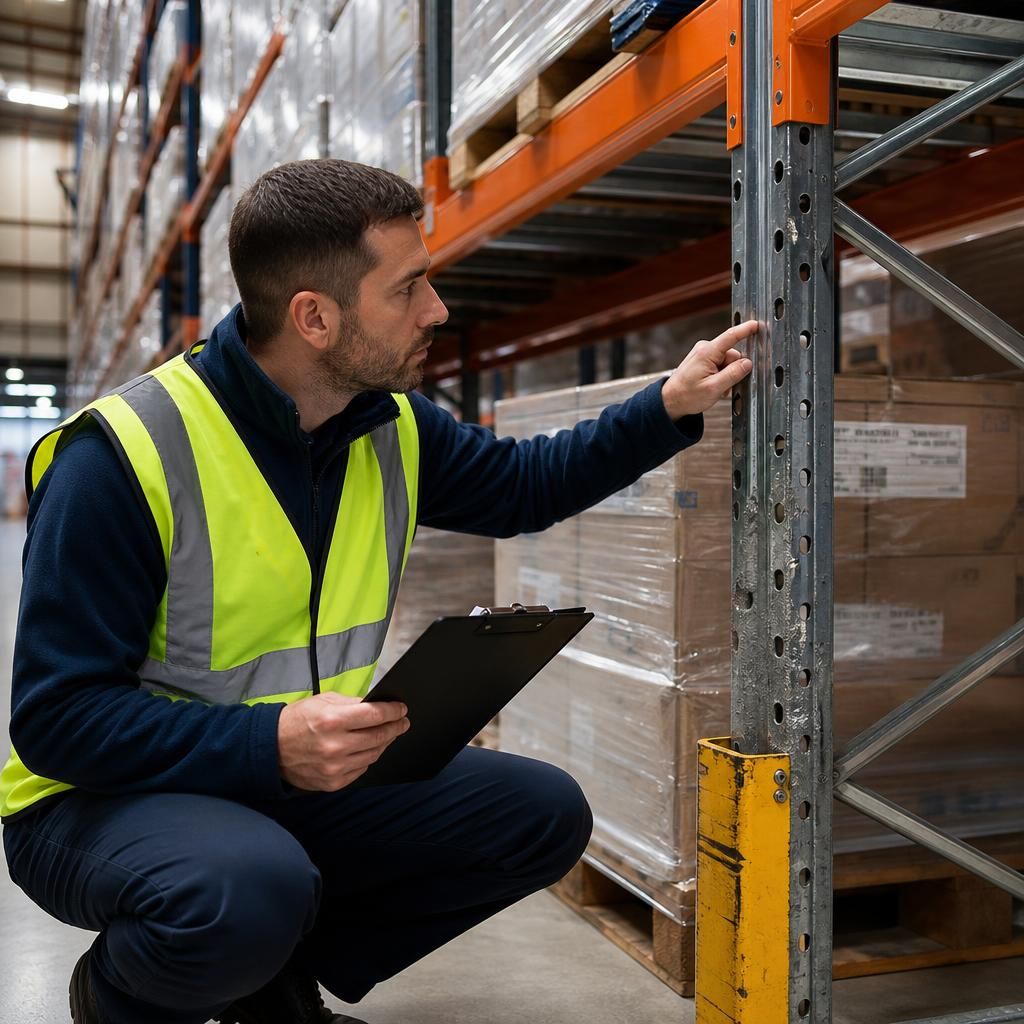
Risk classification is a critical part of a SEMA Approved Inspector’s warehouse racking evaluation. Each defect is assessed according to its location, severity, effect on structural stability and the likely consequence of continued use, rather than appearance alone.
Where damage presents an immediate risk, the affected warehouse racking should be isolated, unloaded or taken out of service until suitable repairs or further technical assessment are completed. The inspection report should identify the exact location, required action and responsible follow-up, providing a clear record for managing repairs and confirming when the area can safely return to use.
Arrange Your Warehouse Racking Evaluation
Arrange a SEMA Approved evaluation of your warehouse racking with Able Racking to identify defects, confirm required controls and prioritise any repairs. Contact our experienced inspection team to discuss your site and arrange a suitable assessment.