
What is the typical timeframe for completing warehouse racking repairs?
Warehouse racking repairs can often be completed during the inspection visit when damage is minor and replacement parts are available. More extensive repairs may take longer, depending on the structural damage, required components, access arrangements and whether work must be carried out around warehouse operations.
Warehouse racking repairs may be completed during the inspection visit when the damage is minor, the correct replacement parts are available and the area can be made safe without disrupting warehouse operations. More extensive repairs usually require a planned return visit, with the timeframe determined by the type and extent of damage, component availability, access requirements and the controls needed to protect people and stock.
Minor repairs can often be completed promptly. Examples include replacing a damaged beam protection, exchanging a visibly damaged component with an approved spare, or correcting a straightforward issue where the surrounding structure remains suitable for use. The repair team will still assess the affected section and adjacent components before work begins, rather than treating the visible damage in isolation.
Moderate repairs may need additional planning. Damaged frames, beams, bracing or connections may require specific replacement components, specialist tools or a carefully controlled sequence of work. If parts are not held in stock, they may need to be identified, ordered and checked for compatibility before the repair is scheduled. The area may need to remain isolated until the work is complete.
Major or urgent repairs can take longer because they may involve unloading affected bays, installing temporary safety measures, replacing several structural components or coordinating work around vehicle and pedestrian movements. Where damage presents an immediate risk, the affected warehouse racking should be taken out of service without delay. The repair itself should not begin until the work area, access equipment, lifting arrangements and exclusion zones have been properly planned.
The main factors affecting the timeframe include:
- the location, severity and type of damage;
- whether the affected section is loaded, accessible and safe to work on;
- the availability and lead time of suitable manufacturer-compatible components;
- whether adjoining frames, beams, bracing and fixings also need assessment;
- the height and layout of the installation, including access equipment requirements;
- the need to coordinate with warehouse staff, contractors and operating schedules;
- site rules, permits, isolation procedures and traffic-management controls; and
- whether the work requires unloading, temporary support or phased completion.
During an Able Racking repair, the team will normally confirm the reported damage, inspect the surrounding warehouse racking for related defects, establish whether the area requires immediate restriction and define the repair method. The required components and equipment are then checked before work starts. This preparation helps prevent delays and reduces the risk of carrying out an incomplete or unsuitable repair.
Some repairs can be carried out while the wider warehouse remains operational, but the affected area must be controlled. Depending on the work, this may involve unloading the relevant bays, creating an exclusion zone, restricting nearby traffic or arranging a temporary change to warehouse activities. Repairs should never be accelerated by allowing people, vehicles or stored goods to remain exposed to an unsafe structure.
Once the repair is complete, the repaired warehouse racking should be checked to confirm that components are correctly installed, fixings are secure and the structure is suitable to return to service. Any unloading or access restrictions should only be removed when the responsible competent person has confirmed that it is safe to do so. Records of the defect, repair and any recommendations should also be retained as part of the site’s safety documentation.
For the most accurate timeframe, provide photographs, the inspection findings, the affected bay or location, details of any stock that must be removed and information about access restrictions. Able Racking can then establish whether the work is suitable for completion during the planned visit or whether parts, specialist access or a separate repair programme will be required. The priority is to restore safe, compliant and efficient warehouse racking without compromising the quality of the repair.
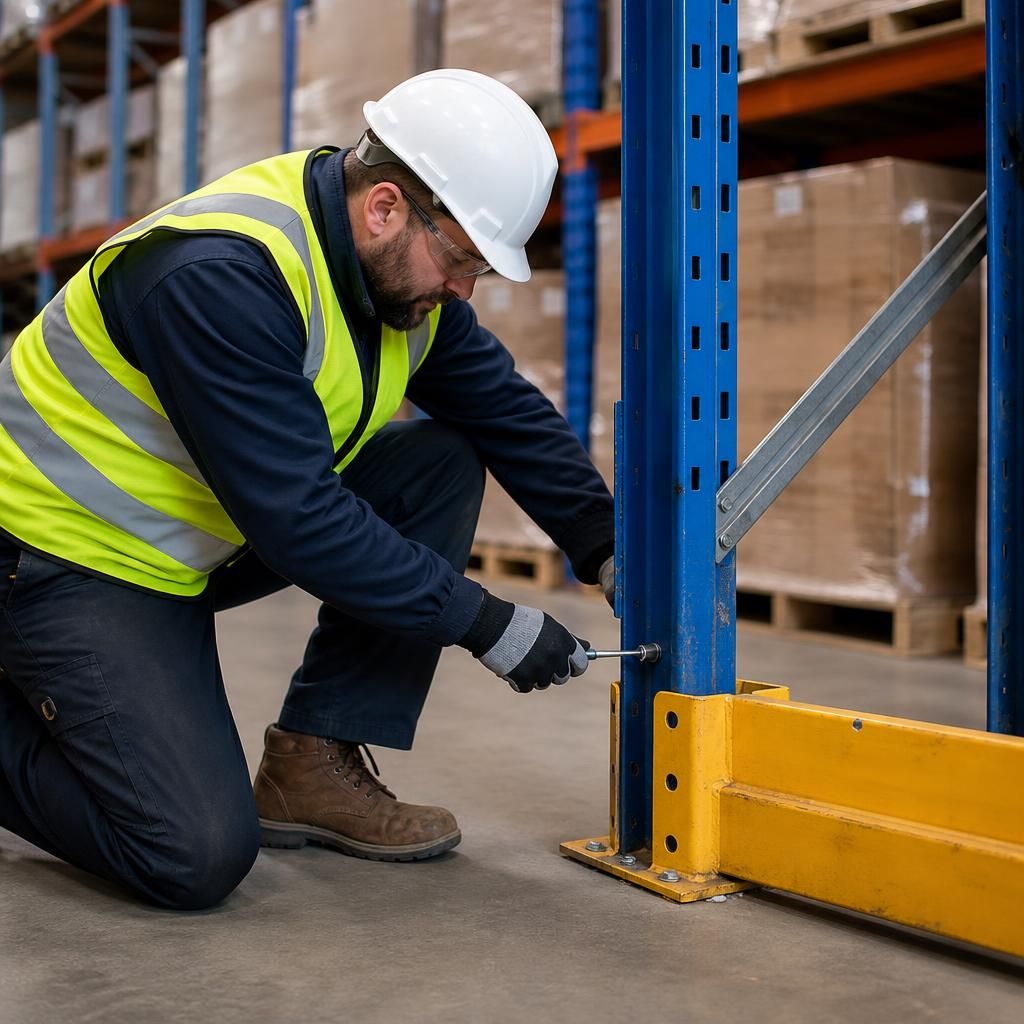
The availability of compatible replacement components is one of the main factors affecting how quickly warehouse racking repairs can be completed. Where suitable parts are already available and the damaged area is accessible, a minor repair may be completed during the planned visit. If components need to be identified, ordered or checked for compatibility, a separate repair visit may be necessary.
Access arrangements can also affect the timeframe. Stock may need to be removed, vehicle movements restricted or an exclusion zone established before work begins. If damage presents an immediate safety risk, the affected warehouse racking should be isolated without delay and remain out of service until the repair has been completed and its condition has been checked by a competent person.
Arrange your warehouse racking repair assessment
Contact Able Racking to arrange a warehouse racking repair assessment and confirm the likely timeframe, required components and access arrangements. Our experienced team can help restore the affected area safely and efficiently.