
What is the process for scheduling and completing warehouse rack repairs with Able Racking?
Scheduling warehouse rack repairs with Able Racking starts with reporting the damage and arranging an expert assessment to determine the required repair method, materials and access arrangements. Once agreed, our qualified technicians complete the work safely, verify the repaired system and provide the relevant completion records and recommendations.
Scheduling warehouse rack repairs with Able Racking involves reporting the damage, arranging an expert assessment, agreeing the repair scope and completing the work under controlled site conditions. Our team then checks the repaired system, records the work carried out and explains any further actions needed to keep your warehouse safe and operational.
1. Report the damage and provide initial information
Contact Able Racking as soon as damage is identified. Useful information includes the location of the affected bay, the type of storage system, the apparent damage, whether stock or equipment is obstructing access and whether the area has already been isolated. Photographs can help with the initial review, but they do not replace an on-site assessment where structural damage may be present.
Where there is a risk of collapse, falling goods or further impact, the affected area should be taken out of service immediately. Stock should not be removed from a visibly damaged structure unless this can be done safely and under a suitable site control procedure.
2. Arrange a suitable inspection appointment
We agree an inspection time around your operating requirements, access arrangements and any restrictions within the warehouse. Before attending, our team may confirm the system layout, available drawings, site contacts, induction requirements, vehicle or pedestrian controls and any permits needed for the work.
The inspection is carried out by an experienced operative who examines the damaged components and the surrounding structure. This helps establish whether the issue is limited to one component or whether impacts, overloading, poor alignment, missing protection or previous alterations have affected the wider installation.
3. Assess the damage and define the repair method
The assessment considers the condition and function of relevant frames, beams, bracing, connectors, guards, fixings and other load-bearing or protective components. We also consider the rack configuration, the intended loading information and the practical conditions needed to complete the repair safely.
Not every defect should be repaired in the same way. Depending on the findings, the appropriate action may involve a proprietary repair system, replacement of a damaged component, realignment, reinstatement of protection or a recommendation to unload and restrict use until further work is completed. If the damage is outside the scope of a safe repair, replacement may be more suitable than attempting to restore the original component.
4. Confirm the quotation, materials and programme
Once the scope is understood, Able Racking provides the relevant work details, including the proposed repair method, materials, access requirements, exclusions and any actions required from your team. The programme is agreed with consideration for stock movements, picking schedules, delivery activity and available working areas.
Using the correct materials is essential. Replacement parts and repair components must be suitable for the system and compatible with its dimensions, connections and intended use. Unapproved substitutions, improvised alterations or welding carried out without proper assessment can compromise the structure and may affect its safe working capacity.
5. Prepare the work area
Before repairs begin, the affected location must be made safe. This may require unloading the bay, creating an exclusion zone, controlling nearby vehicle movements and preventing access by unauthorised personnel. The site team should follow the agreed isolation arrangements and tell the Able Racking operative about any changes to warehouse activity or local hazards.
Our operatives use appropriate equipment and follow the site’s safety requirements alongside the controls established for the repair. Where access equipment, lifting equipment or temporary support is required, its use is planned as part of the work rather than improvised on the day.
6. Complete the repair
The technician carries out the agreed work in accordance with the repair method and the condition of the installation. This can include removing damaged parts, fitting replacement or repair components, restoring connections, replacing protection and checking alignment and fixings. Work is controlled to avoid creating additional instability or exposing people to unnecessary risk.
If further damage is found after the structure has been opened up or made accessible, the work is paused where necessary and the findings are discussed with you. We do not extend the repair beyond the agreed scope without confirming the appropriate action and any effect on the programme.
7. Inspect and verify the completed work
After the repair, the operative checks that the installed components are secure, correctly positioned and suitable for the agreed application. The surrounding area is also reviewed for related damage, obstructions or conditions that could cause a repeat impact. Any temporary restrictions remain in place until the system has been assessed as ready for use.
Where load information, signage or operating controls need updating, these requirements are identified as part of the completion process. Safe use depends not only on the physical repair but also on keeping loading practices, vehicle movements and inspection arrangements under control.
8. Receive completion records and recommendations
Able Racking provides the relevant record of the work completed, together with recommendations arising from the assessment. This may include monitoring requirements, replacement work, changes to protection, operator awareness or a follow-up inspection. Keeping these records with your warehouse safety documentation helps demonstrate that reported damage was assessed and managed appropriately.
Once the repair has been completed and any agreed conditions have been met, the area can be returned to service. Your team should continue to report new impacts, deformation, missing components or changes in loading without delay. Prompt reporting allows defects to be assessed before they develop into more extensive damage.
How to help the process run efficiently
- Report damage promptly and identify the precise aisle, bay or location.
- Send clear photographs and available system or loading information before the visit.
- Keep the area accessible and arrange unloading or isolation where required.
- Provide details of site hazards, operating hours, inductions and access restrictions.
- Make a responsible site contact available to agree the work area and completion arrangements.
- Follow any temporary restrictions until Able Racking confirms that the repaired system is suitable for use.
For urgent damage, explain the immediate risk when contacting us so that the required level of response and initial safety controls can be considered. Able Racking can then guide you through the assessment, repair planning and completion process, with the work matched to the condition of your warehouse rack systems and the demands of your operation.
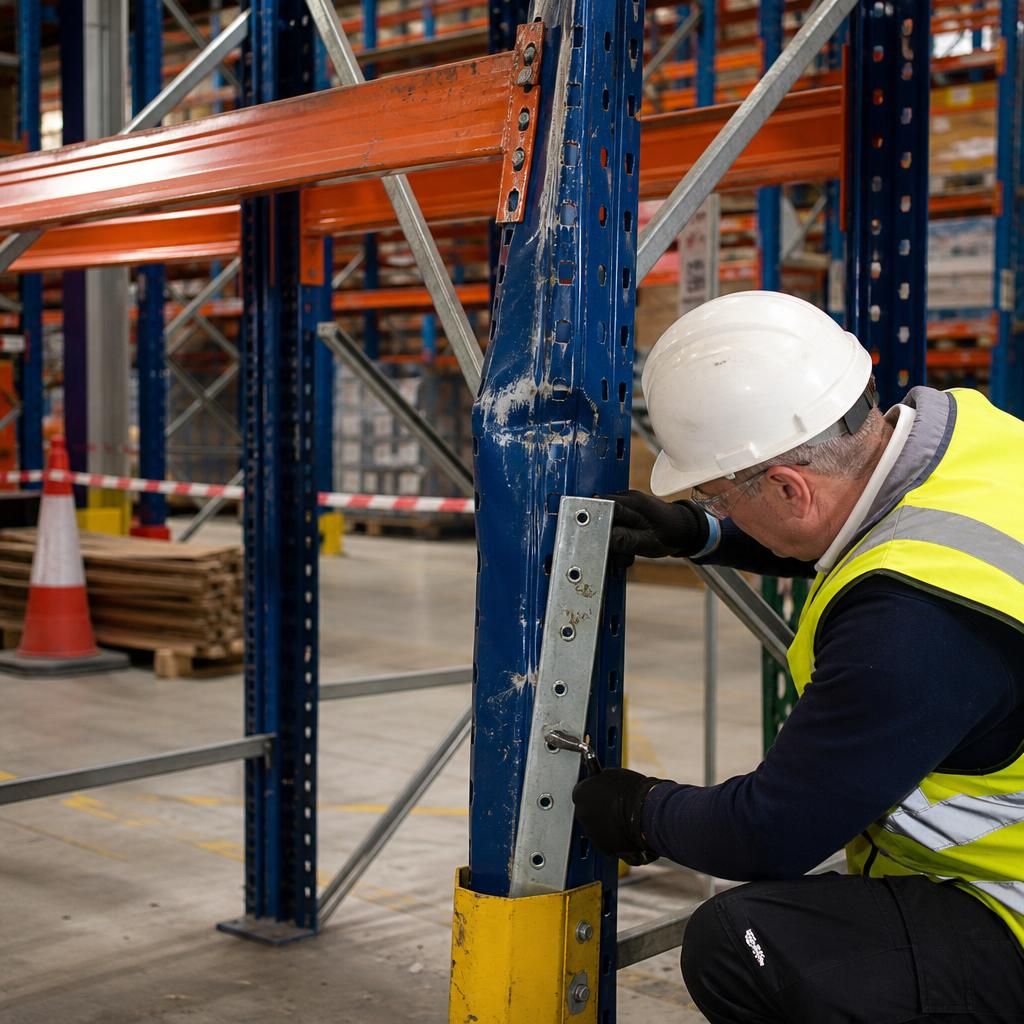
Preparing the affected warehouse racking area before the repair visit is essential for safe, efficient work. The damaged bay should be isolated, unloaded where required and protected from forklifts, pedestrians and other warehouse activity. If there is a risk of collapse, falling goods or further impact, keep the area out of service until it has been assessed.
Before the Able Racking operative arrives, provide the site contact, access instructions, induction requirements and any known hazards. Keep the repair location accessible and have relevant layout, loading or previous inspection information available. These arrangements allow the damage to be assessed accurately and help the agreed repair proceed without unnecessary disruption to your operation.
Arrange your warehouse rack repair assessment
Contact Able Racking to arrange an expert assessment of damaged warehouse racking and agree the safest repair plan for your site. Provide the affected location, damage details and any access or isolation requirements so our team can schedule the work efficiently.