
What types of warehouse racking systems are suitable for different storage needs?
Suitable warehouse racking systems depend on the goods stored, available space, load requirements, stock rotation and access needs. Selective pallet racking suits varied palletised stock and frequent access, while drive-in, push-back, carton live, longspan and cantilever systems can improve density or provide better support for specific product types.
The most suitable warehouse racking system depends on the goods being stored, pallet and product dimensions, load weights, stock rotation, available floor and building height, access requirements and the equipment used to handle stock. Selective pallet racking is usually the most flexible option for varied products and frequent access, while drive-in, push-back and pallet live systems can provide greater storage density or support specific stock rotation methods. Longspan, shelving and cantilever systems are better suited to smaller items, hand-loaded stock or long and awkward products.
Selective pallet racking
Selective pallet racking provides direct access to each stored pallet position. It is suitable for warehouses holding a broad range of stock-keeping units where individual pallet access is more important than maximum density. Beam levels can be configured around pallet dimensions, load requirements and handling equipment, making this a versatile choice for distribution, manufacturing and general storage operations.
Its main advantage is accessibility. Stock can be placed into or removed from a specific location without moving other pallets first. This supports varied product lines, regular replenishment and stock rotation. The trade-off is that aisles and access space reduce the proportion of the building devoted solely to storage, so the layout must balance access with capacity.
Double-deep pallet racking
Double-deep pallet racking places pallet positions two deep, reducing the number of access aisles required. It can increase storage density where several pallets of the same product are held and direct access to every individual pallet is not essential.
This system normally requires suitable reach equipment and careful control of stock rotation. It is most effective where products have a reasonable shelf life, pallet quantities are consistent and operators can manage the deeper positions safely. It is less suitable for operations that need immediate access to every pallet or store a large number of individual product lines in small quantities.
Drive-in and drive-through pallet racking
Drive-in pallet racking allows handling equipment to enter storage lanes, using the available volume efficiently and limiting the space taken by aisles. It is particularly suitable for high quantities of similar products, batch storage and goods with a low or controlled turnover.
Drive-through arrangements provide access from both ends of a lane and can support a first-in, first-out approach when the layout and operating controls are designed for that purpose. Drive-in arrangements generally operate from one side and are more closely associated with last-in, first-out storage. Both systems require disciplined loading practices, compatible handling equipment and protection against impact at entry points. They are not normally the best choice for a large number of mixed product lines requiring frequent individual access.
Push-back pallet racking
Push-back pallet racking stores pallets on wheeled or guided carriers that move along inclined lanes. When a new pallet is loaded, it pushes the existing pallet positions further into the lane. This creates compact, multi-pallet storage while retaining access to the front of each lane.
It is suitable for warehouses holding several pallets of the same product where greater density is required without the operator driving into the storage structure. Push-back storage commonly follows a last-in, first-out sequence, so it should be assessed carefully where stock rotation, product expiry or batch traceability is important.
Pallet live warehouse racking
Pallet live warehouse racking uses inclined roller lanes so pallets move towards the picking face under controlled gravity. Loading and retrieval take place from separate sides, making the system suitable for first-in, first-out stock rotation and high-volume product flows.
This option works well for products with a clear rotation sequence, including goods that need to be picked in date order. It can reduce handling travel and make the picking face easier to manage. Pallet dimensions, pallet condition, product weight and braking arrangements must all be checked before installation because inconsistent pallets may not move correctly through the lanes.
Carton live storage
Carton live storage is designed for hand-picked cartons, totes and smaller packaged goods. Roller tracks or wheels move stock towards the operator, keeping the picking face replenished from the rear. It is useful where there are many product lines, regular piece picking and a need to separate replenishment activity from order picking.
The system can improve product visibility and reduce unnecessary movement, but it depends on consistent carton sizes and suitable product packaging. It is often combined with pallet storage, with reserve stock held elsewhere and smaller quantities presented at an accessible picking face.
Longspan shelving and wide-span storage
Longspan shelving is suitable for manually handled stock that is too substantial for light-duty shelving but does not need to be stored on pallets. It can accommodate cartons, components, tools, archive materials and boxed goods, with adjustable levels to suit changing stock profiles.
Longspan systems are appropriate where orders are picked by hand and product access is more important than forklift capacity. They may also support workstations or small-parts picking areas, provided the proposed configuration is designed for the loads and operating conditions.
Cantilever warehouse racking
Cantilever warehouse racking is designed for long, bulky or irregularly shaped products that cannot be stored efficiently on conventional pallet beams. Arms project from upright columns, allowing items such as timber, tubing, pipes, profiles, sheet materials and other extended products to be supported along their length.
The design should reflect the product length, weight distribution, loading method and required handling equipment. Upright protection, arm clearances and safe loading procedures are especially important because long products can project into aisles or become unstable if they are not properly secured.
Mobile warehouse racking
Mobile warehouse racking is mounted on powered or mechanically assisted bases that move along floor tracks. The arrangement can close unused aisles and open access only where required, increasing the use of available floor space while retaining direct access to stored locations when an aisle is opened.
It may suit archive storage, cold environments, secure stock or operations where floor space is restricted. However, mobile systems need suitable floor construction, carefully controlled movement, emergency access arrangements and clear operating procedures. The additional mechanical and electrical components also need planned maintenance and inspection.
How to choose between systems
- Product characteristics: assess dimensions, weight, packaging, stability, handling restrictions and whether products are palletised, boxed, loose or unusually long.
- Stock rotation: establish whether the operation needs first-in, first-out, last-in, first-out, batch control or direct access to every product line.
- Access and throughput: consider how often stock is replenished or picked, the number of movements required and the type of handling equipment used.
- Storage density: compare the value of additional capacity with the aisle space, equipment access and visibility needed for safe and efficient operations.
- Building constraints: check clear height, floor capacity, column positions, doors, lighting, sprinklers, fire routes and other fixed services before finalising the layout.
- Future requirements: allow for changes in product range, pallet formats, handling equipment and anticipated throughput rather than designing only for current demand.
Every warehouse racking design should be checked against the intended loads, operating methods and relevant UK workplace safety requirements. Uprights, beams, connectors, floors and protection measures must be compatible with the proposed configuration, and load notices should reflect the installed system. Operators should receive suitable instruction, while routine visual checks and formal inspections help identify impact damage, overloading, displacement and other defects before they affect safe operation.
The right system is therefore not determined by storage density alone. A practical design combines capacity, access, stock rotation, handling safety and future flexibility. Able Racking can assess the products, building and operating process together, then recommend a warehouse racking arrangement that is suitable for the storage need and capable of being maintained safely throughout its working life.
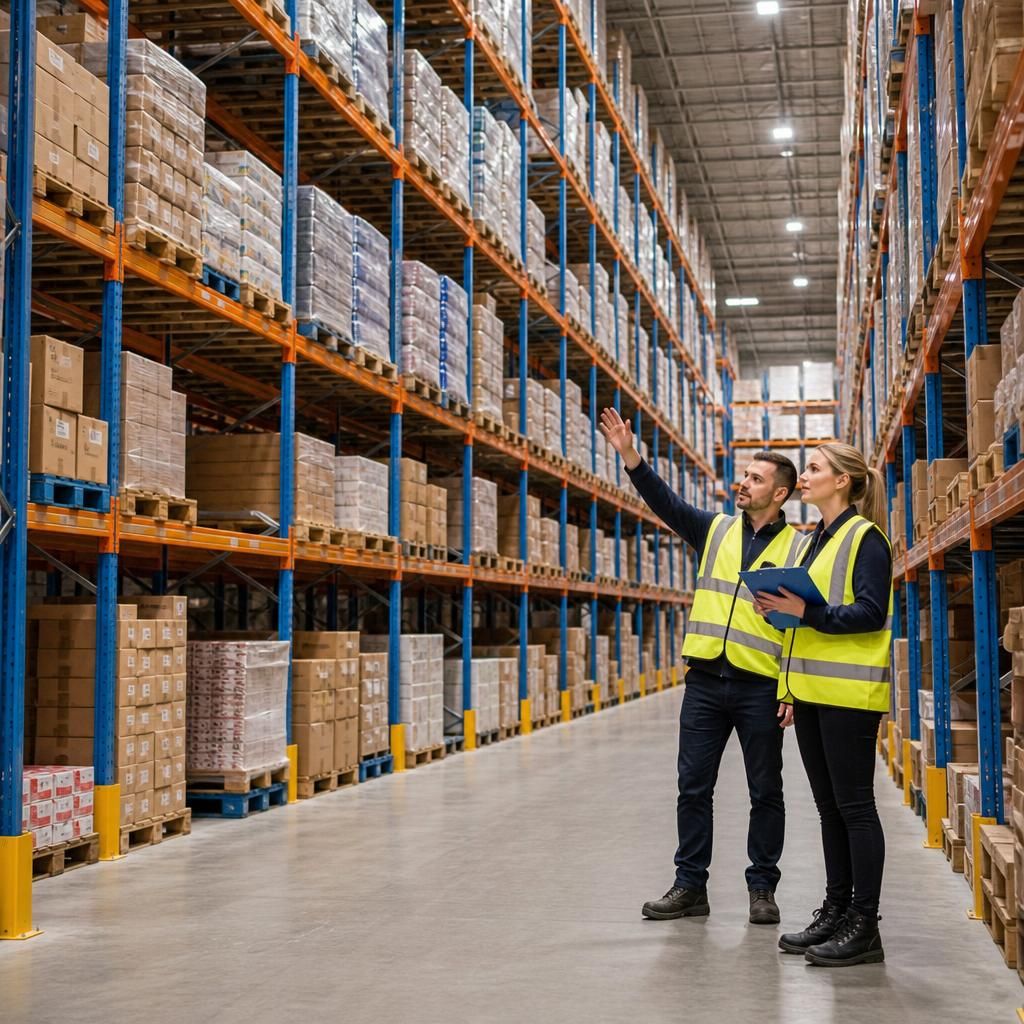
Choosing a warehouse racking system should begin with the way stock is accessed and rotated, rather than storage capacity alone. Selective pallet racking suits mixed stock requiring direct access, while pallet live systems support first-in, first-out movement and drive-in or push-back systems suit larger quantities of similar products where compact storage is a priority.
The decision should also account for product dimensions, load weights, pallet condition, handling equipment and picking frequency. A system that appears space-efficient may reduce efficiency if operators must move other stock to reach a required pallet. Able Racking can assess these factors together so the proposed warehouse racking layout supports safe handling, practical stock control and future operational requirements.
Discuss your warehouse racking system requirements
Discuss your warehouse racking system requirements with Able Racking to review your products, access needs, stock rotation and available space. We can help confirm a practical, safe and suitable warehouse racking arrangement for your operation.