
What are the benefits of using mobile racking systems in temperature-controlled environments?
Mobile racking systems maximise usable storage capacity in temperature-controlled warehouses by moving storage aisles only when access is required. This can reduce the space needing refrigeration, improve stock access and support more efficient, cost-effective warehouse operations.
Mobile racking systems can provide more usable storage capacity in temperature-controlled warehouses by opening an access aisle only when it is needed. Because the storage runs move along floor rails, fewer permanent aisles are required than with conventional static warehouse racking. This can help make better use of expensive chilled or frozen storage space while maintaining controlled access to stock.
The main benefits include:
- More effective use of refrigerated space: Reducing the number of permanently open aisles allows more of the available floor area to be used for storage. Alternatively, the same stock capacity may be accommodated within a smaller temperature-controlled building, subject to the design, clearances and operating requirements of the facility.
- Lower cooling demand in some layouts: A more compact storage arrangement can reduce the volume of space that needs to be refrigerated. The actual energy benefit depends on factors such as insulation, door openings, air circulation, equipment efficiency, stock throughput and the required operating temperature, so it should be assessed as part of the overall warehouse design.
- Improved stock accessibility: Operators can select the required storage aisle through the control system, then access the relevant pallet or location. This supports organised picking and replenishment without leaving every aisle open at the same time.
- Better use of high-value floor area: Temperature-controlled floor space is costly to provide and operate. Mobile warehouse racking can increase storage density without automatically requiring an extension to the building, although the structure, floor loading and handling equipment must all be suitable.
- Support for stock rotation: The layout can be configured to support first-in, first-out or other stock rotation procedures. This is particularly useful where product shelf life, batch control or traceability is important. Warehouse processes and software controls must still be properly managed; the system itself does not replace stock-control procedures.
- Reduced exposure to the working environment: Where access is controlled and aisles are opened only when required, products may spend less time exposed to warm air during routine activity. This can support temperature management, but it does not remove the need for suitable door discipline, rapid access procedures and monitoring.
Mobile systems can be particularly useful where storage density is more important than continuous access to every aisle. They are suitable for many chilled and frozen applications, including pallet storage and carefully planned order-picking areas. However, the correct arrangement depends on the product, pallet dimensions, handling equipment, required throughput, temperature range and access frequency. A layout that maximises density may not be suitable for an operation requiring simultaneous access to numerous locations.
Cold and frozen environments also create specific design and installation considerations. The warehouse floor must be capable of supporting the combined loads from the stored goods, warehouse racking, rails and moving equipment. It must remain sufficiently level and stable for safe operation. In some facilities, insulation and frost-protection measures beneath the floor are important to prevent movement or damage caused by low temperatures. These requirements should be confirmed with the building and system designers before installation.
Material selection and protection are also important. Condensation, wash-down procedures, humidity and temperature changes can affect rails, drive components, fixings and other metalwork. The specification should account for the operating environment, cleaning regime and any risk of corrosion. Electrical equipment, sensors and control panels must be appropriate for the conditions in which they are installed and maintained.
Safety controls are essential because the storage runs move while operators and handling equipment may be working nearby. A properly designed system will normally include guarding, emergency stops, aisle-entry controls, presence detection and interlocking arrangements appropriate to the layout. Safe operating procedures must cover opening and closing aisles, pedestrian access, vehicle movements, load limits and actions to take if a fault occurs. Staff should receive suitable instruction, and the system should be inspected and maintained at planned intervals.
Temperature-controlled environments can make maintenance more demanding. Lubricants, batteries, sensors and moving components may behave differently at low temperatures, while ice or condensation can affect movement and detection equipment. Maintenance should follow the manufacturer’s requirements and take account of the actual conditions on site. Damage to frames, rails, guards or control equipment should be reported promptly rather than left until the next planned service.
Fire protection and emergency arrangements also need to be considered at the design stage. The storage configuration, aisle width, sprinkler or suppression provisions, escape routes and access for emergency services must work together. Changing a static layout to a mobile system without reviewing these factors can create avoidable compliance and operational problems.
In practice, the best result comes from balancing storage density with access, throughput, refrigeration performance and safe working space. A site assessment should review the building, floor, temperature conditions, stock profile, handling equipment, fire strategy and maintenance arrangements before the system is specified. Once installed, regular warehouse racking inspections and preventative maintenance help identify damage, wear, alignment issues and control faults before they affect safe operation.
Mobile warehouse racking can therefore deliver substantial practical advantages in temperature-controlled storage: it can increase capacity, make better use of refrigerated floor area, support controlled stock access and help create a more organised operation. Those benefits depend on competent design, correct installation, suitable safety controls and ongoing inspection, particularly where low temperatures, condensation and heavy pallet loads place additional demands on the system.
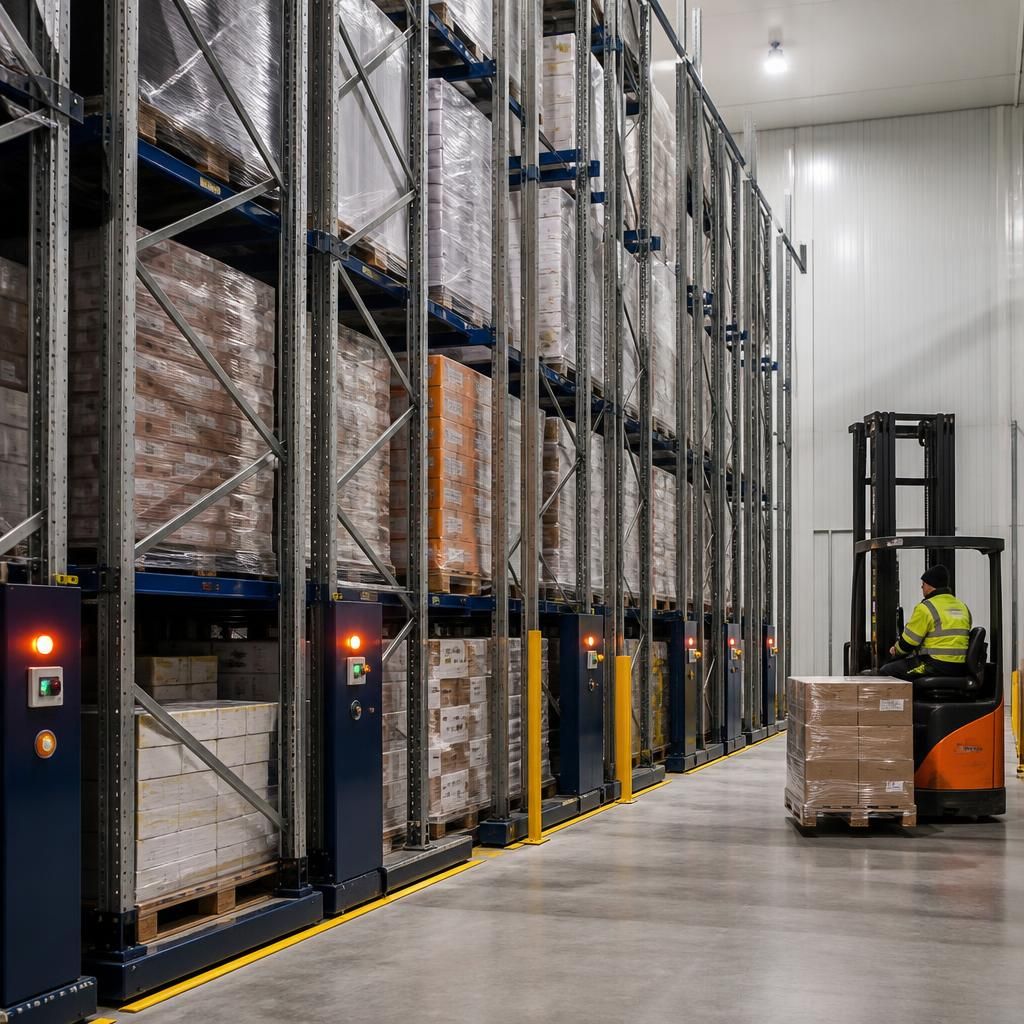
Mobile racking systems can increase storage density in chilled and frozen warehouses by reducing the number of permanently open aisles. Storage runs move along floor rails, allowing operators to open an aisle only when a particular pallet or location is required. This makes better use of costly temperature-controlled floor space and may allow the required capacity to fit within a smaller refrigerated area. The layout must still provide suitable access, ventilation, fire protection, floor loading and safe operating clearances for the stock and handling equipment.
Discuss your temperature-controlled racking requirements
Contact Able Racking to discuss your temperature-controlled racking requirements and identify a safe, space-efficient mobile storage solution for your warehouse.