
What qualifications should a warehouse racking inspector possess?
A warehouse racking inspector should be a competent person with recognised inspection training, practical experience of storage systems, and a sound understanding of relevant UK safety guidance, including HSE HSG76 and manufacturer requirements. Suitable credentials may include SEMA-approved inspector training, supported by the ability to identify damage and risks, assess their significance, and produce clear, actionable reports.
A warehouse racking inspector should be a demonstrably competent person with recognised inspection training, practical experience of storage systems and a thorough understanding of UK health and safety requirements. They should be able to identify damage, assess the risk it presents, recommend appropriate action and produce a clear inspection report. A certificate alone is not enough; competence depends on the combination of training, experience, technical knowledge and sound professional judgement.
Recognised inspection training
The inspector should have completed specific training in warehouse racking inspection rather than relying only on general health and safety knowledge. In the UK, suitable training may include a SEMA-approved rack inspector qualification, such as the SEMA Approved Rack Inspector route. This type of training covers the inspection of common storage equipment, damage assessment, safe working practices, reporting and the responsibilities of the person carrying out the inspection.
Training should also cover the principles in HSE guidance, particularly HSG76, Warehousing and storage: A guide to health and safety, together with the relevant requirements of BS EN 15635 for the application and maintenance of storage equipment. The inspector should understand how these sources relate to the system being examined and how manufacturer instructions, load notices and site procedures affect the assessment.
Practical experience with storage systems
An effective inspector needs practical knowledge of how warehouse racking is designed, installed, used and maintained. This should include familiarity with items such as frames, beams, bracing, protection, decking, locking devices, load notices and connections. Experience across different layouts and equipment types helps the inspector recognise when an issue is routine wear, installation-related, use-related or potentially a sign of a more serious structural problem.
Practical experience is particularly important when assessing damage. A trained inspector should be able to distinguish between minor cosmetic damage and defects that may reduce the load-bearing capacity or stability of the system. They should also understand that the significance of damage can depend on its position, direction, extent, the surrounding components and the loads being stored.
Knowledge of relevant safety requirements
The inspector should understand the duties of employers and users under applicable UK health and safety legislation, including the need to maintain work equipment in a safe condition and to control foreseeable risks. They should know how inspection arrangements fit into the site’s wider risk assessment, maintenance and accident-prevention procedures.
They should also be familiar with:
- the manufacturer’s specifications and permitted loading information;
- the difference between an immediate danger, a serious defect and a lower-priority issue;
- the need to prevent use of unsafe areas until suitable corrective action has been completed;
- the importance of checking previous inspection reports and outstanding repairs;
- safe access and working arrangements while carrying out the inspection; and
- the limitations of a visual inspection, particularly where concealed or inaccessible components are involved.
Ability to assess and prioritise defects
Qualifications should equip the inspector to classify findings consistently and explain what action is required. A competent inspector will record the location and type of defect, identify the affected component and consider whether the area should be unloaded, isolated, repaired or monitored.
The assessment should not simply list damaged components. It should provide enough information for the responsible person to make a safe decision. Photographs, bay or location references, descriptions of the damage and recommended timescales can all help the site team act promptly. Where the inspector cannot safely determine the cause or extent of a defect, they should recommend further assessment by an appropriately qualified specialist rather than making an unsupported assumption.
Clear reporting and communication skills
A qualified inspector must be able to communicate findings to people who may not have a technical background. The report should use consistent terminology, identify the precise location of each issue and separate urgent actions from routine maintenance. Any restrictions on use should be unambiguous.
The inspector should also explain significant findings to the person responsible for the warehouse before leaving site. This is important where damage presents an immediate risk, where loads need to be removed or where temporary controls are required. A well-written report supports traceability by recording the inspection date, the areas examined, the findings, recommended actions and any limitations that affected the inspection.
Independence and professional judgement
The inspector should be sufficiently independent to report defects objectively. They should not downplay a finding because it could lead to repair work, nor should they recommend unnecessary work without a clear technical reason. Independence does not necessarily require a separate organisation, but the inspector must be able to make impartial decisions and explain the evidence behind them.
They should also know when a matter falls outside their competence. For example, complex structural damage, a significant alteration to the original design or uncertainty about load capacity may require input from a suitably qualified designer, engineer, manufacturer or repair specialist.
Current knowledge and ongoing competence
Inspection competence should be maintained through refresher training, relevant experience and awareness of changes to guidance, standards and manufacturer requirements. An inspector who has completed a course but rarely examines storage systems may not have the same practical competence as someone who regularly carries out inspections and reviews the results of repairs.
When appointing an inspector, ask for evidence of relevant training, experience with comparable warehouse racking, insurance and a sample inspection report with confidential information removed. It is also reasonable to ask how findings are categorised, how urgent risks are communicated and how the inspector keeps their knowledge current.
Ultimately, the suitable person is not simply the one with the most certificates. They are the person who can inspect the system methodically, recognise defects accurately, apply the relevant guidance, communicate risk clearly and provide practical recommendations that help the duty holder keep the warehouse racking safe and compliant.
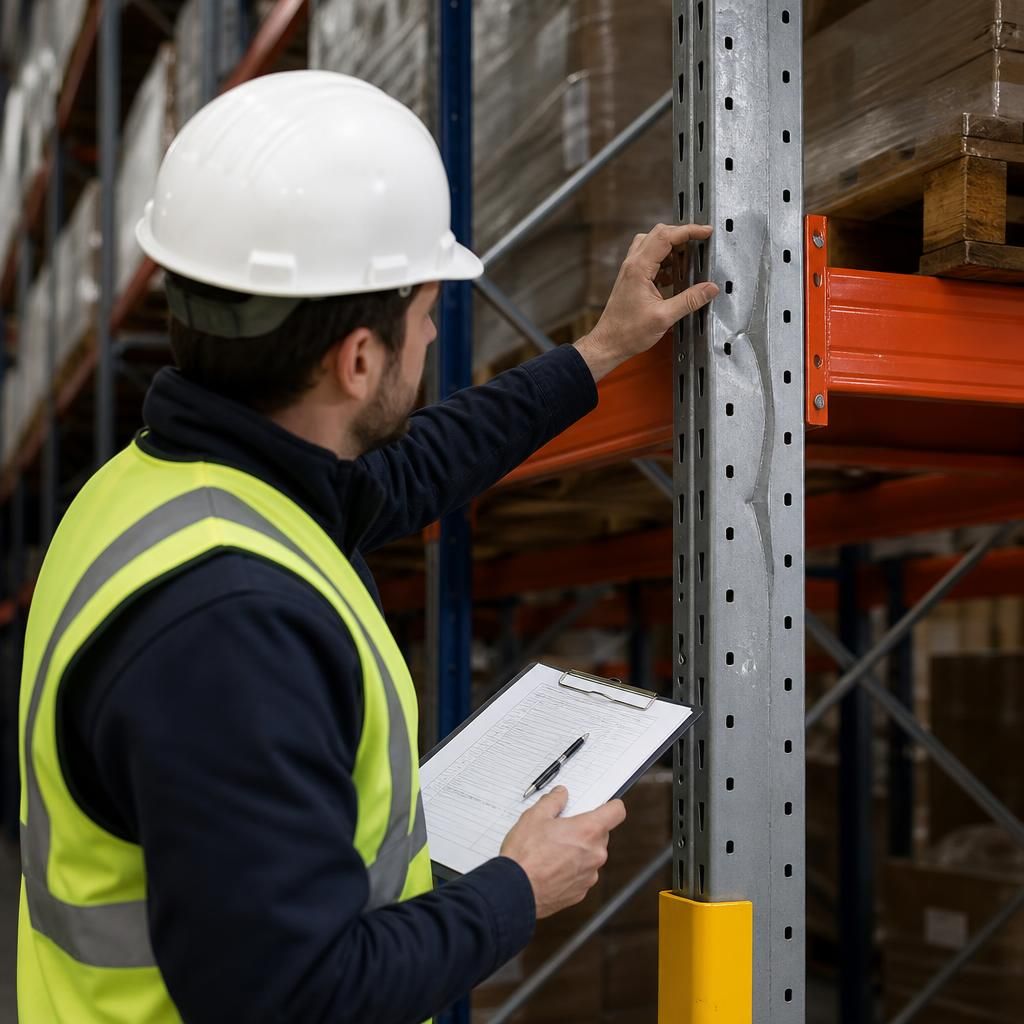
A qualified warehouse racking inspector needs more than a course certificate. Competence comes from recognised inspection training, practical experience with storage systems and the ability to apply relevant guidance to the conditions found on site.
The inspector should be able to identify damaged components, assess how defects may affect stability or load capacity, and prioritise corrective action. They should also understand manufacturer requirements, load notices and site procedures, while recognising when a complex defect requires further advice from a suitably qualified specialist.
Clear reporting is equally important. Findings should identify the affected location, explain the risk and state whether the area requires isolation, unloading, repair or monitoring. This gives the responsible person a clear basis for keeping the warehouse racking safe and compliant.
Book a warehouse racking inspection with a qualified inspector
Arrange a warehouse racking inspection with a qualified inspector to identify defects, assess risks and receive clear recommendations for corrective action. Contact Able Racking to schedule an inspection suited to your site and storage system.