
How do I choose the right type of mezzanine lift system for my warehouse's specific needs?
Choose a mezzanine lift system by assessing the goods being moved, required load capacity, travel height, available space, movement frequency and the layout of your warehouse. A site assessment by a competent specialist will then help determine the most suitable lift type, loading arrangements, guarding and controls while ensuring the installation is safe, practical and compliant.
The right mezzanine lift system is determined by the goods being moved, their weight and dimensions, the vertical travel required, the available floor space, the frequency of use and the way people and materials move through the warehouse. A suitable system must also provide safe access at each level, integrate with the existing layout and meet the relevant UK health and safety requirements. A site assessment by a competent specialist is the most reliable way to confirm the appropriate lift type and specification.
Start with the material-handling requirement
Define exactly what the lift will carry before comparing equipment. Consider whether the load consists of pallets, stillages, cages, cartons, containers, components or loose materials. Note the largest and heaviest individual load, as well as the normal working load. The lift platform, enclosure and landing arrangements must accommodate the load without creating an unstable or obstructed transfer.
Also consider how the load is presented to the lift. A pallet moved by powered equipment may need a different platform arrangement from a wheeled trolley or a manually handled container. If loads vary considerably, the system should be selected for the most demanding foreseeable operating condition rather than the average load.
Compare the main lift system options
- Goods lifts: These are designed to move materials between levels and are often suitable where the operation requires controlled loading and unloading at defined landings. They can be specified for different platform sizes, capacities and travel heights.
- Material lifts: These can suit smaller or more regular goods movements where a full goods-lift arrangement is unnecessary. Their suitability depends on the load, the required speed and the way operators interact with the equipment.
- Vertical conveyors: These may be appropriate for repetitive movement of standardised items between fixed levels. They are generally most effective where the product flow is consistent and the loading and discharge points can be clearly defined.
- Specialist lifting arrangements: Bespoke platforms, enclosed carriers or integrated transfer systems may be needed for unusually large loads, awkward products, controlled environments or restricted access conditions.
The choice should be based on the complete handling process, not simply on the quoted lifting capacity. A system that is technically capable of carrying the load may still be unsuitable if it slows the operation, creates difficult manual handling or cannot be safely loaded at the landings.
Assess capacity, dimensions and travel
Capacity should include the goods, pallet or container and any handling equipment that will enter the lift. Do not overlook the weight of cages, trolleys or pallet trucks. The platform dimensions must allow safe positioning without excessive gaps, overhanging loads or a need for operators to reach into the shaft.
Measure the required travel between finished floor levels, including the precise landing heights. The available headroom, pit or base arrangement, overhead structure and surrounding clearances can affect the design. Where a conventional pit is not practical, an alternative base arrangement may be possible, but this must be considered during the design stage rather than treated as an installation detail.
Consider movement frequency and operating speed
Estimate how often the lift will operate during normal and peak periods. Occasional movement between storage levels may be well served by a standard goods lift, whereas continuous or high-volume transfer may require a system designed for more frequent cycles and closer integration with the workflow.
Speed is only one part of productivity. Loading time, door operation, queueing at landings and the time needed to position goods can have a greater effect on throughput. The assessment should examine the full cycle from the originating level to the destination, including whether loads need to wait for another process.
Check the warehouse layout and available space
Map the proposed lift position against pedestrian routes, vehicle movements, emergency exits, fire protection, doors, columns, services and working areas. The lift should not force people to cross avoidable traffic routes or create blind spots at loading points.
Allow space for safe approach, loading, unloading, door movement and routine inspection. Guarding and landing gates require sufficient room to operate correctly. The surrounding structure must also be capable of supporting the lift and its imposed loads, with suitable foundations or structural connections confirmed by the relevant designer.
Where the lift serves a raised storage platform, check that the platform layout supports safe transfer and that the landing position does not compromise edge protection. The lift should complement the access arrangements rather than become an informal alternative to a staircase or pedestrian route.
Review how operators will use the system
Controls should be positioned so that operators can use them without standing in an unsafe location. Consider visibility of the platform, communication between levels, call and send controls, emergency stopping, door interlocks and the procedures for dealing with a stalled or abnormal load.
If people need to enter the lift, confirm that the proposed equipment is designed and certified for that purpose. A goods lift must not be treated as a passenger lift simply because a person can physically fit inside it. The intended use, signage, guarding and control system must all match the equipment classification.
Manual handling should also be considered. If staff must push heavy cages or repeatedly handle awkward goods across a threshold, the lift may need level access, suitable sill details or additional handling equipment. These practical points often determine whether the system is safe and efficient in daily use.
Account for the operating environment
Temperature, dust, moisture, washdown, corrosive substances and the risk of impact from vehicles can influence the specification. Outdoor or semi-exposed installations may require additional protection, while food, pharmaceutical or clean manufacturing environments may impose hygiene and material requirements.
Tell the designer about any unusual conditions, including explosive atmospheres, cold storage, aggressive cleaning chemicals or restricted maintenance access. Selecting equipment without considering the environment can lead to premature wear, unreliable operation and avoidable changes after installation.
Confirm compliance and safeguarding
The completed installation should be supported by a suitable risk assessment, operating instructions and technical documentation. Depending on the equipment and its use, requirements may include the Provision and Use of Work Equipment Regulations, the Lifting Operations and Lifting Equipment Regulations, machinery safety requirements, structural design obligations and workplace fire and access provisions.
Important safeguards commonly include interlocked landing gates, enclosed shafts or protected openings, suitable edge protection, emergency stops, overload protection, safe access for maintenance and clear signage. The exact safeguards depend on the lift design and risk assessment. Before use, the system should be commissioned, examined where required and handed over with the relevant records and instructions.
Plan for maintenance and future demand
Ask how the lift will be inspected, maintained and isolated for safe servicing. Access to motors, controls, doors and safety devices should be practical, and the maintenance regime should reflect the operating environment and frequency of use. Keep inspection reports, defect records, manuals and examination documents available to the responsible person.
Consider foreseeable changes to the business, such as heavier loads, additional storage levels, altered shift patterns or increased transfer volumes. Selecting a system with suitable flexibility can avoid an expensive replacement, but capacity and safety limits must never be exceeded to accommodate future demand.
A practical selection process
- Record the goods, containers, handling equipment and maximum working load.
- Measure the platform size, travel height, landing levels, headroom and surrounding clearances.
- Review movement frequency, peak demand, loading times and pedestrian or vehicle routes.
- Identify environmental conditions, structural constraints and any unusual operating requirements.
- Define the required guarding, controls, access arrangements and emergency procedures.
- Obtain a site-based design and quotation that explains capacity, duty, installation requirements and compliance documentation.
- Confirm commissioning, operator instruction, examination and ongoing maintenance arrangements before placing the system into service.
A competent assessment should result in a clear specification rather than a generic equipment recommendation. By matching the lift to the actual loads, workflow, building constraints and operating risks, you can choose a system that is safe to use, practical to maintain and capable of supporting the warehouse as requirements develop.
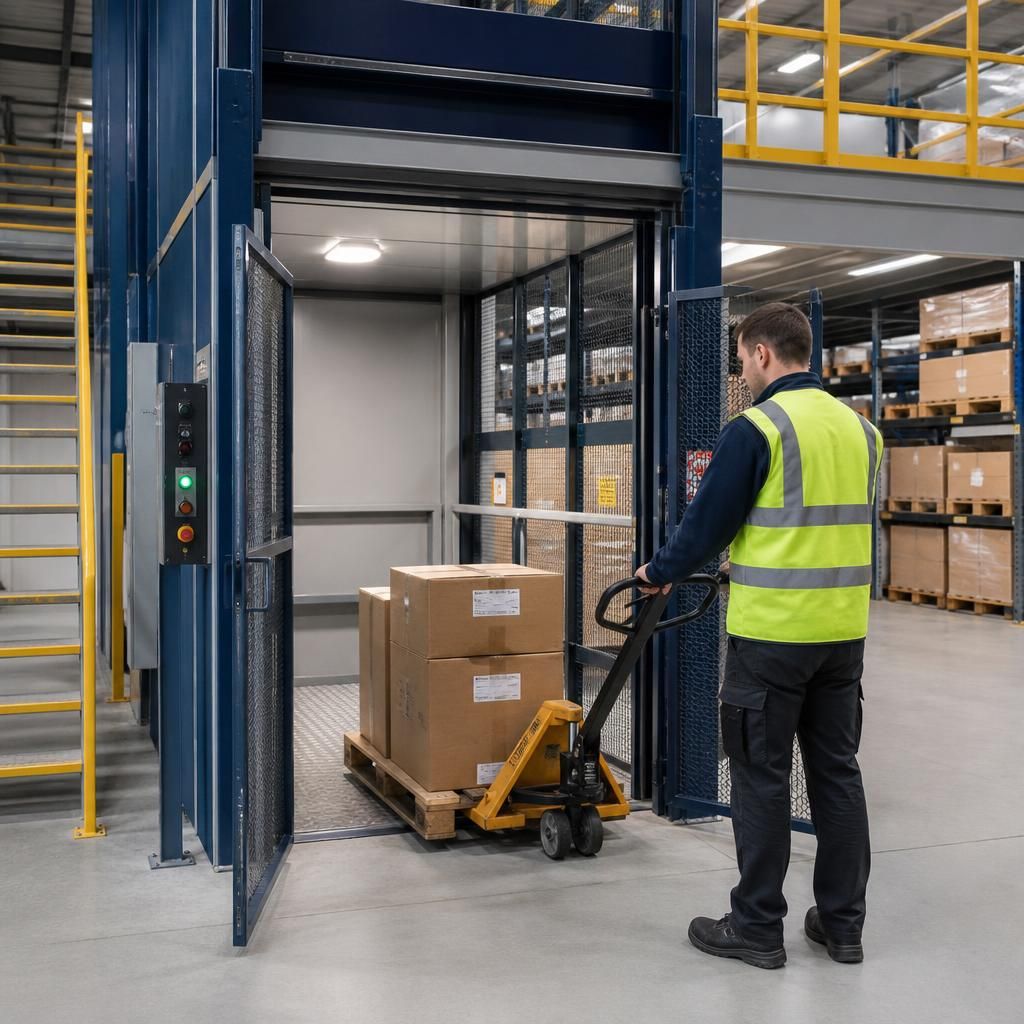
Choosing the right mezzanine lift system starts with defining the loads it must move and how often they will be transferred. Record the maximum combined weight of the goods, pallet, cage, trolley or handling equipment, then confirm the platform dimensions and travel height. The system should accommodate the largest foreseeable load without overhanging, unstable positioning or unsafe manual handling.
Consider the complete movement cycle, including loading time, landing access, door operation and unloading. A goods lift may suit controlled movement between fixed levels, while a vertical conveyor may be more appropriate for frequent transfers of standardised items. The final choice should also account for available space, guarding, pedestrian routes, environmental conditions and safe maintenance access.
Get Expert Advice on Choosing Your Mezzanine Lift System
Contact our specialist team for a site assessment and practical advice on selecting a mezzanine lift system that suits your loads, layout, workflow and safety requirements.