
What maintenance is required for mezzanine sliding gates to ensure long-term reliability?
Long-term reliability depends on scheduled inspections, cleaning, lubrication where specified, and prompt correction of wear or damage to the sliding gate, tracks, rollers, guides, locks and safety devices. Keep the mechanism free from debris, check alignment and operation routinely, and arrange competent servicing whenever faults, impact damage or unusual resistance are identified.
Long-term reliability of a mezzanine sliding gate depends on planned inspections, routine cleaning, correct lubrication where specified, and prompt repair of wear or damage. The gate, track, rollers, guides, locks, guarding and safety devices should be checked by competent personnel so that faults are identified before they affect safe operation or interrupt loading activities.
Follow the manufacturer’s maintenance instructions. Gate construction varies, so the correct inspection points, lubrication products and adjustment methods should be taken from the supplied documentation. Do not alter the gate, remove safety features or apply lubricant to components that are designed to run dry without confirming that this is permitted.
Inspect the gate regularly. The frequency should reflect how often the gate is used, the working environment, the loads handled nearby and any previous damage or faults. Routine checks should include:
- Whether the gate opens and closes smoothly without sticking, excessive resistance or abnormal noise.
- The condition and alignment of the sliding track, including signs of distortion, looseness, impact damage or obstruction.
- Rollers, wheels, bearings and guides for wear, cracking, looseness or uneven movement.
- Stops and end restraints to confirm that the gate cannot run beyond its intended travel.
- Locks, latches and catches to ensure they engage fully and release correctly.
- Guarding, handrails, toe boards and infill panels for damage, loose fixings or gaps that could create a fall or trapping hazard.
- Safety interlocks, warning signs and other protective devices for correct operation and secure attachment.
- Bolted connections, brackets and fixings for loosening, corrosion or deformation.
Keep the mechanism clean. Dust, packaging fragments, metal swarf and other debris can collect in the track or around the rollers. This can increase resistance, cause misalignment and accelerate component wear. Remove contamination using a suitable method and avoid allowing waste to build up at the loading area. Cleaning should not involve forcing debris further into bearings, guides or other enclosed parts.
Lubricate only where required. Correct lubrication can reduce friction and help prevent premature wear, but excess or unsuitable lubricant can attract dust and interfere with locking or braking components. Apply the product and quantity specified by the manufacturer, clean the relevant surfaces first, and wipe away excess. If a roller, bearing or guide is sealed or maintenance-free, it may not require additional lubrication.
Check alignment and movement after maintenance. A sliding gate should remain level, stable and properly supported throughout its travel. Do not compensate for a stiff or misaligned gate by forcing it open or closed. Investigate the underlying cause, which may include a damaged track, worn roller, loose fixing, settlement of the supporting structure or impact from handling equipment.
Test safety features as part of the service routine. The gate must retain the protection intended by its design when it is open, closed or being loaded. Confirm that locks and interlocks function as intended, that the gate cannot be bypassed through normal use, and that openings are adequately protected when the gate is not in its safe position. Any safety device that fails a test should be taken out of service until the fault has been assessed and corrected.
Respond promptly to damage or unusual behaviour. Stop using the gate and arrange an assessment if it becomes difficult to move, drops or moves unevenly, fails to latch, develops excessive play, makes unusual noises, or shows bent components, cracked welds or loose fixings. Impact damage should always be investigated, even where the gate appears to continue working. A competent person should determine whether the gate can remain in service, requires temporary controls or needs repair and replacement parts.
Use competent repair personnel. Repairs should be carried out by people with suitable knowledge of the gate design and the risks associated with work at height, falling objects and moving components. Replacement rollers, locks, guides and fixings should be compatible with the original design. Improvised parts, unapproved welding or drilling can weaken the assembly and invalidate the intended safety performance.
Include the gate in wider workplace inspections. Maintenance should be coordinated with inspections of the supporting structure, access arrangements, loading procedures and nearby material-handling activities. The gate should not be used to retain loads for which it was not designed, and pallets or other items should not be positioned so that they obstruct its movement or put impact loads into the frame.
Keep clear maintenance records. Record inspection dates, findings, cleaning and lubrication completed, defects reported, repairs made and any parts replaced. Records should also identify outstanding actions and the person responsible for closing them. This provides an effective maintenance history and helps identify repeated issues such as recurring impacts, contamination or premature component wear.
Planned maintenance does not replace a formal examination or a competent assessment following damage, alteration or a significant change in use. Where a fault affects the gate’s stability, guarding or safety devices, isolate the area, prevent use and obtain professional advice before returning it to service. A consistent programme of inspection, cleaning, functional testing and documented repair will help maintain safe operation and extend the useful service life of the sliding gate.
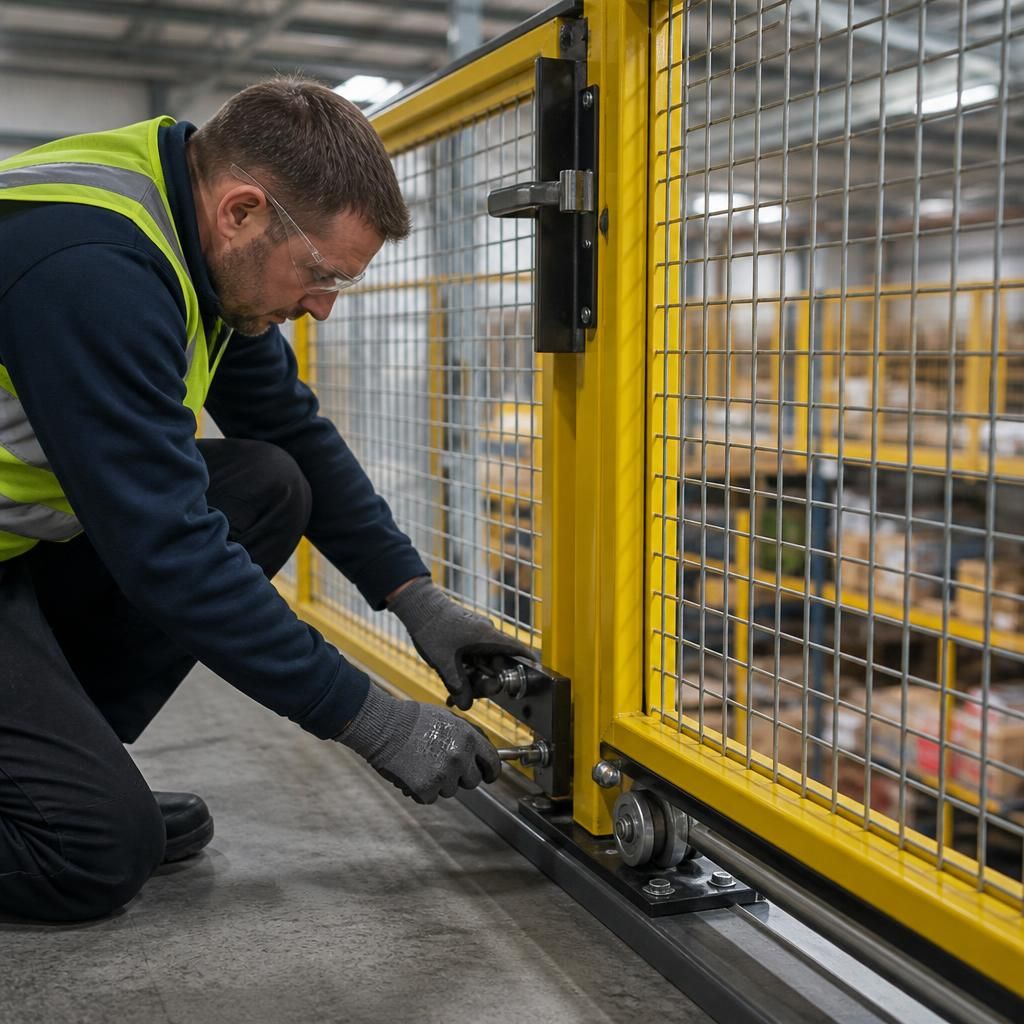
Routine cleaning and functional checks are essential to keeping a mezzanine sliding gate reliable. Remove dust, packaging and other debris from the track, rollers and guides using a suitable method, then check that the gate moves smoothly without sticking, unusual noise or excessive resistance.
Lubricate components only where the manufacturer permits it and use the specified product. During the same check, confirm that locks, latches, stops, guards and safety devices work correctly. If the gate is difficult to move, fails to latch or shows impact damage, isolate it and arrange an assessment by a competent person before returning it to service.
Arrange a professional mezzanine sliding gate maintenance assessment
Arrange a professional mezzanine sliding gate maintenance assessment with Able Racking to identify wear, alignment issues and safety defects before they affect reliable operation. Contact our experienced team to plan a suitable inspection and any required remedial work.