
What are the maintenance requirements for a steel structure mezzanine floor to ensure longevity and safety?
A steel structure mezzanine floor requires planned inspections, prompt repair of damage, checks on fixings and protective systems, and regular review of loading, access and fire-safety features. Maintaining accurate records and arranging competent inspections after alterations, impact or other significant events helps protect structural integrity, extend service life and maintain safe use.
A steel structure mezzanine floor needs a planned maintenance programme covering its steelwork, connections, decking, guarding, access equipment, fire provisions and loading arrangements. Regular visual checks should be supported by competent inspections at risk-based intervals, with defects recorded and repaired promptly. The floor should also be reassessed after an impact, alteration, change of use, unexpected movement or other event that could affect its stability.
Maintenance is not limited to cleaning or repainting. The objective is to confirm that the mezzanine remains structurally sound, is being used within its approved capacity and continues to provide safe access and protection against falls. Inspection records should be retained alongside drawings, load information, installation details, repair evidence and any later modification records.
Inspect the primary steel structure
Steel columns, beams, bracing and supporting members should be checked for signs of damage, distortion, cracking, excessive movement or unexpected deflection. Particular attention is needed in areas exposed to vehicle or equipment impact, including column bases, corners, loading points and routes used for moving goods.
- Look for bent, buckled or twisted steelwork.
- Check for corrosion, especially where moisture, condensation or chemicals are present.
- Identify damaged protective coatings, exposed steel or areas where corrosion may be concealed.
- Investigate unusual vibration, movement, noise or changes in floor level.
- Confirm that bracing members remain present, secure and free from damage.
Minor surface corrosion may be treatable, but the correct repair depends on the extent and location of the affected area. Significant section loss, distortion or impact damage should be assessed by a suitably competent person before the affected area is used again. Steelwork should not be cut, drilled, welded or repositioned without an appropriate technical assessment.
Check connections, anchors and fixings
Bolted connections, base plates, anchors, welds and other fixings are essential to the stability of the structure. Inspections should look for missing, loose, damaged or visibly displaced components, as well as elongated holes, cracked welds and signs that a connection has moved.
Any tightening or replacement work should follow the original design information or advice from a competent structural specialist. Replacing a bolt with an unsuitable alternative, adding unapproved fixings or removing components during maintenance can compromise the load path. Where an impact has occurred, a visual check alone may not be enough to confirm that the connections remain sound.
Maintain the floor deck and edge protection
Decking should be kept in good condition and checked for broken boards, loose panels, corrosion, lifted edges, gaps and localised deterioration. Damaged decking can create trip hazards and may no longer distribute loads as intended. Repairs should use compatible materials and preserve the original fixing and support arrangement.
Guardrails, handrails, toe boards, gates and other edge protection should be secure, complete and correctly positioned. Check for loose posts, damaged rails, missing toe boards and gaps through which people or materials could fall. Loading gates and removable sections should operate correctly and should not be left open when they are not actively being used. Self-closing or interlocked arrangements should be tested as part of the planned inspection process where fitted.
Keep stairs, access points and working areas safe
Stairs, landings, walkways and access gates should be inspected for secure fixings, damaged treads, worn surfaces, obstructions and inadequate lighting. Surfaces must remain suitable for the conditions in which they are used, particularly where dust, oil, water or packaging materials could cause slips.
- Keep access routes clear and use them only for their intended purpose.
- Remove spillages and accumulated debris without delay.
- Check that doors, gates and barriers do not obstruct escape routes.
- Maintain lighting so that steps, edges, labels and loading areas can be seen clearly.
- Do not store materials on stairs, landings or in front of safety equipment.
Where powered handling equipment or vehicles operate near the structure, impact protection should be maintained and inspected. Damaged barriers should not be treated as cosmetic defects; they may indicate that the structure or its anchors have also been affected.
Control loads and changes of use
The floor should be used only within its approved load-bearing capacity and in accordance with any displayed load notices. Maintenance checks should consider both uniformly distributed loads and concentrated loads, such as machinery, containers, shelving, safes or stored materials with small contact areas.
Do not assume that a change from light storage to heavier goods is acceptable because the floor appears stable. A change in use, storage layout, equipment, access arrangement or material-handling method may require a structural review. New openings, services, partitions, conveyors, lifting points or attachments should also be assessed before installation. Load notices must remain visible, accurate and consistent with the current arrangement.
Protect against corrosion, fire and environmental deterioration
Paint systems, galvanised finishes and fire-protective coatings should be kept intact and maintained in accordance with their specification. Areas of flaking, impact damage, contamination or water ingress should be investigated rather than simply covered over. Cleaning products and repair materials must be compatible with the coating and the underlying steel.
Fire-resisting construction, compartmentation, protected escape routes, fire doors, alarms, sprinklers and other safety measures associated with the floor should not be altered or obstructed. Any fire-protective coating or encasement that has been damaged during installation, storage or impact should be repaired using an approved system. Fire safety arrangements should be reviewed if the use, occupancy, stored materials or building layout changes.
Use a structured inspection programme
Routine user checks can identify obvious problems early, but they do not replace a competent examination. The inspection frequency should reflect the environment, loading, traffic, history of damage, consequences of failure and the recommendations provided with the structure. A competent inspector should determine when a more detailed examination is necessary.
Additional inspection is appropriate after vehicle impact, fire, flooding, significant movement, overloading, unauthorised alteration or a prolonged period of unusual use. If there is an immediate risk, restrict access to the affected area and prevent further loading until the condition has been assessed.
Record defects and complete repairs properly
Inspection records should identify the location and nature of each defect, its severity, the temporary controls applied, the person responsible and the date of completion. Photographs, marked-up drawings and repair certificates can help demonstrate what was found and how it was resolved.
Repairs should be carried out by suitably experienced operatives using appropriate materials and methods. Temporary measures, such as barriers or reduced loading, should remain in place until a permanent repair has been completed and verified. After structural work, the floor should be checked before being returned to normal service, with updated drawings and load information retained where the arrangement has changed.
Review the maintenance arrangements
A reliable programme assigns responsibility for daily housekeeping, user checks, formal inspections, specialist assessments and corrective work. Staff should know how to report damage, what signs require immediate escalation and which areas must not be used while defects are investigated.
For a steel structure mezzanine floor, longevity and safety depend on combining good housekeeping with competent inspections, controlled loading, protection against impact and corrosion, and disciplined management of alterations. This approach helps identify deterioration before it becomes a structural or operational risk and provides clear evidence that the floor is being maintained in a controlled manner.
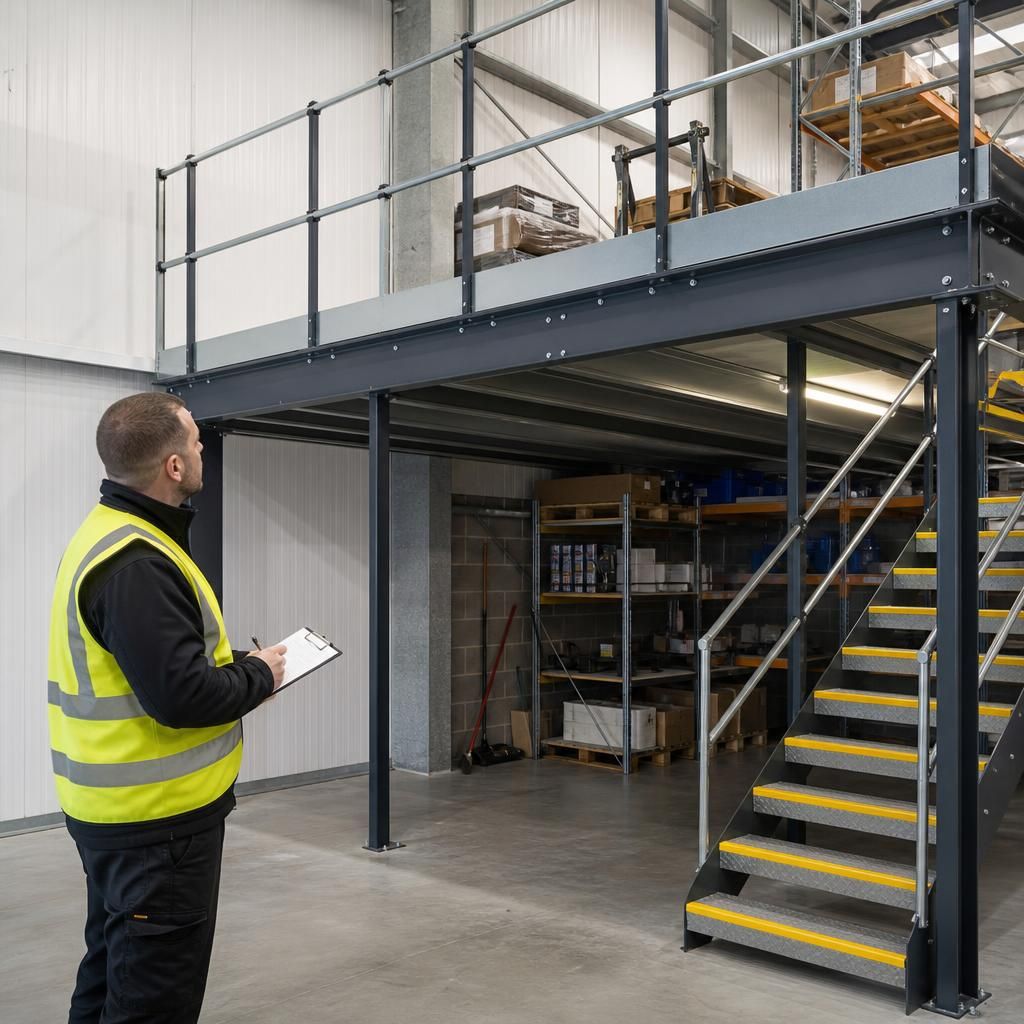
Prompt assessment after impact is an essential part of maintaining a steel structure mezzanine floor. If a vehicle, lift or piece of equipment strikes a column, guardrail or supporting area, restrict access and prevent further loading until a competent person has checked the steelwork, connections, anchors and surrounding floor. Damage may not be visible at first, and returning the affected area to service without a proper assessment could allow a minor defect to worsen.
Arrange Your Steel Structure Mezzanine Floor Inspection
Arrange a professional inspection of your steel structure mezzanine floor to identify defects, confirm safe use and support planned maintenance. Contact Able Racking to discuss your inspection requirements.