
What topics are typically covered in the SEMA Racking Inspection Course curriculum?
The SEMA Racking Inspection Course curriculum typically covers warehouse racking safety principles, inspection procedures, damage assessment, risk classification, load and design information, and the reporting of defects. It also explains relevant guidance, inspection responsibilities, escalation procedures and practical methods for identifying issues during workplace inspections.
The SEMA Racking Inspection Course curriculum covers the knowledge and practical methods needed to inspect warehouse racking, identify defects, assess risk and communicate findings clearly. Training normally combines warehouse racking safety principles with inspection procedures, damage assessment, load and design information, risk classification, reporting requirements and the responsibilities of people involved in maintaining a safe warehouse.
The course is intended to help participants carry out structured visual inspections rather than relying on experience or informal checks. It explains what to look for, how to record observations and when an issue needs to be escalated for competent technical assessment or immediate action.
Warehouse racking safety principles
Early course content establishes how warehouse racking should be used and maintained within a wider workplace safety system. This includes the relationship between the warehouse racking configuration, the stored loads, handling equipment, pedestrian activity and the condition of the surrounding working area.
Participants learn why warehouse racking damage should not be judged solely by appearance. A bent component, displaced beam or missing protection may affect the stability or intended performance of the system. The course also explains the importance of following the manufacturer’s instructions, site procedures, safe working practices and available design or load information.
Inspection responsibilities and frequency
The curriculum typically distinguishes between routine checks carried out by warehouse staff and more detailed inspections completed by a trained or competent person. It covers the purpose of regular visual checks, how concerns should be reported and how inspection arrangements should fit the risks and activities present at the site.
Participants are shown how to plan an inspection safely, including access arrangements, communication with warehouse personnel, control of vehicle movements and the need to avoid creating additional risks while examining warehouse racking. The course also reinforces that an inspection is not a substitute for safe working practices, planned maintenance or competent design advice.
Inspection of warehouse racking components
A significant part of the curriculum focuses on recognising the main components of warehouse racking and checking their condition. Depending on the system being inspected, this can include:
- uprights, frames and bracing members;
- beams, connectors, locking devices and support components;
- baseplates, floor fixings and protection systems;
- decking, pallets and load-supporting components;
- row spacers, guards, end protection and signage; and
- evidence of unauthorised alterations, missing parts or unsuitable repairs.
The course helps participants distinguish between normal wear, minor defects and damage that may affect the safe use of warehouse racking. It also considers less obvious concerns, such as loose fixings, damaged welds, displaced components, impact marks, corrosion, overloading indicators and changes to the original layout.
Damage assessment and risk classification
Damage assessment is central to the SEMA Racking Inspection Course. Participants learn to describe what they have found accurately, assess its potential significance and apply the relevant risk classification process taught on the course. This supports consistent decisions about whether warehouse racking can remain in service, requires prompt action or should be taken out of use pending further assessment or repair.
Training also explains that the response should reflect the nature and location of the damage, the possible effect on load-carrying performance and the likelihood of further impact. Inspectors are taught not to make unsupported assumptions about capacity or safety where the available information is incomplete.
Loads, configuration and design information
The curriculum covers the information needed to inspect warehouse racking in context. This can include safe working load notices, beam levels, bay dimensions, pallet arrangements, load distribution, system configuration and any restrictions specified by the designer or manufacturer.
Participants learn why an inspection should check whether the warehouse racking in use matches the documented design and operating conditions. Changes to beam positions, pallet types, load sizes or vehicle movements can alter the risk profile. Where design information, load data or component identification is unavailable, the correct approach is to record the limitation and refer the matter to an appropriately competent person rather than guess.
Practical inspection techniques
Practical exercises normally develop a systematic approach to examining warehouse racking. This includes working through an inspection route, viewing components from suitable positions, checking areas that are commonly affected by handling equipment and distinguishing isolated damage from recurring site-wide problems.
Participants may be asked to inspect example conditions, identify defects and explain the action that should follow. These exercises are important because effective inspection depends on observation, judgement and clear communication, not simply on knowing component names.
Reporting and corrective action
The course explains how inspection findings should be recorded so that site managers, maintenance teams and warehouse operatives can understand them. A useful report normally identifies the location, component, defect, apparent severity and recommended action, supported by photographs or other evidence where appropriate.
Training also covers escalation. Serious damage or an immediate safety concern may require the affected area to be isolated, loads to be removed under a controlled procedure or warehouse activity to be changed until competent advice is obtained. Less urgent defects still need ownership, prioritisation and follow-up. The curriculum therefore links inspection findings with repair records, reinspection and close-out processes.
Guidance, compliance and professional limitations
SEMA guidance and relevant workplace safety duties form an important part of the course. Participants learn how recognised guidance supports inspection and maintenance arrangements, while also understanding the limits of their role. An inspection course does not automatically qualify someone to redesign warehouse racking, approve altered configurations, calculate load capacities or carry out specialist structural repairs.
The overall aim is to give participants a repeatable and defensible inspection method. By the end of the course, they should understand how to prepare for an inspection, examine warehouse racking methodically, classify and report defects, recommend proportionate action and escalate matters that require specialist input. This provides a sound basis for supporting a warehouse racking safety programme and for maintaining accurate records of the condition of the system over time.
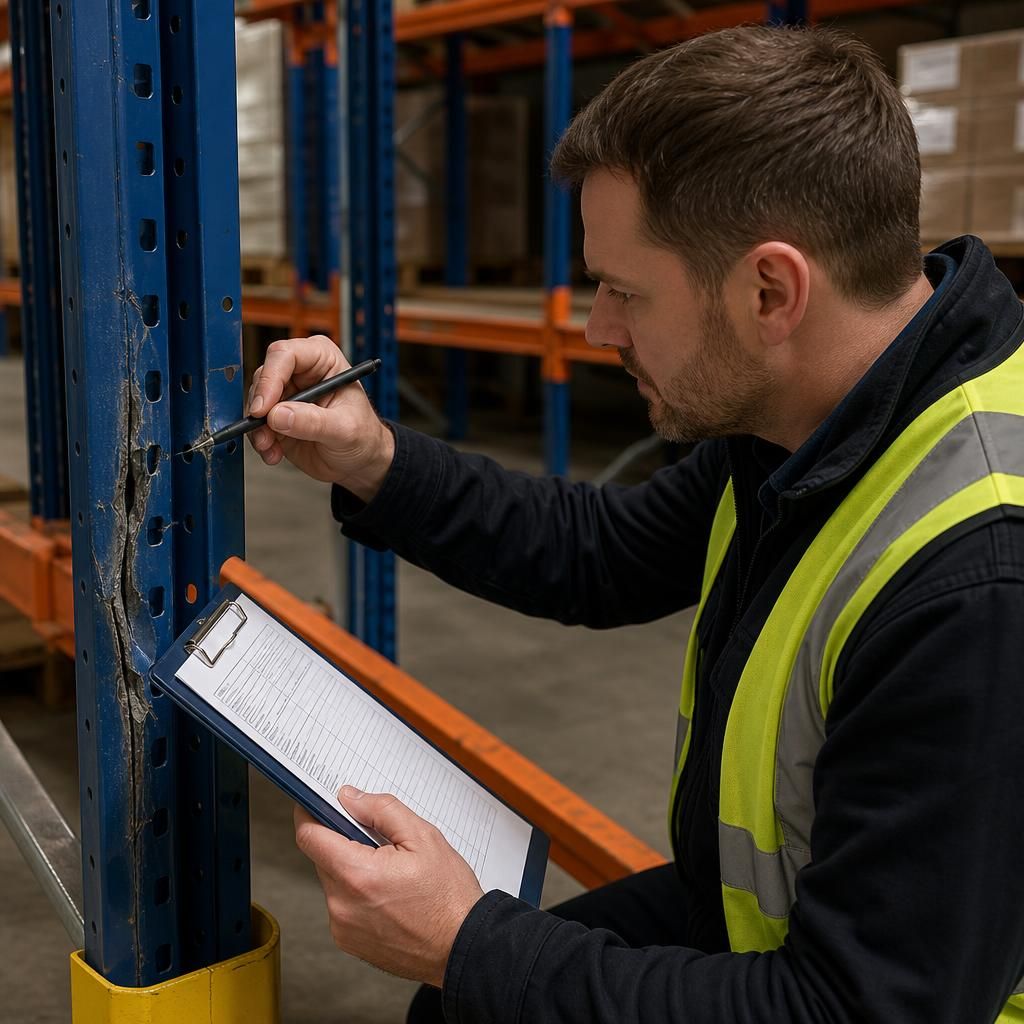
Damage assessment and risk classification are core parts of the SEMA Racking Inspection Course curriculum. Participants learn to identify defects in warehouse racking, describe their location and severity accurately, and determine what action should follow.
Training covers common issues such as bent uprights, displaced beams, damaged connectors, missing protection, loose fixings, corrosion and signs of impact. It also explains why the response depends on the defect’s position, its possible effect on load-carrying performance and the likelihood of further damage.
Rather than relying on personal judgement alone, inspectors are taught to apply a consistent classification process, record suitable evidence and escalate serious concerns. This may include isolating an affected area, controlling access, arranging competent technical advice or scheduling repair and reinspection. The course also reinforces that inspectors should not guess load capacities or approve structural alterations when the available design information is incomplete.
Discuss Your SEMA Racking Inspection Course Requirements
Discuss your SEMA Racking Inspection Course requirements with Able Racking to confirm the most suitable training arrangements for your team. Our experienced advisers can explain the course content, prerequisites and practical considerations before you enrol.